شعوب ما قبل الميلادPeoples before the Christian era
Peoples before the Christian eraشعوب ما قبل الميلاد
أهل دلمون والجرهائيون وقبيلة شذب: من سكن ساحل صفوى قبل الميلاد.The people of Dilmun, the Gerrhaeans and the tribe of Shadhab: who lived on Safwa's coast before the Christian era.
قبل أن تصل القبائل العربية المعروفة، كعبد القيس، عاشت على ساحل القطيف وصفوى شعوب أقدم. فمن نحو سنة 3000 ق.م ازدهرت حضارة دلمون من البحرين إلى تاروت. ثم عرف الإغريق الساحل باسم جرهاء، مدينة تجّار قيل إن أهلها كلدانيون منفيون من بابل. وفي القرون الأخيرة قبل الميلاد كتب أهل ثاج والساحل بالخط الحسائي على شواهد قبورهم، وحفظت هذه الشواهد اسم قبيلة «شذب»، ومنها شاهد وُجد في عين جاوان شمال صفوى.
على مدى أكثر من ألفي عام ازدهرت حضارة دلمون، من حضارات العصر البرونزي، على شواطئ الخليج، من جزر البحرين إلى تاروت وساحل شرق الجزيرة العربية، قبالة صفوى عبر خليج تاروت.
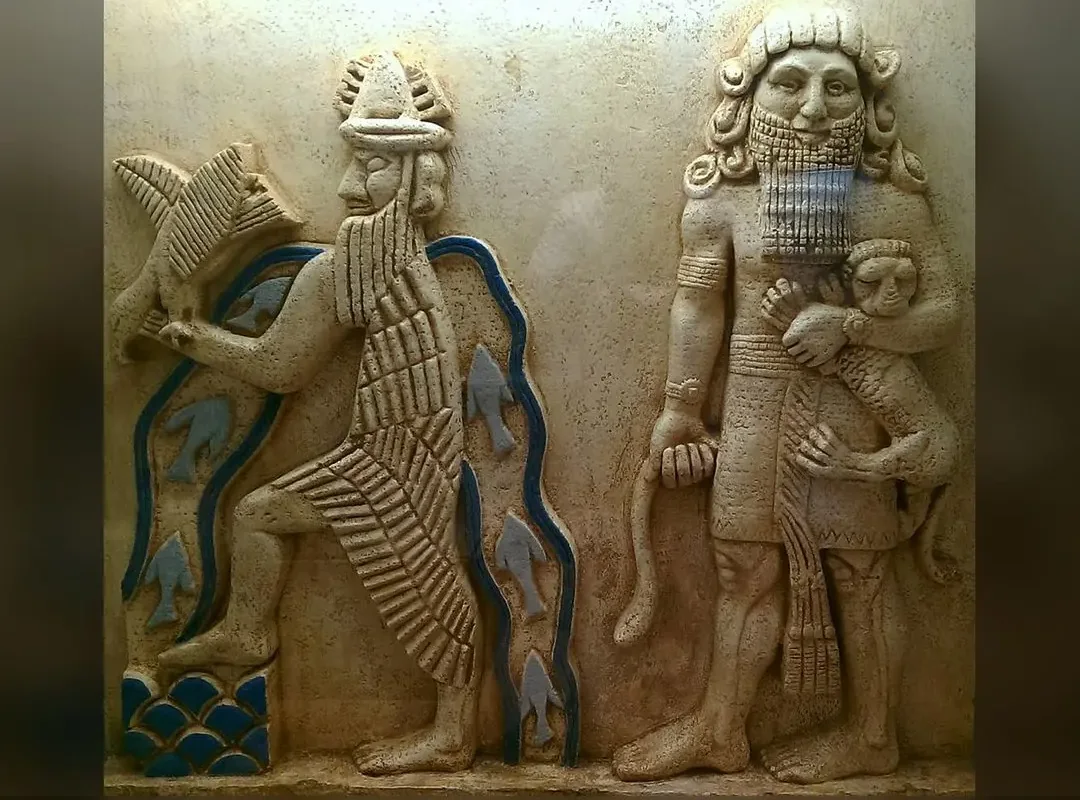
نقش إنكي وجلجامش، متحف البحرين الوطنيمتحف البحرين الوطني – نقش إنكي وجلجامش
كانت جزيرة تاروت من أهم مستوطنات دلمون. وعثر فيها علماء آثار دنماركيون على فخّار يعود إلى نحو 3000 ق.م، وعلى قبور تعود إلى نحو 2000 ق.م. ووُجدت في تل الرفيعة أوانٍ حجرية منحوتة تزيّنها صور الحيوانات ومشاهد البحر.
وقعت دلمون على طريق التجارة بين بلاد الرافدين وعُمان ووادي السند، وحملت سفنها النحاس والخشب واللؤلؤ والطيوب. ونحو عام 2300 ق.م سجّل أحد ملوك سومر أن «سفن دلمون جلبت له الخشب جزيةً». وامتدّ عصرها الذهبي من نحو 2200 إلى 1600 ق.م.
وفي الأساطير السومرية، دلمون أرض طاهرة عذبة الماء، لا مرض فيها ولا شيخوخة، ويرى فيها بعضهم صورة الفردوس المفقود.
ثم خضعت لحكم الآشوريين والبابليين، واختفى اسمها بعد نحو عام 538 ق.م. ولم يُعثر حتى الآن على مصدر يذكر صفوى نفسها في العهد الدلموني.
يصوّر النقش الظاهر هنا، في متحف البحرين الوطني، الإلهَ السومري إنكي، إله المياه العذبة الذي تدور أساطيره في دلمون، إلى جانب البطل جلجامش.
2دلمون وقصة الطوفان
أقدم قصة مكتوبة عن الطوفان سومرية، حفظها لوح واحد مكسور عُثر عليه في نيبور ويعود إلى نحو القرن السابع عشر قبل الميلاد، ونشره عالم السومريات آرنو بويبل سنة 1914م. وبطلها زيوسودرا، ملك مدينة شروباك، الذي نبّهه الإله إنكي، إله المياه العذبة، إلى أن الآلهة قررت إغراق البشر، فبنى سفينة عظيمة. وعصفت العاصفة سبعة أيام وسبع ليالٍ، ثم ظهر إله الشمس أوتو، فسجد زيوسودرا وقدّم القرابين.
وكافأه الإلهان آن وإنليل بالحياة الأبدية، وأسكناه، كما يقول اللوح، «في أرض العبور، أرض دلمون، حيث تشرق الشمس». فكانت دلمون، التي امتدت من البحرين إلى تاروت قبالة صفوى، في خيال السومريين الأرضَ التي يعيش فيها الناجي من الطوفان إلى الأبد.
وأعادت النصوص البابلية اللاحقة رواية القصة، وأشهرها اللوح الحادي عشر من ملحمة جلجامش. ففيه يعبر جلجامش، ملك أوروك، بعد موت صديقه أنكيدو وخوفه من الموت، «مياه الموت» بحثاً عن أوتنابشتم، الاسم الأكدي للناجي نفسه. فيروي له أوتنابشتم قصة الطوفان: السفينة المطلية بالقار، وجبل نصير الذي رست عليه، والحمامة والسنونو والغراب التي أطلقها ليعرف هل انحسر الماء. ثم جعله الإله إنليل وزوجته خالدَين، وأسكنهما «بعيداً عند فم الأنهار».
ولا تذكر ملحمة جلجامش اسم دلمون صراحة، وإنما يربط كثير من الكتّاب «فم الأنهار» بدلمون استناداً إلى الرواية السومرية الأقدم.
بعد أن خبت دلمون، عرف الكتّاب الإغريق والرومان هذا الساحل باسم مدينته التجارية الكبرى، جرهاء. ويرى أكثر الباحثين أن الاسم صيغة يونانية لـ«هجر»، الاسم العربي القديم للإقليم ولأكبر مدنه.
وذكر الجغرافي سترابو، الذي كتب في مطلع الميلاد تقريباً، أن جرهاء تبعد عن البحر نحو 200 ستاديون (قرابة 32 كيلومتراً)، وأن أهلها من الكلدانيين المنفيين من بابل. وكتب أن بيوتها مبنية من الملح، وأن أهلها كانوا يرشّون جدرانها بالماء حتى لا تتقشّر من الحرّ.
وكان الجرهائيون تجّاراً، يحملون البخور والطيوب العربية، وبضائع تأتي من الهند، بحراً إلى بابل، وبرّاً عبر جزيرة العرب إلى الشام ومصر، فاغتنوا من هذه التجارة.
وفي سنة 205 ق.م أبحر الملك السلوقي أنطيوخس الثالث في الخليج إلى جرهاء. ويروي المؤرخ بوليبيوس أن الجرهائيين سألوه أن يتركهم أحراراً على عاداتهم، فأجابهم إلى ذلك، وأخذ منهم 500 تالنت من الفضة.
وضرب ملوك الإقليم في تلك الحقبة نقودهم الخاصة، وبقيت منها أسماء حكّام مثل أبيئيل وأبيثع وحارثة، من القرنين الثالث والثاني قبل الميلاد.
ولا يزال موقع جرهاء موضع خلاف. وأبرز المواقع المرشّحة هجر، أي الهفوف اليوم في الأحساء، وثاج غربي الجبيل، واقترح بعضهم العقير على الساحل. وفي القرون نفسها كان الناس يسكنون جاوان، شمال صفوى مباشرة.
ثم أخذت جرهاء في الأفول في القرنين الأول والثاني للميلاد، وبحلول نحو سنة 300م صار الساحل تحت حكم الفرس الساسانيين.
4الجرهاء بين ممالك العرب
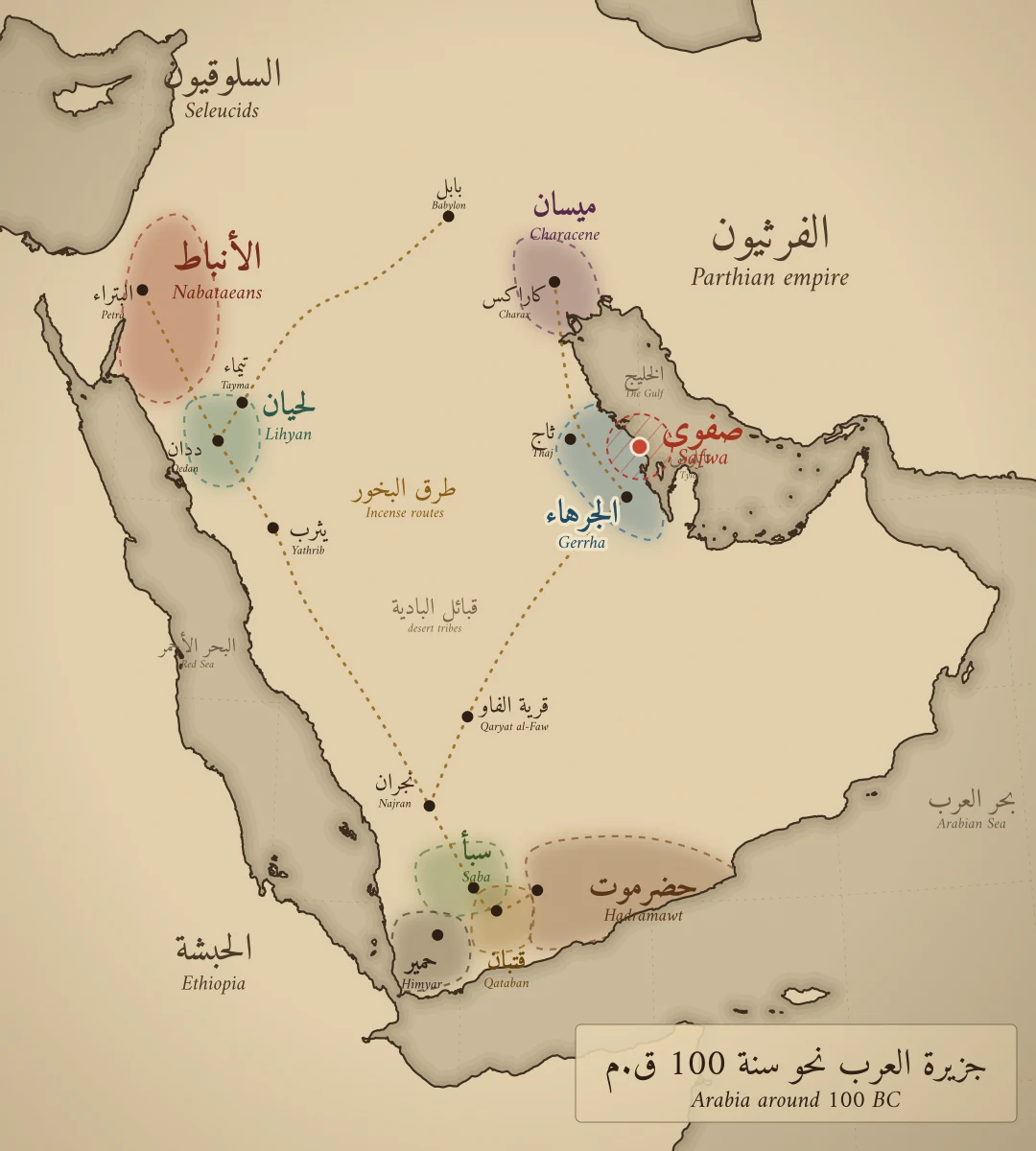
نحو سنة 100 ق.م كانت الجرهاء على ساحل الأحساء والقطيف واحدة من عدة ممالك ومراكز تجارة في جزيرة العرب. ففي الشمال الغربي قامت مملكة الأنباط وعاصمتها البتراء، وإلى جنوبها مملكة لحيان في ددان (العُلا)، التي صارت إلى الأنباط في القرن الأول قبل الميلاد. وفي رأس الخليج قامت مملكة ميسان، التي أسسها هسباوسينس سنة 141 ق.م وجعل عاصمتها ميناء كاراكس، ثم خضعت لسيادة الفرثيين سنة 124 ق.م.
جزيرة العرب نحو سنة 100 ق.م، والحدود تقريبية
وفي الجنوب كانت ممالك اليمن القديمة: سبأ وعاصمتها مأرب، وقتبان وعاصمتها تمنع، وحضرموت وعاصمتها شبوة، وحمير التي استقلت عن قتبان نحو سنة 110 ق.م وعاصمتها ظفار.
ومن الجنوب حملت القوافل البخور واللبان. فمن نجران سار طريق إلى الشمال عبر يثرب وددان إلى البتراء، وسار طريق آخر إلى الشمال الشرقي عبر قرية الفاو إلى الجرهاء، ومنها إلى العراق وبلاد الفرثيين. وفي القرن الأول قبل الميلاد كانت الجرهاء تتحكم في تجارة الطيوب إلى بابل، وكانت من أهم موانئ البضائع الآتية من الهند.
أكبر موقع أثري معروف في شرق الجزيرة العربية هو ثاج، على بعد نحو 90 كيلومتراً من الساحل غربي الجبيل. بُنيت المدينة نحو مطلع القرن الثالث قبل الميلاد داخل سور حجري ضخم، وكانت مركزاً كبيراً للتجارة البعيدة في العصر الهلنستي والقرون الأولى للميلاد.
وكان أهل ثاج والساحل يتكلمون لغة عربية قديمة، ونقشوها على شواهد قبورهم بصورة معدّلة من خط المسند العربي الجنوبي. ويسمّي الباحثون هذه الكتابة «الحسائية»، نسبة إلى الأحساء.
ويُعرف من النقوش الحسائية ما يزيد قليلاً على 40 نقشاً، كثير منها متضرّر، وُجدت في ثاج والقطيف ورأس تنورة وأبقيق وعين جاوان وغيرها. وتعود إلى القرون الأخيرة قبل الميلاد والقرون الأولى بعده، ومنها حجر مكتوب بالحسائية والآرامية معاً يرجَّح أنه من أواخر القرن الثالث قبل الميلاد.
وتبدأ الشواهد بعبارات مثل «نفس وقبر»، أي «شاهد وقبر»، ثم تذكر اسم المتوفى وأباه وجدّه، والأسرة والعشيرة والقبيلة التي ينتمي إليها. وهي من أقدم ما وصلنا من كلام أهل المنطقة بألسنتهم.
وتذكر اثنتان منها قبيلة واحدة هي «شذب» (وتُقرأ أيضاً «شوذب»). فالأولى، من القطيف، ترفع نسب رجل عبر أسرته وعشيرته إلى شذب. والثانية وُجدت في عين جاوان، شمال صفوى، سنة 1945م، على قبر امرأة هي جشم (أو غثم) بنت عمرت بن تحيو، من آل عور، من قبيلة شذب.
وشذب أقدم قبيلة عُرف اسمها حتى الآن في الأرض المحيطة بصفوى. أما القبائل العربية التي ارتبط اسمها بالقطيف في المصادر اللاحقة، كعبد القيس، فقد جاءت في القرون الأولى للميلاد.
6شواهد أخرى لقبيلة شذب
يذكر المؤرخ العراقي جواد علي (1907–1987م)، في كتابه «المفصّل في تاريخ العرب قبل الإسلام»، شواهد أخرى مكتوبة بالمسند من هذا الساحل. فقد عُرفت في زمنه أربع كتابات من ثاج، منها حجر قبر لرجل من قبيلة شذب صار في ملك أمير الكويت.
ويذكر لوحاً استخرجه الرحّالة الأمريكي ب. ب. كورنول (P. B. Cornwall) من أحد بساتين القطيف، كان أصحاب البستان قد دفنوه فيه، وقيل إنه نُقل إليه من جزيرة تاروت أو من موضع غير بعيد عن القطيف. وهو شاهد قبر رجل يُدعى «إيليا بن عيي بن شصر، من أسرة سمم، من عشيرة ذال، من قبيلة شذب». ورأى بعض الباحثين أنه كان نصرانياً عاش في القرن الخامس أو السادس للميلاد.
وعُثر على مقربة من القطيف على شاهد قبر آخر لامرأة هي «شبام بنت صحار بن عنهل بن صامت»، من «يدعب»، وهي بطن من بطون شذب. ولا يحمل الشاهد تاريخاً، ويرى من درسوه أنه من القرن السادس للميلاد، أما الرقم 90 في آخره فالظاهر أنه عمرها.
ويستنتج جواد علي من هذه الشواهد أن شذب كانت من القبائل المعروفة على هذا الساحل، وأن لها عدداً من البطون. والتواريخ التي أعطاها بعض الباحثين لشاهدَي إيليا وشبام أحدث من التواريخ التي تُعطى اليوم لأغلب النقوش الحسائية، من القرون الأخيرة قبل الميلاد إلى القرون الأولى بعده.
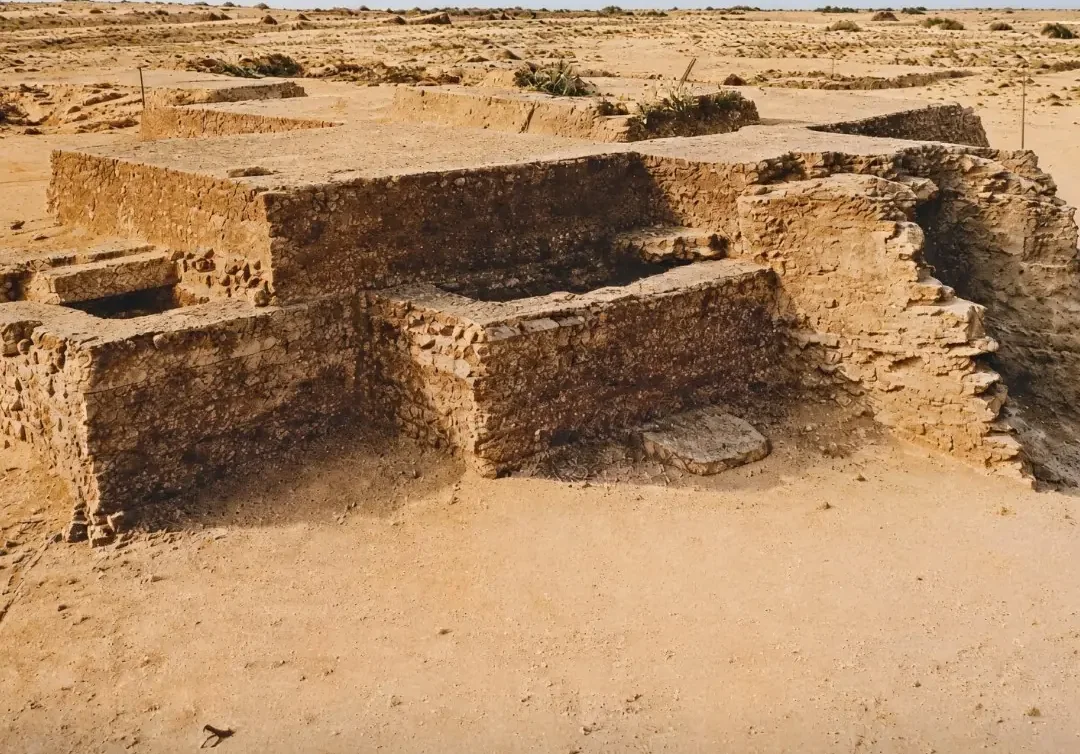
على بُعد نحو 6 كيلومترات شمال صفوى، عند الركن الشمالي الغربي لخليج تاروت، استوطن الناس موقع جاوان، وظلّ الموقع مأهولاً قرابة ألف عام.
الاستيطان في جاوانأطلال جاوان
عثر الأثريون فيه على سبع طبقات أثرية تعود إلى ثلاث مراحل استيطان، أقدمها يسبق القرن الرابع قبل الميلاد، والأحدث تضمّ مباني من العصور الهلنستية والرومانية والبيزنطية. وتبلغ مساحة الموقع نحو 200 هكتار، وكان مرتبطاً بتجارة شرق الجزيرة العربية.
ومن المكتشفات جدران من الحجر الجيري مكسوّة بالجصّ الأبيض، ومجموعة من القبور الصغيرة، وفخّار محلي متميّز، وحجر منقوش بخط المسند الجنوبي على قبر امرأة اسمها جشم بنت عمرة بن تحيو، من آل عور من قبيلة شدب.
ويرى بعض الباحثين أن جاوان هي «بلبانة» الواردة على خريطة بطليموس القديمة، وتُعرف أيضاً باسم «الجونين» أو «الجونان».
ويستحضر الشاعر الأموي جرير «الجونين» لاحقاً بين أيام العرب المشهورة:
ألم تشهدِ الجونَينِ والشِّعبَ ذا الصفاوكرّاتِ قيسٍ يومَ ديرِ الجماجمِ
وتذهب موسوعة المعرفة إلى أن «الجونين» في هذا البيت هي جاوان.
8لغاتهم
دُوّنت سجلات دلمون بالأكدية، لغة بلاد الرافدين، وإن حمل ملوكها أسماء أمورية من لغة سامية قريبة من العبرية والعربية. وجاء كلدانيو جرهاء من بابل، وكانت الآرامية قد انتشرت فيها، وكُتبت الآرامية في ثاج أيضاً. أما قبيلة شذب وجيرانها فتكلموا الحسائية وكتبوا بها، وهي لغة عربية قديمة حلّت محلها العربية لاحقاً. وللمزيد: لهجات صفوى وما حولها.
9من جاء بعدهم
أفلت تجارة جرهاء في القرنين الأول والثاني للميلاد، وبحلول نحو سنة 300م صار الساحل في يد الفرس الساسانيين. وفي هذه القرون نفسها انتقلت قبيلة عبد القيس العربية إلى إقليم البحرين على مراحل، وتربط المصادر اللاحقة القطيف وصفوى بعشائرها. وفي القرن الثاني الميلادي نشأ في الإقليم حلف تنوخ القبلي، ثم رحل إلى العراق في القرن الثالث. واستمر السكن في جاوان حتى نحو القرن السادس الميلادي.
Before the well-known Arab tribes such as ʿAbd al-Qays arrived, older peoples lived on the coast of Qatif and Safwa. From about 3000 BC the Dilmun civilisation flourished from Bahrain to Tarut. Later the Greeks knew the coast by the name of Gerrha, a city of merchants whose people were said to be Chaldaeans exiled from Babylon. In the last centuries BC the people of Thaj and the coast wrote on their gravestones in the Hasaitic script, and these stones preserve the name of a tribe, Shadhab, including one found at ʿAin Jawan, north of Safwa.
For more than two thousand years, the Bronze Age civilisation of Dilmun flourished on the shores of the Gulf, from the islands of Bahrain to Tarut and the coast of eastern Arabia, just across the bay from Safwa.
Relief of Enki and Gilgamesh, Bahrain National MuseumBahrain National Museum – Relief of Enki and Gilgamesh
Tarut island was one of Dilmun's major settlements. Danish archaeologists found pottery there from about 3000 BC, and tombs from about 2000 BC. Carved stone vessels decorated with animals and sea scenes have been found at Tell Rafiʿah.
Dilmun sat on the trade route between Mesopotamia, Oman and the Indus valley. Its ships carried copper, timber, pearls and perfumes, and around 2300 BC a Sumerian king recorded that “the ships of Dilmun brought him wood as tribute.” Its golden age ran from about 2200 to 1600 BC.
In Sumerian myth, Dilmun is a pure land of sweet water, where there is no sickness and no old age. Some see in it the image of a lost paradise.
Later it came under Assyrian and Babylonian rule. After about 538 BC the name fell out of use. No source yet found names Safwa itself in the Dilmun period.
The relief shown here, in the Bahrain National Museum, depicts Enki, the Sumerian god of fresh water whose myths are set in Dilmun, beside the hero Gilgamesh.
2Dilmun and the flood story
The oldest written flood story is Sumerian. It survives on a single broken tablet found at Nippur, dating to about the 17th century BC and published by the Sumerologist Arno Poebel in 1914. Its hero is Ziusudra, king of the city of Shuruppak, who was warned by the god Enki, god of fresh water, that the gods had decided to drown mankind, and built a huge boat. The storm raged for seven days and seven nights; then the sun god Utu appeared, and Ziusudra bowed down and made offerings.
The gods An and Enlil rewarded him with eternal life and, in the tablet's words, settled him “in the land of crossing, the land of Dilmun, the place where the sun rises”. So Dilmun, which stretched from Bahrain to Tarut, across the bay from Safwa, was in the Sumerian imagination the land where the survivor of the flood lived forever.
Later Babylonian texts retold the story, most famously Tablet 11 of the Epic of Gilgamesh. There Gilgamesh, king of Uruk, grieving for his friend Enkidu and afraid of death, crossed “the waters of death” to find Utnapishtim, the Akkadian name of the same survivor. Utnapishtim told him the flood story: the boat sealed with bitumen, Mount Nisir where it came to rest, and the dove, swallow and raven he sent out to see whether the waters had gone down. The god Enlil then made him and his wife immortal and settled them “far away, at the mouth of the rivers”.
The Epic of Gilgamesh does not name Dilmun itself; many writers link “the mouth of the rivers” with Dilmun because of the older Sumerian version.
After Dilmun faded, Greek and Roman writers knew this coast by the name of its great trading city, Gerrha. Most scholars take the name to be a Greek form of Hajar, the old Arabic name for the region and its chief town.
The geographer Strabo, writing around the turn of the Christian era, placed Gerrha about 200 stadia (some 32 km) from the sea and said its people were Chaldaeans, exiles from Babylon. He also wrote that its houses were built of salt, and that people sprinkled the walls with water to stop them flaking in the heat.
The Gerrhaeans were merchants. They carried Arabian incense and perfumes, and goods brought from India, by sea to Babylonia and overland across Arabia to Syria and Egypt, and grew rich on the trade.
In 205 BC the Seleucid king Antiochus III sailed down the Gulf to Gerrha. According to the historian Polybius, the Gerrhaeans asked him to leave them free to keep their customs. He agreed, and received from them 500 talents of silver.
Kings of the region struck their own coins at this time. The names of rulers such as Abiʾel, Abyathaʿ and Harithat survive from the 3rd and 2nd centuries BC.
Where Gerrha stood is still debated. The main candidates are Hajar, today's Hofuf in al-Ahsa, and Thaj, west of Jubail; some have also proposed al-ʿUqair on the coast. In the same centuries, people were living at Jawan, just north of Safwa.
Gerrha declined in the 1st and 2nd centuries AD, and by about AD 300 the coast had come under the Sasanian Persians.
4Gerrha among the kingdoms of Arabia
Around 100 BC Gerrha, on the coast of al-Ahsa and Qatif, was one of several kingdoms and trading centres in Arabia. In the north-west was the Nabataean kingdom, with its capital at Petra, and south of it the kingdom of Lihyan at Dedan (al-ʿUla), which passed to the Nabataeans in the 1st century BC. At the head of the Gulf lay Characene (Maysan), founded in 141 BC by Hyspaosines with its capital at the port of Charax; it accepted Parthian overlordship in 124 BC.
Arabia around 100 BC; borders are approximate
In the south were the old kingdoms of Yemen: Saba with its capital at Marib, Qataban at Timna, Hadramawt at Shabwa, and Himyar, which became independent of Qataban around 110 BC, with its capital at Zafar.
Caravans carried incense and frankincense north from these lands. From Najran one road ran north through Yathrib and Dedan to Petra; another ran north-east through Qaryat al-Faw to Gerrha, and on to Iraq and the Parthian lands. In the 1st century BC Gerrha controlled the trade in aromatics to Babylon and was one of the main ports for goods from India.
The largest ancient site known in eastern Arabia is Thaj, about 90 km inland, west of Jubail. The city was built around the early 3rd century BC inside a massive stone wall, and was a major hub of long-distance trade in the Hellenistic period and the first centuries AD.
The people of Thaj and the coast spoke an early Arabian language and carved it on their gravestones in an adapted form of the South Arabian alphabet, the musnad. Scholars call this writing Hasaitic, after al-Ahsa.
Just over 40 Hasaitic inscriptions are known, many of them damaged, from Thaj, Qatif, Ras Tanura, Abqaiq, ʿAin Jawan and other sites. They date from the last centuries BC and the first centuries AD; one stone written in both Hasaitic and Aramaic is probably from the late 3rd century BC.
The gravestones open with words such as nafs wa qabr, “memorial and grave”, then give the dead person's name, father and grandfather, and the family, clan and tribe they belonged to. They are among the earliest records of the area's people in their own words.
Two of them name the same tribe, Shadhab (also read Shawdhab). One, from al-Qatif, traces a man through his family and clan to Shadhab. The other was found at ʿAin Jawan, just north of Safwa, in 1945. It marked the grave of a woman, Jashm (or Ghuthm) daughter of ʿAmrat son of Tahiyu, of the clan of ʿUr, of the tribe of Shadhab.
Shadhab is the earliest tribe yet known by name from the land around Safwa. The Arab tribes linked with Qatif in later sources, such as ʿAbd al-Qays, came in the first centuries AD.
6More gravestones of Shadhab
The Iraqi historian Jawad ʿAli (1907–1987), in his al-Mufassal fi Tarikh al-ʿArab qabl al-Islam, lists more gravestones in the musnad script from this coast. Four inscriptions were known from Thaj in his day; one of them, the gravestone of a man of the tribe of Shadhab, passed into the collection of the Emir of Kuwait.
He also describes a slab that the American explorer P. B. Cornwall recovered from a palm garden in Qatif. Its owners had buried it there, and it was said to have been brought from Tarut island or from a place not far from Qatif. It marked the grave of “Ilya son of ʿAyy son of Shasr, of the family of Samam, of the clan of Dhal, of the tribe of Shadhab”. Some researchers took him for a Christian of the 5th or 6th century AD.
Another gravestone, found near Qatif, belonged to a woman, “Shibam daughter of Suhar son of ʿAnhal son of Samit”, of Yadʿab, a branch of Shadhab. It carries no date; those who studied it placed it in the 6th century AD, and the number 90 at its end seems to give her age.
From these stones Jawad ʿAli concluded that Shadhab was a well-known tribe of this coast, with several branches. The dates some researchers gave to the stones of Ilya and Shibam are later than those now given to most Hasaitic inscriptions, from the last centuries BC to the first centuries AD.
About 6 km north of Safwa, near the north-west corner of Tarut Bay, people settled at Jawan. The site stayed inhabited for close to a thousand years.
The settlement at JawanRuins at Jawan
Archaeologists have found seven layers of remains from three phases of settlement. The earliest is older than the 4th century BC; the later ones include buildings from the Hellenistic, Roman and Byzantine eras. The site covers about 200 hectares, and was linked to the trade of eastern Arabia.
Among the finds are limestone walls coated in white plaster, small graves, a distinctive local pottery, and a stone inscribed in the ancient South Arabian musnad script marking the tomb of a woman named Jasham bint ʿAmra bin Tahyu, of the Al ʿAwr clan of the Shadab tribe.
Some researchers identify Jawan with “Bilbana”, a place marked on the ancient map of Ptolemy. It is also known as al-Jawnain or al-Jawnan.
The Umayyad poet Jarir later recalls al-Jawnayn in a list of famous battle days:
ألم تشهدِ الجونَينِ والشِّعبَ ذا الصفاوكرّاتِ قيسٍ يومَ ديرِ الجماجمِ
“Did you not witness al-Jawnayn, and the pass by al-Safa, and the charges of Qays on the day of Dayr al-Jamajim?”
The Arabic encyclopaedia Marefa identifies the al-Jawnayn of this verse with Jawan.
8What they spoke
Dilmun's records were written in Akkadian, the language of Mesopotamia, though its kings bore Amorite names, from a Semitic language related to Hebrew and Arabic. The Chaldaeans of Gerrha came from Babylon, where Aramaic had spread by then, and Aramaic was written at Thaj too. The tribe of Shadhab and its neighbours spoke and wrote Hasaitic, an early Arabian language that later gave way to Arabic. More in The dialects of Safwa and its neighbours.
9Who came after
Gerrha's trade faded in the 1st and 2nd centuries AD, and by about AD 300 the Sasanian Persians held the coast. In these same centuries the Arab tribe of ʿAbd al-Qays moved into the region of al-Bahrayn in stages, and later sources link Qatif and Safwa with its clans. In the 2nd century AD the tribal confederation of the Tanukh took shape in the region, before moving on to Iraq in the 3rd century. People went on living at Jawan until about the 6th century AD.

 عبد القيسالقبيلة العربية التي استوطنت إقليم البحرين قبل الإسلام.
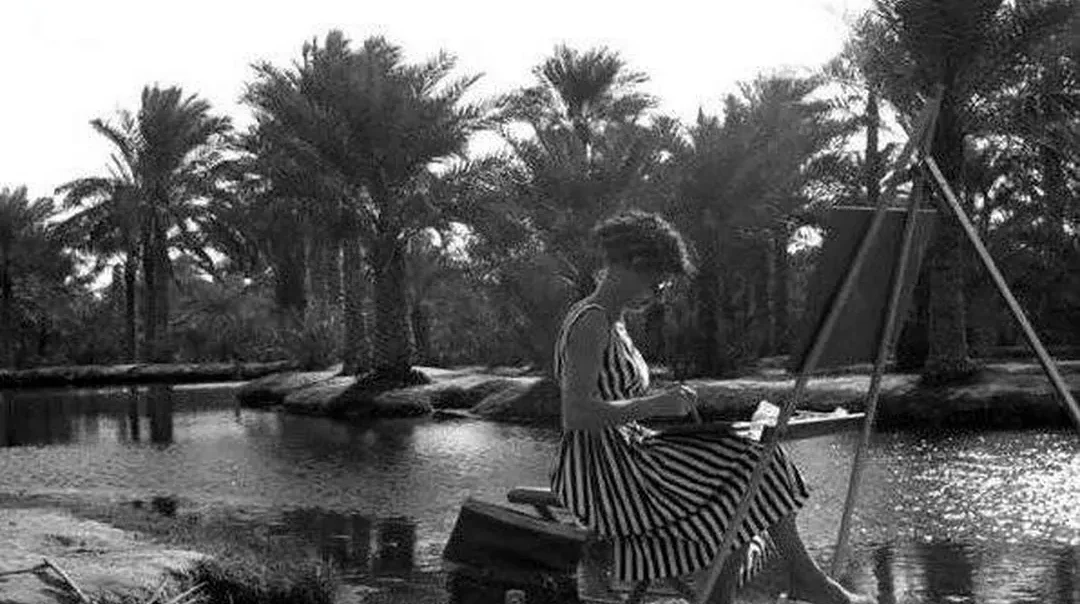 عين داروشعين صفوى الكبرى، سقت نخيل البلدة آلاف السنين.
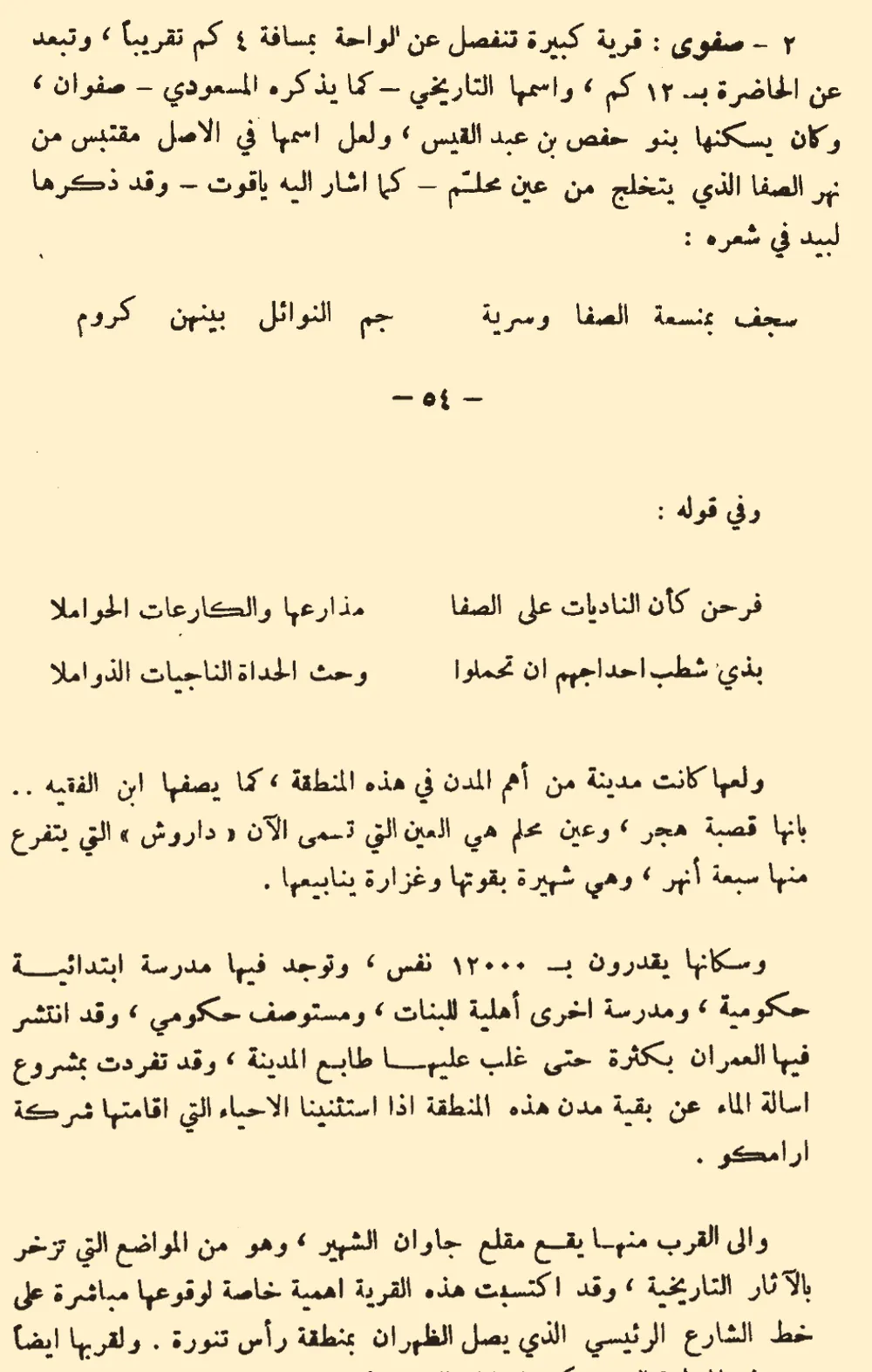 لهجات صفوى وما حولها«يبل» و«يمل»: لهجة صفوى وأخواتها في واحة القطيف، وجذورها في لهجات العرب القديمة.