الاسم القديم لساحل شرق الجزيرة العربية كله، ومنه القطيف وصفوى، قبل أن يقتصر على جزر أوال.The old name for the whole eastern Arabian coast, Qatif and Safwa among it, before it came to mean only the islands of Awal.
كان اسم البحرين يُطلق قديماً على إقليم واسع، لا على الجزر وحدها. فمن ظهور الإسلام إلى مطلع القرن السادس عشر الميلادي كان «إقليم البحرين» يمتد على ساحل الخليج من البصرة إلى مضيق هرمز، ومنه الأحساء والقطيف وصفوى وجزر أوال. وعلى هذا الساحل قامت حضارة دلمون، ثم تعاقبت عليه الدول، من الفرس إلى القرامطة والعيونيين والجبريين. ثم ضاق الاسم شيئاً فشيئاً حتى صار يعني الجزر وحدها.
حتى أواخر العصور الوسطى كان اسم «البحرين» يدلّ على إقليم أكبر من الجزر. فمن ظهور الإسلام في القرن السابع إلى مطلع القرن السادس عشر شمل الاسم ساحل الخليج من البصرة إلى مضيق هرمز، وعُرف بإقليم البحرين، وكان أهله العرب يُنسبون إلى قبيلة عبد القيس.
ومن أقدم الشواهد على المعنى الأضيق ما كتبه ابن بطوطة حين زار القطيف نحو سنة 1331م، إذ أطلق اسم البحرين على جزر أوال. ولا يُعرف على وجه الدقة متى ضاق الاسم ليقتصر على الجزر.
على مدى أكثر من ألفي عام ازدهرت حضارة دلمون، من حضارات العصر البرونزي، على شواطئ الخليج، من جزر البحرين إلى تاروت وساحل شرق الجزيرة العربية، قبالة صفوى عبر خليج تاروت.
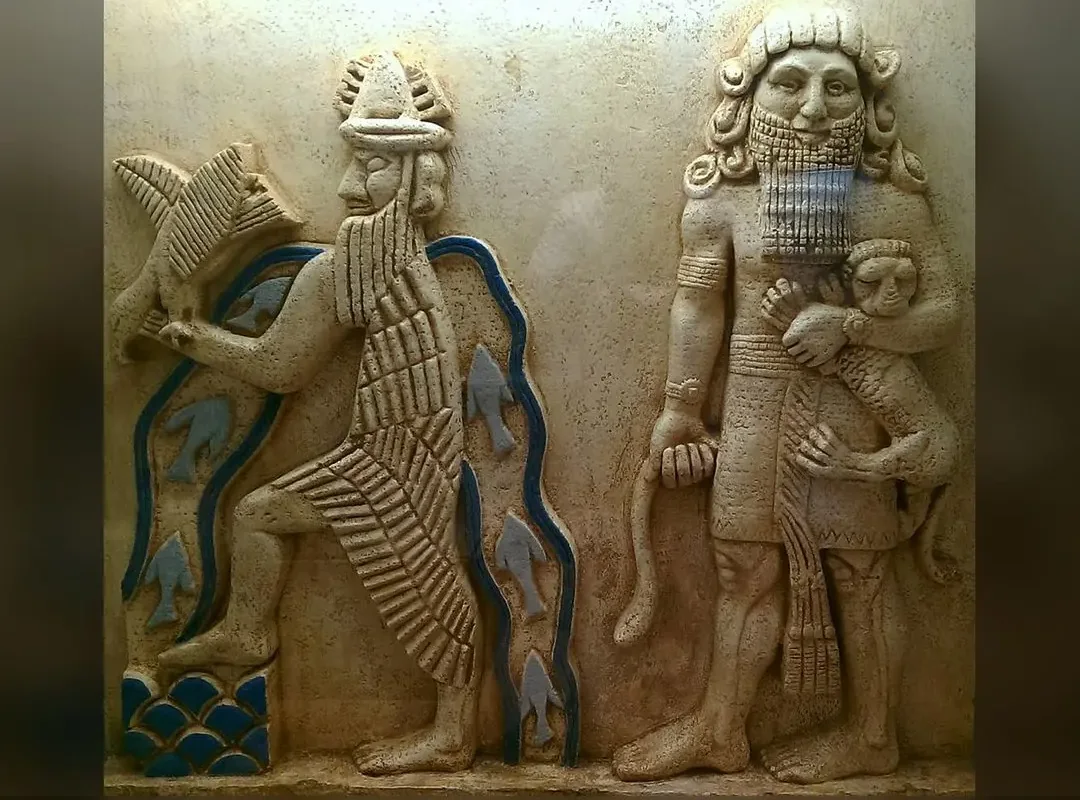
نقش إنكي وجلجامش، متحف البحرين الوطنيمتحف البحرين الوطني – نقش إنكي وجلجامش
كانت جزيرة تاروت من أهم مستوطنات دلمون. وعثر فيها علماء آثار دنماركيون على فخّار يعود إلى نحو 3000 ق.م، وعلى قبور تعود إلى نحو 2000 ق.م. ووُجدت في تل الرفيعة أوانٍ حجرية منحوتة تزيّنها صور الحيوانات ومشاهد البحر.
وقعت دلمون على طريق التجارة بين بلاد الرافدين وعُمان ووادي السند، وحملت سفنها النحاس والخشب واللؤلؤ والطيوب. ونحو عام 2300 ق.م سجّل أحد ملوك سومر أن «سفن دلمون جلبت له الخشب جزيةً». وامتدّ عصرها الذهبي من نحو 2200 إلى 1600 ق.م.
وفي الأساطير السومرية، دلمون أرض طاهرة عذبة الماء، لا مرض فيها ولا شيخوخة، ويرى فيها بعضهم صورة الفردوس المفقود.
ثم خضعت لحكم الآشوريين والبابليين، واختفى اسمها بعد نحو عام 538 ق.م. ولم يُعثر حتى الآن على مصدر يذكر صفوى نفسها في العهد الدلموني.
يصوّر النقش الظاهر هنا، في متحف البحرين الوطني، الإلهَ السومري إنكي، إله المياه العذبة الذي تدور أساطيره في دلمون، إلى جانب البطل جلجامش.
3تايلوس والإمبراطوريات الفارسية
بعد دلمون صارت الجزر جزءاً من الإمبراطورية الأخمينية الفارسية، وكانت للأسطول الأخميني قواعد فيها وفي عُمان واليمن. ثم عرفها الإغريق باسم «تايلوس»، المأخوذ على الأرجح من اسم دلمون (تلمون)، وزارها نيارخوس، قائد أسطول الإسكندر، ووصف مزارع القطن فيها. وتأثرت بالثقافة الإغريقية، فتكلّم أعيانها اليونانية، وحملت نقودها صورة زيوس جالساً.
وبسط الفرثيون سيطرتهم على الخليج نحو سنة 130 ق.م، وأقاموا حاميات على ساحله الجنوبي. ثم هزم أردشير الأول، مؤسس الدولة الساسانية، الوالي الفرثي، وولّى ابنه شابور الأول، الذي بنى «بتن أردشير». وقسّم الساسانيون الإقليم ثلاث نواحٍ: هجر (الهفوف اليوم)، وبتن أردشير (منطقة القطيف اليوم)، ومشماهيج (جزيرة البحرين).
4حلف تنوخ
تروي كتب الأخبار العربية، وأقدمها ما نقله المؤرخ الكوفي ابن الكلبي (ت. 819م)، أن تنوخ حلف من قبائل عربية مهاجرة اجتمعت في إقليم البحرين، وأن اسمها جاء من «التنوّخ»، أي الإقامة، لأن هذه القبائل تحالفت على المقام فيه والتناصر. ومن القبائل التي تذكرها الروايات قبائل من قضاعة والأزد، وتجعل مالك بن فهم الأزدي أول ملوكهم.
ويشكّك المؤرخون المحدثون في تفاصيل هذه الهجرة، لكنهم يقبلون عموماً وجود تنوخ في شرق الجزيرة العربية في القرن الثاني الميلادي. فقد ذكرهم الجغرافي الإغريقي بطليموس هناك في كتابه «الجغرافيا» نحو سنة 150م، ولم يذكرهم بلينيوس في كتابه الأقدم «التاريخ الطبيعي» سنة 77م. فكان ساحل القطيف وصفوى جزءاً من الإقليم الذي نشأ فيه هذا الحلف.
ثم رحلت تنوخ من البحرين إلى وادي الفرات الأوسط في العراق، ربما قبل سنة 220م. وكان ملكها في القرن الثالث جذيمة الأبرش، الذي ورد اسمه ملكاً لتنوخ في نقش بأم الجمال في الأردن. ومن هذا الحلف خرج اللخميون ملوك الحيرة، ومنهم امرؤ القيس بن عمرو، الذي يؤرّخ نقش النمارة وفاته بسنة 328م. وفي عهده، نحو سنة 309م، أغارت قبائل من البحرين، منها عبد القيس، على سواحل فارس مستغلّة ضعف الساسانيين.
وتذكر المصادر أن البحرين بقيت بعد ذلك من نواحي ملك الحيرة، وكانت أوال مدينتها الرئيسية، وتسكنها قبائل عبد القيس وربيعة وإياد، وكان حكامها المحليون من هذه القبائل يتعاقبون عليها. وذكر ابن خلدون أن امرأ القيس بن عمرو كان أول من تنصّر من ملوك آل نصر في الحيرة. وتختلف الروايات في تواريخ ملوك تنوخ الأوائل، فبعض القوائم تجعل حكم مالك بن فهم بين 169 و231م.
5غزوة حِمْيَر إلى القطيف
نحو سنة 300م بلغت جيوش اليمن هذا الساحل أيضاً. فهناك نقش سبئي بخط المسند يسمّيه العلماء «شرف الدين 42»، ورد فيه أن الملك شمّر يهرعش، ملك سبأ وذي ريدان، أمر قواته بغزو أرض مالك ملك أسد، فتقدّمت نحوها، ثم اتجهت إلى أرض «قطوف»، ويقرؤها جواد علي «القطيف»، حتى بلغت موضع «كوكبان»، ثم «ملك فارس وأرض تنوخ».
ويذكر النص أن أرض تنوخ، التابعة للفرس، كانت تحت حكم مملكتين، يقال لإحداهما «قطو» وللأخرى «كوكب»، وأن أعراب شمّر أنزلوا بهما خسائر فادحة. ودوّن النقش قائدان من قوّاد شمّر، من «ريمان ذي حزفر» ومن «عنان»، بعد عودتهما سالمين غانمين، وقدّم أحدهما الشكر للآلهة في نجران.
ويرى جواد علي أن أرض تنوخ هي الأحساء الحالية، وكانت يومئذ منزل قبائل تنوخ، وأن في النقش تأييداً لروايات الأخباريين التي تذكر أن شمّر يهرعش غزا أرض الفرس. ويضيف أن غزو الأحساء وساحل الخليج كان عسيراً لولا صلات حسنة بأعراب نجد، ولا سيما كندة، التي كانت تنزل الأفلاج والخرج.
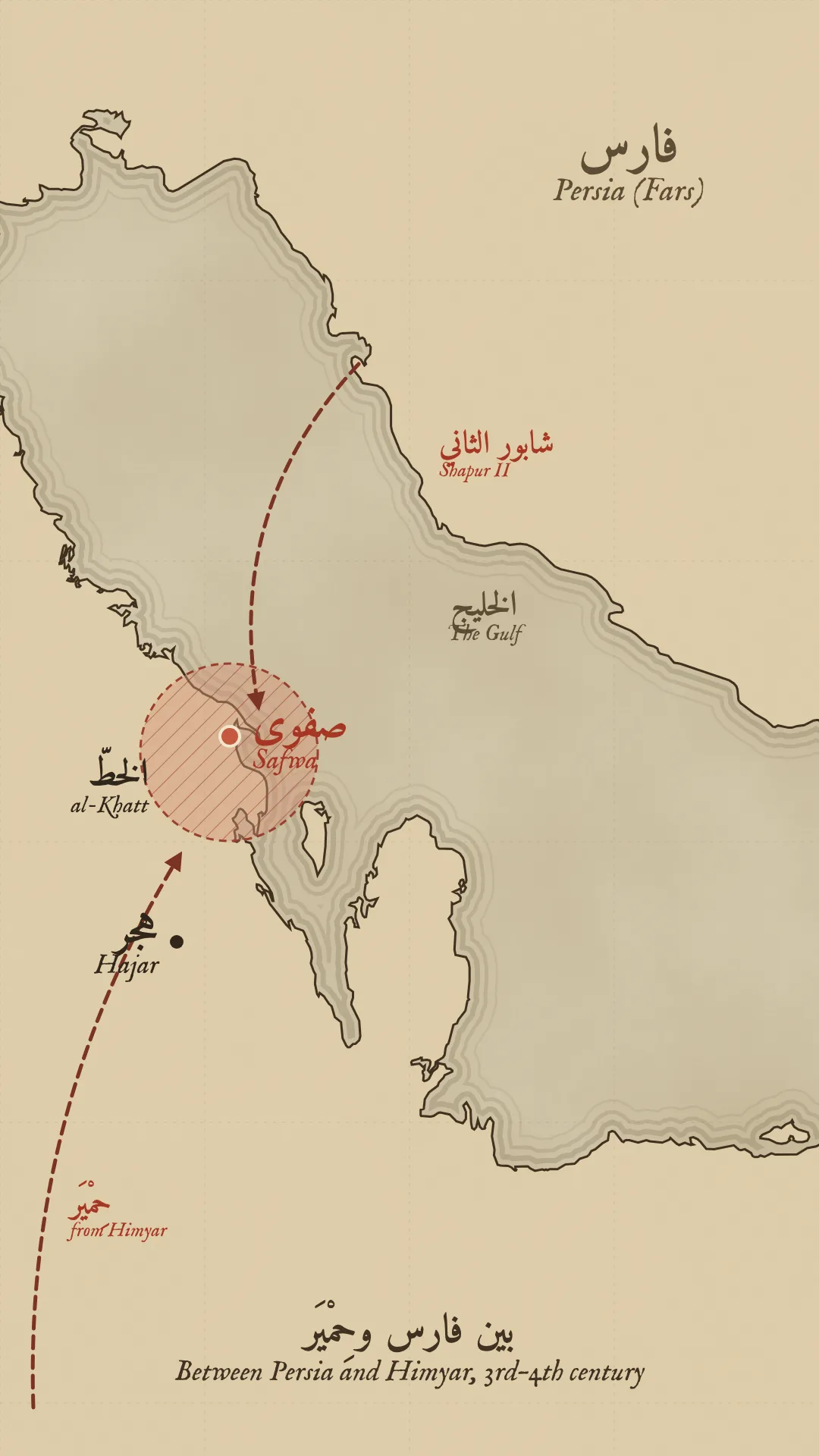
في القرنين الثالث والرابع الميلاديين وقع ساحل الخطّ، حيث صفوى، بين قوّتين: الإمبراطورية الساسانية الفارسية على الضفة الأخرى من الخليج، ومملكة حِمْيَر في اليمن.
خريطة: حملات الفرس وحِمْيَر على ساحل الخطّخريطة رُسمت لصفوانيبيديا
حكم أردشير بن بابك، مؤسس الدولة الساسانية، من نحو 224 إلى 242م، ومدّ سلطان فارس إلى الساحل العربي من الخليج. ويذكر مؤرخون عرب لاحقون أنه أسّس مدينة في الخطّ.
وبعد نحو قرن قاد سابور الثاني حملة على القبائل العربية. وفي رواية الطبري أنه قطع البحر فورد الخطّ، وقتل من أهل البحرين خلقاً كثيراً، وأفشى القتل في هجر. وكانت عبد القيس وتميم وبكر بن وائل من القبائل التي أصابها.
ومن الجنوب جاءت حِمْيَر. يذكر المؤرخ جواد علي أن عرب حِمْيَر قدموا إلى القطيف وسيطروا عليها في الفترة ما بين نحو 285 و310م، في عهد الملك الحِمْيَري شمّر يهرعش.
لا يذكر أيّ مصدر من هذه الفترة صفوى باسمها، لكن هذه الحروب شكّلت الساحل الذي كانت جزءاً منه.
الخريطة، المرسومة لهذه الصفحة، تبيّن زحف الفرس عبر الخليج وزحف حِمْيَر من الجنوب.
7جزيرة العرب قبيل الإسلام
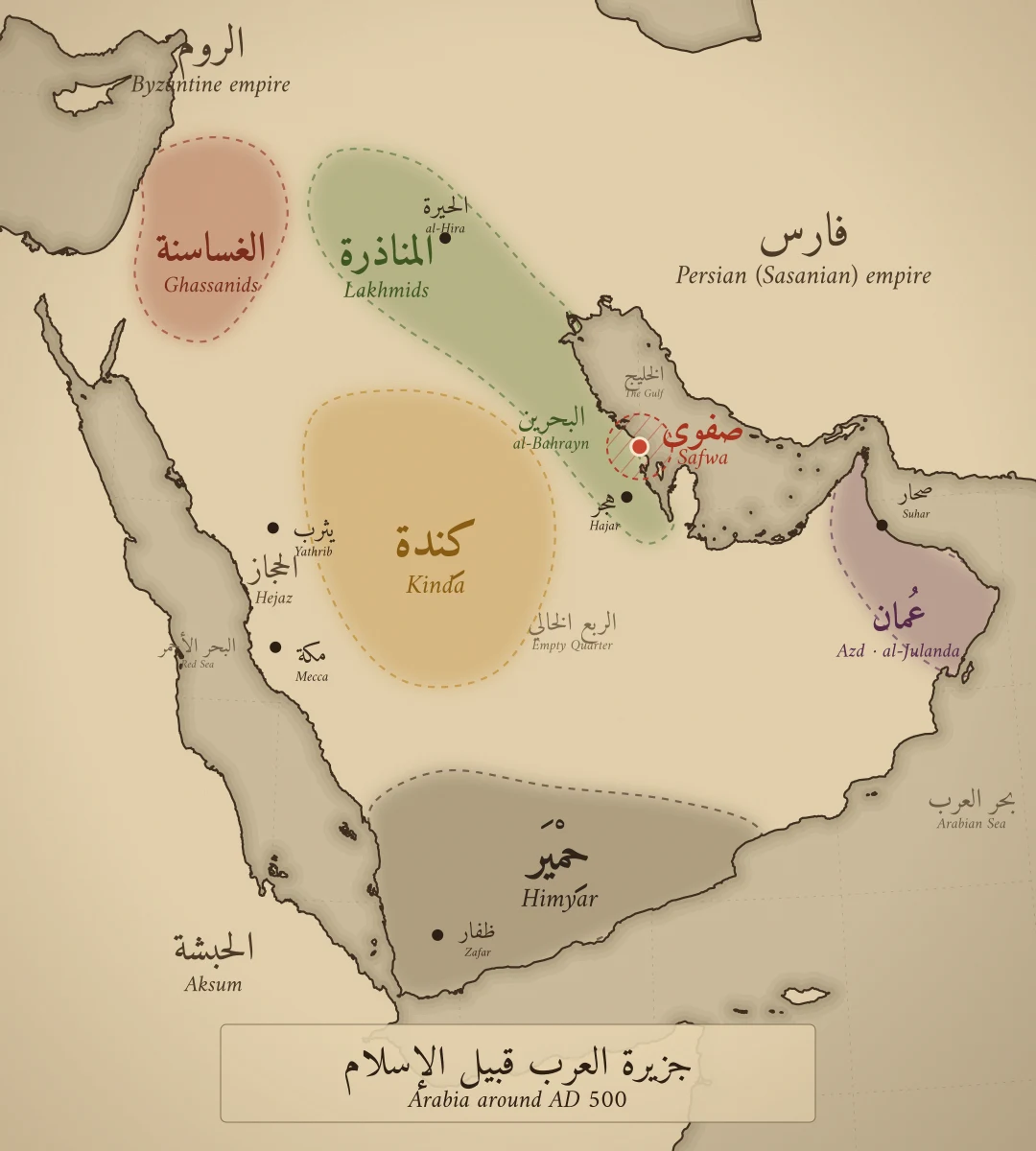
نحو سنة 500م كانت جزيرة العرب بين إمبراطوريتين كبيرتين: الروم في الشمال الغربي، والفرس الساسانيين في الشمال الشرقي. وكان لكل منهما حلفاء من العرب: الغساسنة في بادية الشام مع الروم، والمناذرة (اللخميون) في الحيرة بالعراق مع الفرس. وامتد سلطان المناذرة إلى حلفائهم من العرب في البحرين واليمامة، فكان ساحل القطيف وصفوى في دائرة فارس.
جزيرة العرب نحو سنة 500م، والحدود تقريبية
وفي وسط الجزيرة قامت مملكة كندة على قبائل معدّ في نجد بين نحو 450 و550م، بدعم من مملكة حمير في اليمن. وبقيت حمير قوة الجنوب حتى غلب عليها الأحباش من أكسوم نحو سنة 525م. وفي عُمان حكم آل الجلندى من الأزد، وللفرس فيها حاميات. أما مكة ويثرب في الحجاز فلم تكونا تابعتين لأي من هذه الممالك.
وانتهى ملك المناذرة سنة 602م حين عزل كسرى الثاني آخر ملوكهم النعمان الثالث، ثم هزمت قبائل عربية جيش الفرس في معركة ذي قار، فضعفت سيطرة فارس على شرق الجزيرة. وعند ظهور الإسلام كان المنذر بن ساوى التميمي يحكم البحرين باسم الفرس.
8الأديان قبل الإسلام
من العهد الساساني في القرن الرابع إلى القرن الثامن الميلادي اعتنق كثير من أهل الإقليم المسيحية النسطورية، المعروفة بكنيسة المشرق، ومن آثار تلك الحقبة أطلال معبد في سماهيج (مشماهيج). ويوصف أهله قبل الإسلام بأنهم عرب تنصّر بعضهم، وفلاحون يتكلمون الآرامية، وفرس زرادشتيون، وقليل من اليهود، وكانت السريانية والفارسية الوسطى من لغاته. ودخل الإقليم في الإسلام سنة 629م، في السنة السابعة للهجرة.
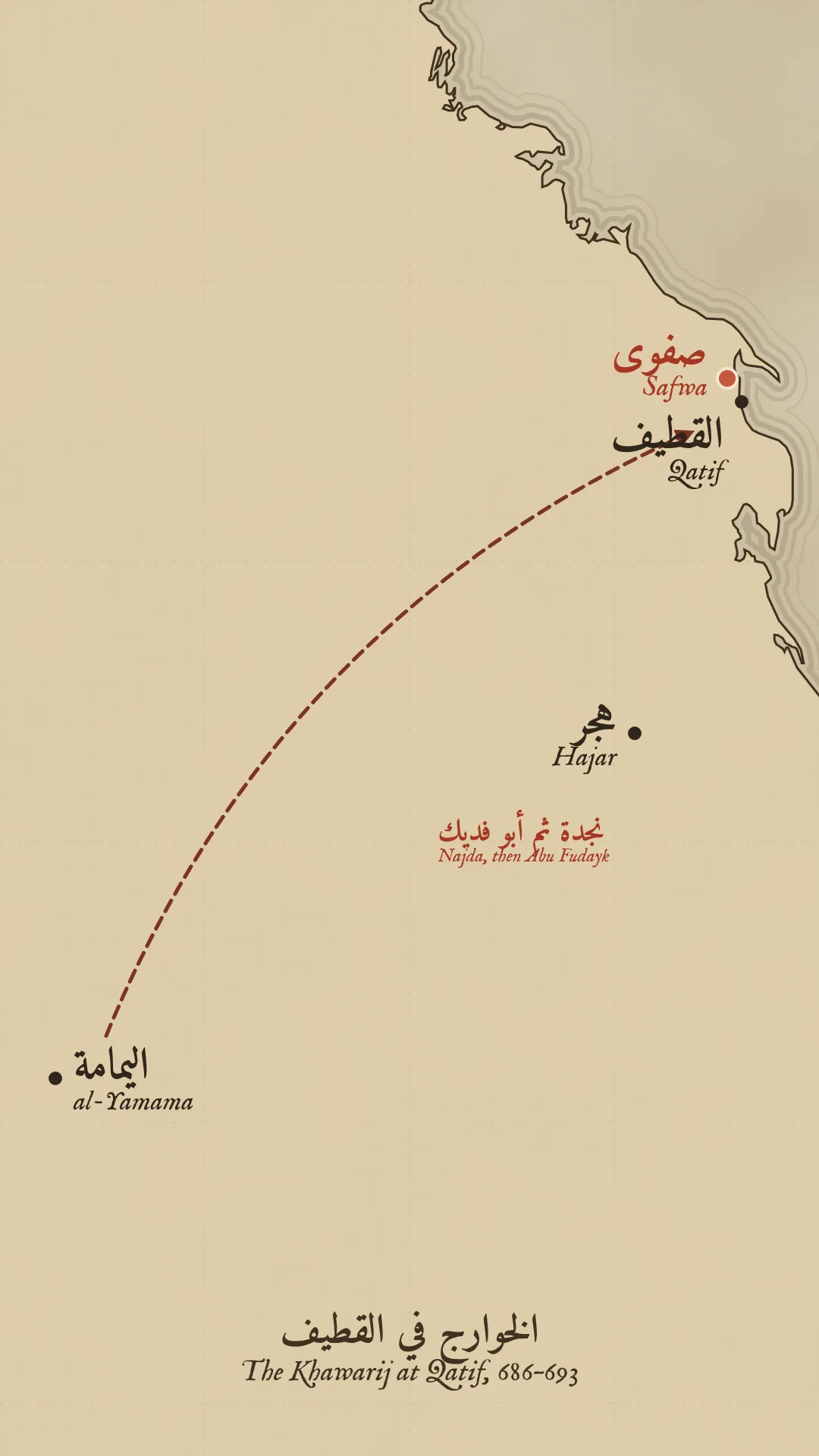
في أثناء الفتن التي شهدتها ثمانينيات القرن السابع الميلادي، استولت حركة من الخوارج قادمة من اليمامة، في وسط الجزيرة العربية، على البحرين. ونحو سنة 687م دخل زعيمها نجدة بن عامر الحنفي القطيفَ فاستباحها ونهب أموالها.
خريطة: زحف الخوارج من اليمامة إلى القطيفخريطة رُسمت لصفوانيبيديا
الخوارج حركة خرجت على الطرفين في الخلافات الأولى حول قيادة المسلمين. ثم انقلب على نجدة أتباعه، وقتله أبو فُدَيك عبد الله بن ثور الذي خلفه وحكم من البحرين.
وأرسل الخليفة الأموي عبد الملك بن مروان الجيوش لقتاله. وبعد هزائم سابقة، هزم جيشٌ بقيادة عمر بن عبيد الله بن معمر أبا فديك وقتله نحو سنة 693م، فعاد الحكم الأموي إلى المنطقة.
ويذكر كتاب حديث لعلي الدرورة أن عبد الملك دفن بعد ذلك عيوناً كثيرة في المنطقة وردمها بالصخور الضخمة، للقضاء على زراعة من ناصروا الثورة. ولم تعثر هذه الصفحة بعدُ على مصدر قديم لهذه الرواية، وهي لا تسمّي عيون صفوى.
يذكر ابن الأثير أن رجلاً قدم من سامرّاء، عاصمة العباسيين، إلى هجر في إقليم البحرين الذي كانت القطيف جزءاً منه، وادّعى أنه من آل أبي طالب وأن اسمه علي بن محمد. وقيل إنه من عبد القيس، وقيل إنه من أصل إيراني.
فتبعه في البداية خلق كثير، واكتسب مكانة بين أهل البحرين لعطفهم على العلويين، فجبوا له الخراج وقاتلوا عامل السلطان دونه. ثم انكشف أمره، فتنكّروا له وانشقّوا عليه.
ثم انتقل إلى الأحساء ونزل على بني الشمّاس من بني سعد بن تميم، وصحبه رجال من أهل البحرين، منهم يحيى بن محمد الأزرق البحراني وسليمان بن جامع الذي صار لاحقاً قائد جيشه.
فخرج إلى البادية يتنقل بين القبائل داعياً لنفسه، فتبعه منهم جماعة أغار بهم على خصومه. فتصدّى له بنو عبد القيس، ومنهم محارب من بني حفصة، أهل صفوى القدامى، ومعهم بنو عامر، فأخرجوه من بلاد البحرين بعد هزائم متتالية.
ثم مضى إلى البصرة سنة 868م، فدعا الزنج، وهم العبيد من شرق أفريقيا العاملون في سباخ جنوب العراق، إلى التمرد على أسيادهم. فهزّت ثورتهم الدولة العباسية نحو خمس عشرة سنة حتى قُضي عليها سنة 883م، وعُرف في التاريخ بصاحب الزنج.
11أوال بعد الجبريين
بعد سقوط الجبريين افترق تاريخ الجزر عن تاريخ الساحل. فأخذ البرتغاليون البحرين سنة 1521م وحكموها حتى أخرجتهم منها ثورة شعبية سنة 1602م. ثم حكمها الصفويون الفرس من 1602 إلى 1717م، حين غزاها العمانيون، واستعادها نادر شاه سنة 1736م. وفي سنة 1783م أخذها بنو عتبة بقيادة أحمد الفاتح، أول حكّام آل خليفة، ووقّع آل خليفة معاهدة مع بريطانيا سنة 1820م.
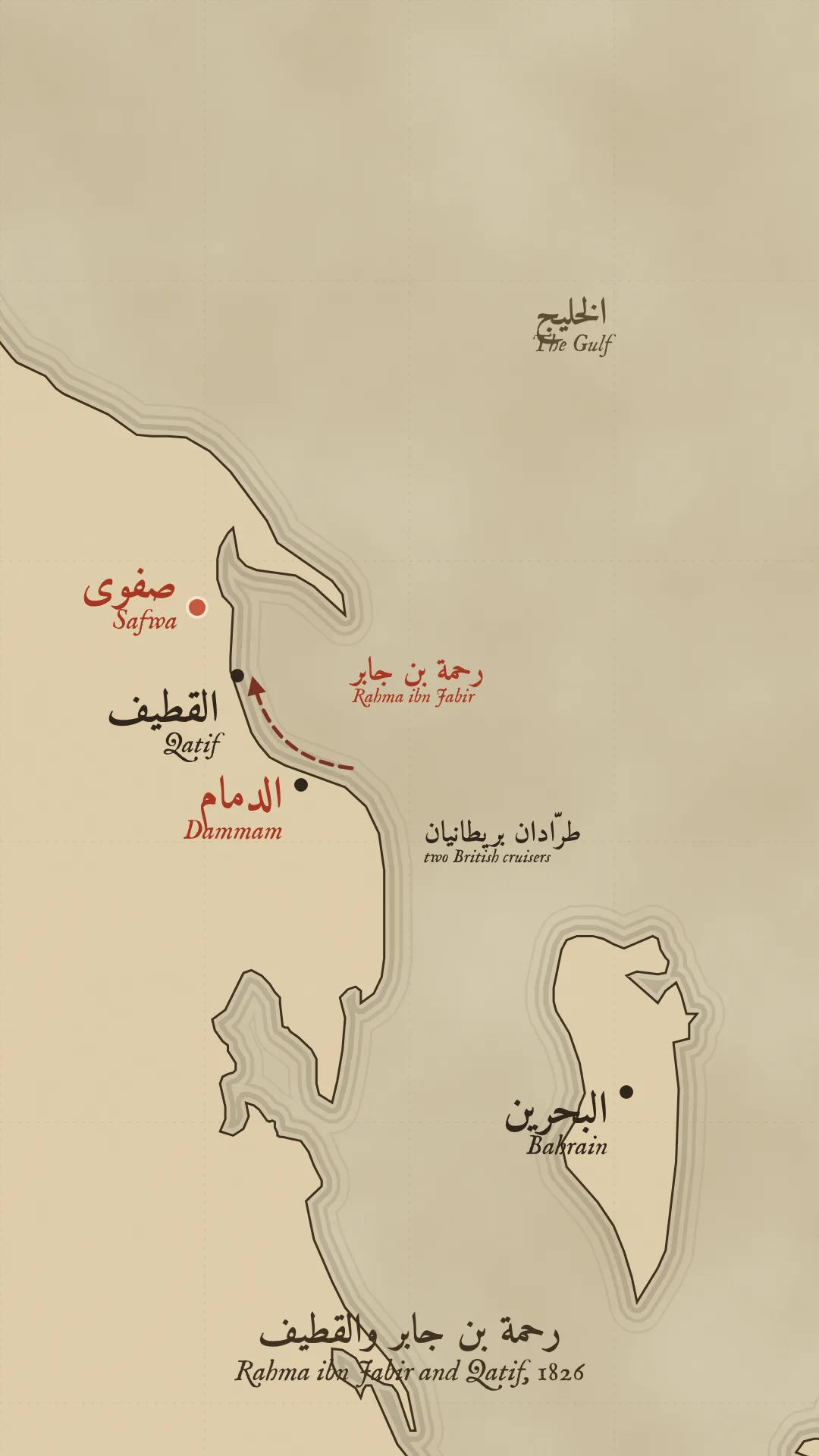
رحمة بن جابر، المشتهر بالقرصنة في الخليج العربي والمتمركز في الدمام، وجّه غاراته البحرية إلى أهل القطيف، ليضرب تجارتهم ويفرض عليهم الجزية.
خريطة: رحمة بن جابر يغير على القطيف من الدمام، وطرّادان بريطانيان أمام الدمام، والبحرين إلى الجنوب الشرقيخريطة رُسمت لصفوانيبيديا
ولم يكن لدى الأمير الخالدي ماجد بن عريعر قوة بحرية تردعه، فطلب المساعدة من آل خليفة حكام البحرين. ولما امتدت قرصنة رحمة إلى أهل البحرين، طلب ماجد المساعدة من بريطانيا، فأرسلت طرّادين أمام الدمام.
ووقعت معركة عنيفة قرب القطيف بدعم من البحرين وبريطانيا، فهُزم رحمة بن جابر وقُتل فيها، وصارت قلعة الدمام، التي قيل إنه بناها، تابعة للإمارة الخالدية.
وبعدها توثقت علاقات ماجد بالبحرين، وزادت علاقاته التجارية والسياسية مع البريطانيين.
13البحرين في جغرافيا ابن سعيد
وصف الجغرافي الأندلسي ابن سعيد المغربي (1213–1286م) الإقليم بعد سنة 1260م. فذكر هجر، قاعدة بلاد البحرين في القديم، على ساحل البحر، وقال إن تمرها يُضرب به المثل في الكثرة. وذكر «مدينة البحرين»، قاعدة البلاد المشهورة على بحر فارس، وفسّر اسمها بأن البحر يدخل في البر من جانبيها.
وفي شرقيها جزيرة أوال، مستطيلة ضيقة، أعرض ما فيها عشرة أميال، وبينها وبين البحرين نحو ستين ميلاً. فكان اسم البحرين عنده لمدينة وبلاد على البر، واسم أوال للجزيرة، وذلك قبل زيارة ابن بطوطة بنحو سبعين عاماً.
14البحرين عند ابن عنبة
كتب النسّابة ابن عنبة (ت. 1425م) كتابه «الفصول الفخرية» بالفارسية في أنساب العرب وآل أبي طالب، ونُقل إلى العربية سنة 2021م. وترد فيه أخبار قليلة عن إقليم البحرين.
ففي ذكر ملوك الحيرة يقول إن المنذر بن النعمان بن المنذر، الذي يُقال له «الغَرور»، تولّى المُلك في البحرين فترة قصيرة، وذلك بعد انتهاء ملك المناذرة. ويذكر أن قدامة بن مظعون، من قريش، كان والي البحرين.
ويصف منازل القبائل في عصره، أي أوائل القرن الخامس عشر الميلادي. فيقول إن بقية عبد القيس «في بلاد الأحساء الآن»، وإن من بني شيبان «جمعاً في القطيف وباديتها»، وإن نسل ربيعة بن عقيل، من عامر بن ربيعة، «في أرض البصرة والقطيف».
The name al-Bahrayn once covered a wide region, not just the islands. From the rise of Islam to the early 16th century, the province of al-Bahrayn ran along the Gulf coast from Basra to the Strait of Hormuz, taking in al-Ahsa, Qatif, Safwa and the islands of Awal. The Dilmun civilisation grew up on this coast, and one state after another ruled it, from the Persians to the Qarmatians, the Uyunids and the Jabrids. In time the name narrowed until it meant only the islands.
Until the late Middle Ages, the name Bahrain meant a region larger than the islands. From the rise of Islam in the 7th century to the early 16th century it covered the Gulf coast from Basra to the Strait of Hormuz, and was known as the province of al-Bahrayn. Its Arab people were said to descend from the tribe of ʿAbd al-Qays.
One early sign of the narrower meaning comes from Ibn Battuta, who visited Qatif around 1331 and used the name Bahrain for the islands of Awal. When exactly the name came to mean only the islands is not known.
For more than two thousand years, the Bronze Age civilisation of Dilmun flourished on the shores of the Gulf, from the islands of Bahrain to Tarut and the coast of eastern Arabia, just across the bay from Safwa.
Relief of Enki and Gilgamesh, Bahrain National MuseumBahrain National Museum – Relief of Enki and Gilgamesh
Tarut island was one of Dilmun's major settlements. Danish archaeologists found pottery there from about 3000 BC, and tombs from about 2000 BC. Carved stone vessels decorated with animals and sea scenes have been found at Tell Rafiʿah.
Dilmun sat on the trade route between Mesopotamia, Oman and the Indus valley. Its ships carried copper, timber, pearls and perfumes, and around 2300 BC a Sumerian king recorded that “the ships of Dilmun brought him wood as tribute.” Its golden age ran from about 2200 to 1600 BC.
In Sumerian myth, Dilmun is a pure land of sweet water, where there is no sickness and no old age. Some see in it the image of a lost paradise.
Later it came under Assyrian and Babylonian rule. After about 538 BC the name fell out of use. No source yet found names Safwa itself in the Dilmun period.
The relief shown here, in the Bahrain National Museum, depicts Enki, the Sumerian god of fresh water whose myths are set in Dilmun, beside the hero Gilgamesh.
3Tylos and the Persian empires
After Dilmun, the islands became part of the Achaemenid Persian empire, whose navy had bases there, in Oman and in Yemen. The Greeks knew them as Tylos, a name thought to come from Dilmun (Tilmun). Nearchus, Alexander's admiral, visited and described its cotton plantations. Tylos took on Greek ways: its upper classes spoke Greek, and its coins showed a seated Zeus.
By about 130 BC the Parthians controlled the Gulf and kept garrisons on its southern coast. Ardashir I, founder of the Sasanian dynasty, then defeated the Parthian governor and appointed his son Shapur I, who built Batan Ardashir. Under the Sasanians the region was divided into three districts: Haggar (today's al-Hofuf), Batan Ardashir (today's Qatif region) and Mishmahig (Bahrain island).
4The Tanukh
Arab historical tradition, starting with the Kufan historian Ibn al-Kalbi (d. 819), says that the Tanukh were a confederation of migrant Arab tribes formed in the region of al-Bahrayn, and that the name comes from tanawwukh, “staying put”, because the tribes swore to settle there together and stand by one another. The stories name clans of Quḍāʿa and al-Azd among them, and make Malik ibn Fahm al-Azdi their first king.
Modern historians doubt the details of this migration, but generally accept that the Tanukh were in eastern Arabia in the 2nd century AD. The Greek geographer Ptolemy placed them there in his Geography around AD 150, while Pliny's earlier Natural History of AD 77 does not. The coast of Qatif and Safwa was part of the region where this confederation took shape.
From al-Bahrayn the Tanukh moved to the middle Euphrates valley in Iraq, perhaps before AD 220. In the 3rd century their king was Jadhima al-Abrash, named as king of Tanukh in an inscription at Umm al-Jimal in Jordan. The Lakhmid kings of al-Hira came from this confederation; one of them, Imruʾ al-Qays ibn ʿAmr, died in AD 328, the date on his Namara inscription. In his reign, around AD 309, tribes of al-Bahrayn, ʿAbd al-Qays among them, raided the Persian coasts while the Sasanians were weak.
Sources add that al-Bahrayn remained part of the realm of the kings of al-Hira, with Awal as its main town. ʿAbd al-Qays, Rabiʿa and Iyad lived there, and its local rulers came from these tribes in turn. Ibn Khaldun records that Imruʾ al-Qays ibn ʿAmr was the first of the Nasrid kings of al-Hira to become a Christian. The traditions differ on the dates of the early Tanukh kings; some king lists place Malik ibn Fahm's reign between 169 and 231.
5The Himyarite raid on Qatif
Around AD 300 the armies of Yemen reached this coast too. A Sabaean inscription in the musnad script, which scholars call Sharaf al-Din 42, records that King Shammar Yuharʿish of Saba and Dhu Raydan ordered his forces to raid the land of Malik, king of the Asad. They advanced there and then turned towards the land of “Qtwf”, which Jawad ʿAli reads as Qatif, as far as a place called Kawkaban, and on to “the king of Persia and the land of Tanukh”.
The text says that the land of Tanukh, which belonged to Persia, was under two kingdoms, one called “Qtw” and the other “Kwkb”, and that Shammar's Bedouin troops dealt them heavy losses. Two of Shammar's commanders, of Rayman dhu Hazfar and of ʿAnan, had the inscription made after they came home safe and laden with spoils, and one of them gave thanks to the gods at Najran.
Jawad ʿAli takes the land of Tanukh to be today's al-Ahsa, then home to the Tanukh tribes, and sees the inscription as support for the Arab historians' reports that Shammar Yuharʿish raided the lands of Persia. A raid on al-Ahsa and the Gulf coast, he adds, would have been hard without good relations with the Bedouin of Najd, above all Kinda, who lived in al-Aflaj and al-Kharj.
In the 3rd and 4th centuries, the coast of al-Khatt, where Safwa lies, was caught between two powers: the Sasanian empire of Persia across the Gulf, and the kingdom of Himyar in Yemen.
Map: Persian and Himyarite campaigns on the coast of al-Khattmap drawn for Safwanipedia
Ardashir I, founder of the Sasanian dynasty, ruled from about 224 to 242 and pushed Persian rule onto the Arabian shore of the Gulf. Later Arab historians say he founded a town at al-Khatt.
About a century later, Shapur II led a campaign against the Arab tribes. In the account of al-Tabari, he crossed the sea, landed at al-Khatt, killed many of the people of al-Bahrayn and carried the slaughter on to Hajar. The ʿAbd al-Qays, Tamim and Bakr ibn Waʾil were among the tribes he struck.
From the south came Himyar. The historian Jawad ʿAli writes that between about 285 and 310, Arabs of Himyar reached Qatif and took control of it, in the reign of the Himyarite king Shammar Yuharʿish.
No source from this period names Safwa. These wars shaped the coast it belonged to.
The map, drawn for this page, shows the Persian advance across the Gulf and the Himyarite advance from the south.
7Arabia on the eve of Islam
Around AD 500 Arabia lay between two great empires: the Byzantines to the north-west and the Sasanian Persians to the north-east. Each had Arab allies: the Ghassanids in the Syrian desert on the Byzantine side, and the Lakhmids of al-Hira in Iraq on the Persian side. Lakhmid authority reached their Arab allies in al-Bahrayn and al-Yamama, so the coast of Qatif and Safwa lay within the Persian sphere.
Arabia around AD 500; borders are approximate
In central Arabia the kingdom of Kinda ruled the Maʿadd tribes of Najd from about 450 to 550, backed by the Himyarite kingdom of Yemen. Himyar remained the power of the south until it fell to the Ethiopians of Aksum around 525. In Oman the al-Julanda family of the Azd ruled, with Persian garrisons in the country. Mecca and Yathrib in the Hejaz belonged to none of these kingdoms.
The Lakhmid kingdom ended in 602, when Khosrow II deposed its last king, al-Nuʿman III; Arab tribes then defeated a Persian army at the battle of Dhi Qar, and Persian control over eastern Arabia weakened. When Islam appeared, al-Mundhir ibn Sawa al-Tamimi governed al-Bahrayn on behalf of the Persians.
8Religion before Islam
From the Sasanian period in the 4th century until the 8th, many of the region's people followed Nestorian Christianity, the Church of the East; ruins of a temple from this time survive at Samahij (Mishmahig). Before Islam its people are described as Arabs, some of them Christian, Aramaic-speaking farmers, Persian Zoroastrians and a few Jews, and Syriac and Middle Persian were among its languages. The region embraced Islam in 629, the seventh year of the Hijra.
During the civil wars of the 680s, a Kharijite movement from al-Yamama, in central Arabia, seized al-Bahrayn. In about 687 its leader, Najda ibn ʿAmir al-Hanafi, entered Qatif, plundered it and seized its wealth.
Map: the Kharijite advance from al-Yamama to Qatifmap drawn for Safwanipedia
The Khawarij were a movement that broke with both sides in the early disputes over who should lead the Muslims. Najda's own followers later turned on him, and he was killed by Abu Fudayk ʿAbd Allah ibn Thawr, who took his place and ruled from al-Bahrayn.
The Umayyad caliph ʿAbd al-Malik sent armies against him. After earlier defeats, an army under ʿUmar ibn ʿUbayd Allah ibn Maʿmar defeated and killed Abu Fudayk in about 693, and Umayyad rule returned to the region.
A modern history by ʿAli al-Darura says that ʿAbd al-Malik then had many springs of the region buried under huge rocks, to ruin the farms of those who had backed the revolt. This page has not yet traced an early source for the story, and it does not name Safwa's springs.
According to Ibn al-Athir, a man arrived in Hajar, in the Bahrain region that included Qatif, from the Abbasid capital Samarra. He called himself ʿAli ibn Muhammad and claimed descent from ʿAli ibn Abi Talib. Some said he was of the ʿAbd al-Qays, others that he was of Persian origin.
At first many followed him. Out of sympathy for the family of the Prophet, the people of the region paid him their taxes and fought the governor's men on his behalf. But his claims were soon exposed, and they turned against him.
He then moved to al-Ahsa and stayed with the Banu al-Shammas, a clan of the Banu Saʿd ibn Tamim. Some men of the region went with him, among them Yahya ibn Muhammad al-Azraq al-Bahrani and Sulayman ibn Jamiʿ, who later led his army.
He moved into the desert among the tribes, gathering followers there and raiding his enemies. The ʿAbd al-Qays, among them the clan of Muharib from the Banu Hafsa, Safwa's ancient people, together with the Banu ʿAmir, drove him out of the Bahrain region after a series of defeats.
He went on to Basra, arriving in 868, where he called on the Zanj, enslaved East Africans working the salt marshes of southern Iraq, to rise against their masters. Their revolt shook the Abbasid state for some fifteen years, until it was crushed in 883. History remembers him as the Master of the Zanj.
11Awal after the Jabrids
After the fall of the Jabrids, the history of the islands parted from that of the coast. The Portuguese took Bahrain in 1521 and held it until a popular uprising drove them out in 1602. Safavid Persia then ruled the islands from 1602 until Oman invaded in 1717, and Nader Shah's forces retook them in 1736. In 1783 the Bani ʿUtbah, led by Ahmed al-Fateh, the first Al Khalifa ruler, took Bahrain, and in 1820 the Al Khalifa signed a treaty with Britain.
Rahma ibn Jabir, a sea raider based at Dammam, turned his attacks on the people of Qatif, trying to ruin their trade and force them to pay him tribute.
Map: Rahma ibn Jabir raids Qatif from Dammam; British cruisers off Dammam; Bahrain to the south-eastmap drawn for Safwanipedia
The Bani Khalid emir Majid ibn ʿUrayʿir had no fleet to stop him. He asked the Al Khalifa rulers of Bahrain for help, and when Rahma's raids reached Bahrain too, he turned to Britain, which sent two cruisers to lie off Dammam.
A fierce battle followed near Qatif, with support from Bahrain and Britain. Rahma ibn Jabir was defeated and died in the fighting, and the fort of Dammam, which he is said to have built, passed to the Bani Khalid.
Afterwards Majid's ties with Bahrain grew closer, along with trade and political links with the British.
13Al-Bahrayn in Ibn Saʿid
The Andalusian geographer Ibn Saʿid al-Maghribi (1213–1286) described the region after 1260. He named Hajar, the old capital of the land of al-Bahrayn, on the coast, and wrote that its dates were a byword for plenty. He also named “the city of al-Bahrayn”, the well-known capital of the land on the Sea of Fars (the Gulf), and explained the name by the sea entering the land on both sides of it.
East of it lay the island of Awal, long and narrow, at most ten miles wide and about sixty miles away. For him, al-Bahrayn was the name of a city and a land on the mainland, and Awal the name of the island, some seventy years before Ibn Battuta's visit.
14Al-Bahrayn in Ibn ʿInaba
The genealogist Ibn ʿInaba (d. 1425) wrote al-Fusul al-Fakhriyya in Persian, on the lineages of the Arabs and of the family of Abu Talib; it was translated into Arabic in 2021. It has a few notes on the region of al-Bahrayn.
In his list of the kings of al-Hira, he writes that al-Mundhir son of al-Nuʿman son of al-Mundhir, known as “al-Gharur”, held kingship in al-Bahrayn for a short time, after the Lakhmid kingdom had ended. He also notes that Qudama ibn Maẓʿun, of Quraysh, was governor of al-Bahrayn.
He also describes where the tribes lived in his own day, the early 15th century. The rest of the ʿAbd al-Qays, he writes, were “now in the land of al-Ahsa”; a group of the Banu Shayban lived “in Qatif and its desert”; and the descendants of Rabiʿa ibn ʿUqayl, through ʿAmir ibn Rabiʿa, lived “in the land of Basra and Qatif”.
ʿAli ibn Ibrahim al-Darura – Tarikh al-Ihtilal al-Burtughali lil-Qatif (History of the Portuguese Occupation of Qatif), Cultural Foundation, Abu Dhabi, 2001

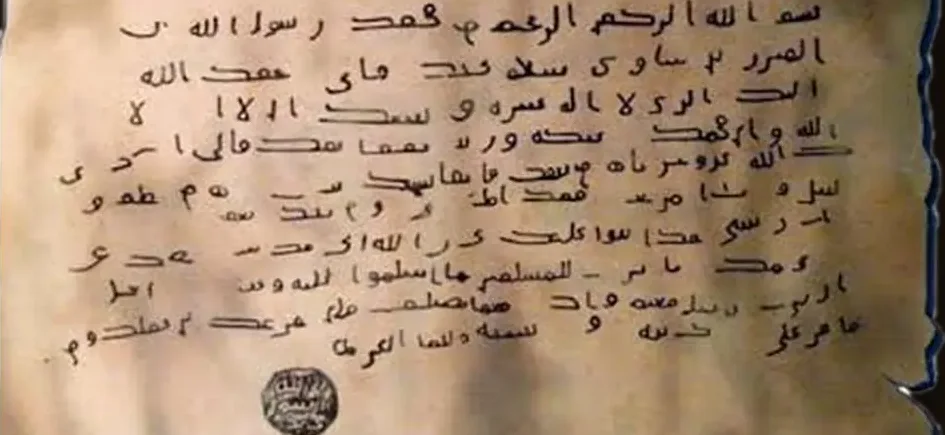 عبد القيسالقبيلة العربية التي استوطنت إقليم البحرين قبل الإسلام.
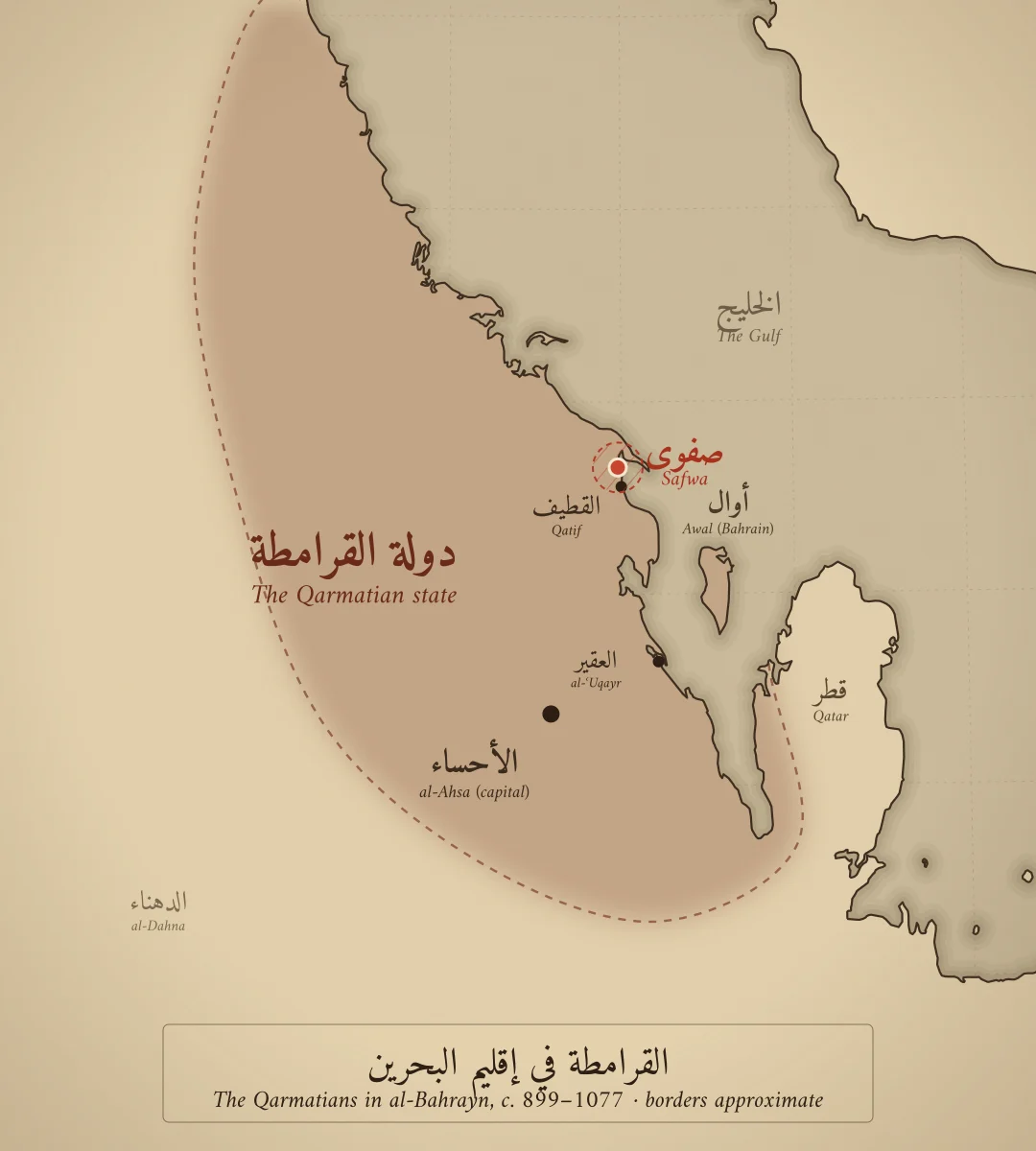 القرامطةدولة حكمت شرق الجزيرة العربية، ومنها القطيف، قرابة قرنين.
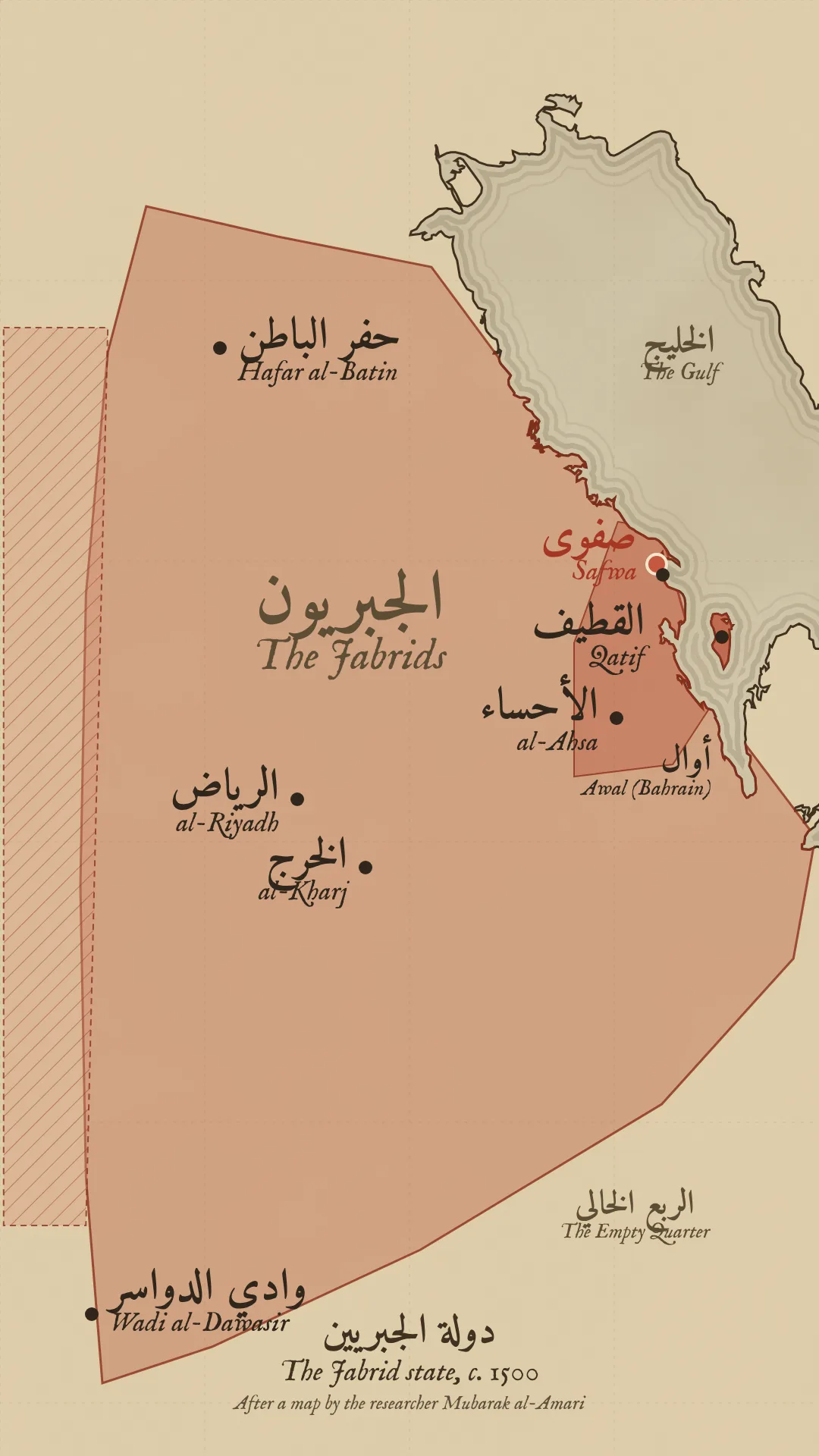 الجبريونأسرة عربية من بني عقيل حكمت شرق الجزيرة العربية حتى قدوم البرتغاليين.
 اسم صفوىالصفا، وصفوان، وصفواء: كيف ورد اسم البلدة في الشعر والمعاجم.
 واحة القطيفالواحة الخضراء التي تقع صفوى في طرفها الشمالي: أسماؤها وأرضها ومناخها.