الخرافات والشخصيات الخياليةFolk tales and creatures
Folk tales and creaturesالخرافات والشخصيات الخيالية
عبد العين وأبو مغوي والطنطل وأم حمار: كائنات الحكايات الشعبية في واحة القطيف.ʿAbd al-ʿAin, Abu Mughawi, al-Tantal and Umm Himar: the creatures of folk tales in the Qatif oasis.
عرفت واحة القطيف، ومنها صفوى، حكايات شعبية عن كائنات خيالية تسكن العيون والبحر والنخيل والبيوت، توارثها الناس جيلاً بعد جيل. وكان كثير منها حكايات تخويف ترويها الأمهات والجدات لحماية الصغار: من الغرق في العيون، ومن الخروج في الليل أو في القايلة. وسجّل المؤرخ محمد سعيد المسلم بعضها، ورأى أن مصدرها الخوف في الأماكن الموحشة، وأنها صارت مثاراً للتندّر بعد انتشار التعليم.
كانت العيون منتشرة في أنحاء الواحة، وكان غرق الصغار فيها من الحوادث الشائعة حين يذهبون إليها ويسبحون دون الكبار، لا لجهلهم بالسباحة وحده، بل لقوة اندفاع الماء في العين. فكان الآباء والأمهات يحاولون أن يجعلوا هذه الحكايات كالعقيدة عند أبنائهم ليحفظوهم من الخطر. وعلى النحو نفسه كان يقال للطفل: لا تخرج في الليل حتى لا تأخذك «أم الخضر والليف».
وتروي نساء من القطيف في تحقيق نشرته «جهينة الإخبارية» سنة 2013م كيف كانت الجدّات يخوّفن الصغار بشخصيات خيالية حتى يناموا، وكيف كان أحد الأخوال يلبس عباءة ويضع شيئاً فوق رأسه ليبدو طويلاً ثم يطفئ الأنوار، فيهرب الأطفال إلى أمهاتهم. ورأت بعضهن أن أطفال اليوم لم تعد تؤثر فيهم هذه الأساليب، بعد أن اعتادوا على أفلام الرعب ورسوم الوحوش.
2كائنات العيون
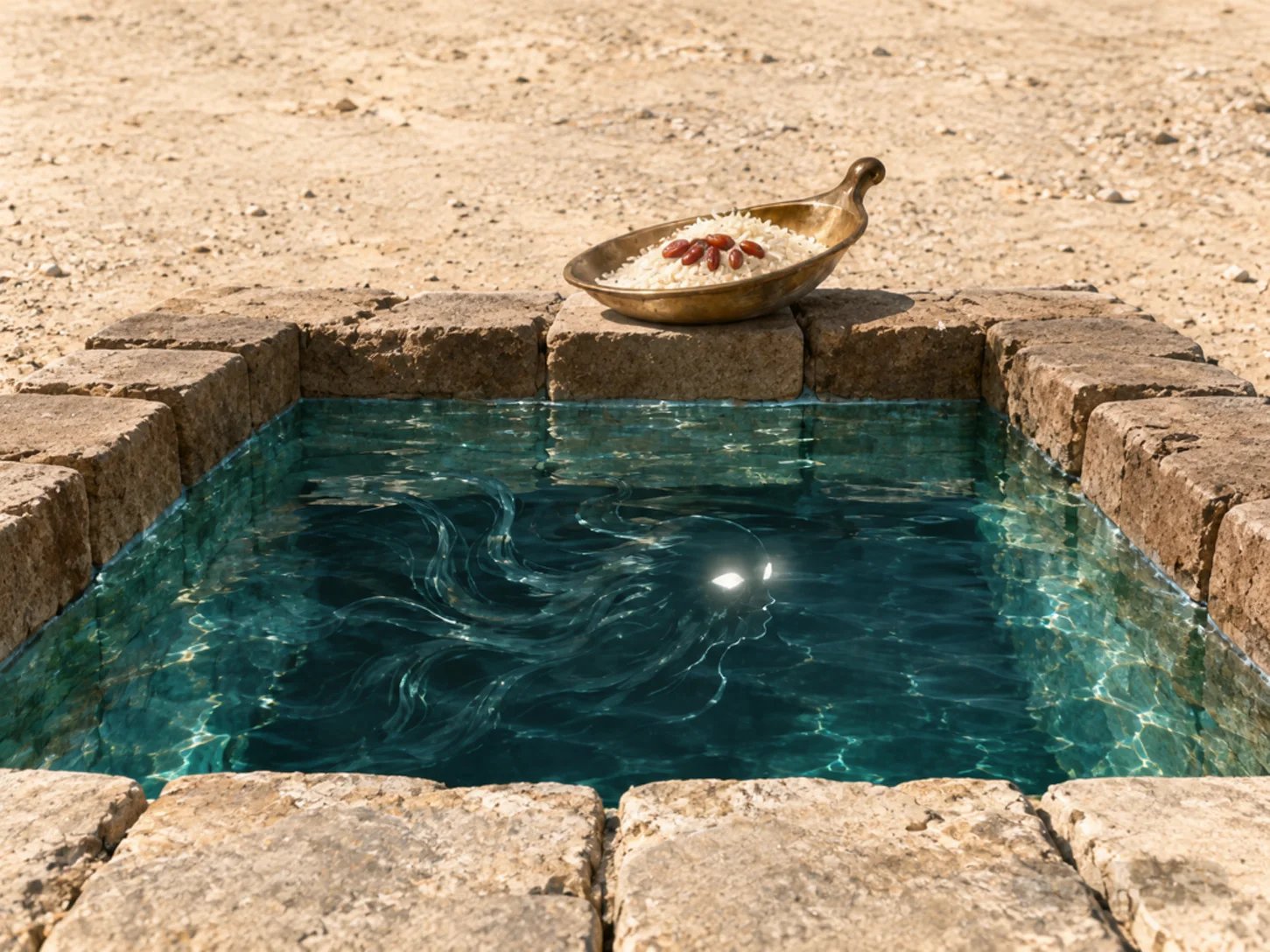
عبد العين: كان العامة يزعمون أن في كل عين جنّياً يسكن «التنّور»، وهو موضع نبع الماء من تحت الأرض، وأنه قد يسحب أحد السبّاحين إلى مسكنه فيغرقه، بل إن بعض العيون تأخذ واحداً كل سنة. ولهذا كان سكان بعض المواضع يقدّمون له بين حين وآخر الأرز واللحم، أو الأرز بالسكر والزبيب، ليتركهم في سلام.
عبد العين في عمق العين، وطبق الأرز والزبيب على الدرجرسم تخيّلي: صفوانيبيديا، 2026م
دعيدعة العين: مخلوق يُعتقد أنه في أعماق العين، يسحب الناس إلى داخلها ويخنقهم. واختلف السبّاحون في صورته: فمنهم من رآه طائراً أبيض يطير داخل الماء، ومنهم من قال فأر خانق، أو شبح يمسك الغريق من رقبته. وكانوا يظنون أيضاً أن في أعماق العين ذهباً، فيتنافس الأولاد في الغوص إلى أطول مدة. ويتداول أهل تاروت قصة فتاة غرقت في عين العودة وهي تمسك بيد أخيها الصغير، فنجا أخوها، ونُسب غرقها إلى دعيدعة العين.
أم حمار: امرأة لها وجه إنسان ورجلا حمار، وقيل إنها تظهر في صورة رجل فتقود الناس ليلاً إلى العين فتغرقهم. وتُسمّى أيضاً «حمارة القايلة» لأنها لا تظهر إلا في القايلة، وقت اشتداد الحر في الظهيرة، فكانت الأمهات يمنعن بها أطفالهن من الخروج في ذلك الوقت.
3كائنات البحر
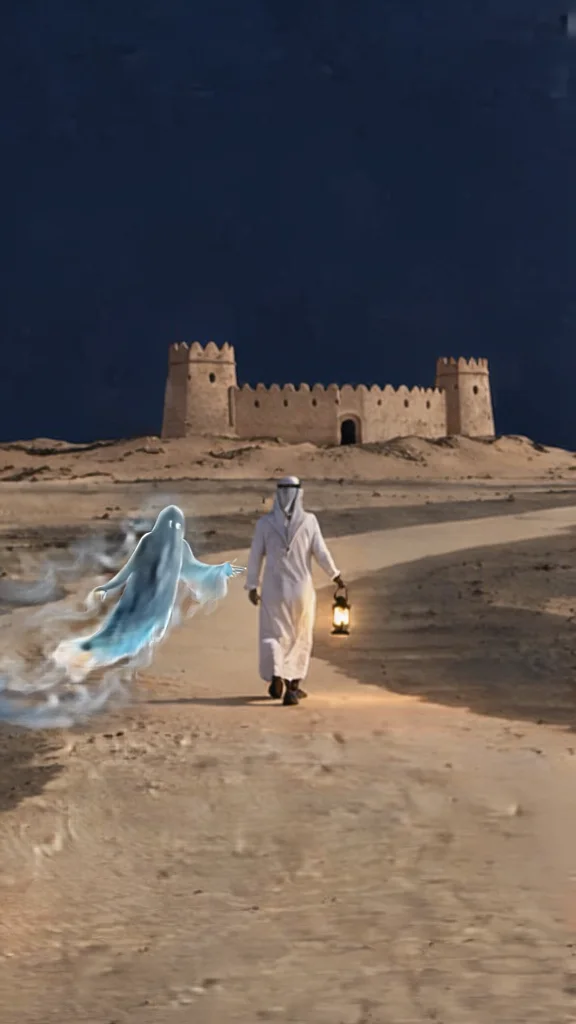
أبو مغوي: يقول المسلم إن أطرف ما يُحكى عنه عفريت من جن البحر يُسمع صوته ولا يُرى، يقف في وسط «مقطع تاروت»، وهو الطريق الرملي الذي كان يُسلك وقت الجزر بين القطيف وتاروت، فيقول للسائر: خذ يميناً أو شمالاً، فإذا أطاعه وانحرف عن الطريق وقع في الطين اللزج فهلك. ويُروى أيضاً أنه ينادي السمّاكين الذين يصطادون ليلاً بأصوات زملائهم، زاعماً أن الصيد عنده وفير، حتى يدخلهم الماء العميق فيغرقهم، ومن هنا جاء اسمه من «الإغواء».
أبو مغوي يغري السائر على مقطع تاروت بترك الطريقرسم تخيّلي: صفوانيبيديا، 2026م
أبو دربارة: يذكر المسلم أنه يتراءى لأهل البحر كالغريق الذي يستنجد، فإذا اقترب منه أحد لينقذه أكله، وإن تركه اختفى في الماء.
4كائنات الليل والنخيل
الخبابة: امرأة طويلة متّشحة بالسواد من رأسها إلى قدميها، تخطف الصغار وتغوي الرجال، وتظهر في المزارع الكثيفة، وكانت الأمهات يخوّفن بها أولادهن ليمنعنهم من الخروج ليلاً.
السعلوة: امرأة طويلة الشعر ممشوقة القوام، تظهر للرجال ليلاً فتسحرهم حتى تبلغ بهم مكاناً منعزلاً فتقتلهم، وقيل إنها تُرى من بعيد كأنها نار مشتعلة. ويصفها المسلم، باسم «السعلو»، بصورة عملاق أسود له أنياب طويلة يخطف الأولاد الصغار. ويذكر صادق علي القطري (2025م) أنها كانت تقلّد صوت الأم أو الأخت أو القريبة، فتنادي الطفل باسمه عند باب البيت حتى يخرج إليها، وأنها قد تظهر في صورة امرأة جميلة ثم تكشف عن وجهها الحقيقي بشعر متشابك وأنياب طويلة. ورأى أن حكايتها كانت تعمل عمل حارس ليلي، تُبعد الصغار عن الآبار المكشوفة والطرق المظلمة بين القرى.
الدعيدع: يقول المسلم إنه يتمثّل للماشي في الظلام كالجمر الملقى على الطريق، فإذا اقترب منه انتقل إلى موضع آخر. وفي روايات أخرى هو جنّي يظهر في صورة رجل في المقابر والنخيل، ويطلع للفلاحين عند حلول الليل. ويُسمّى باسمه أيضاً نوع قديم من الرطب طويل أحمر يميل طعمه إلى المرارة.
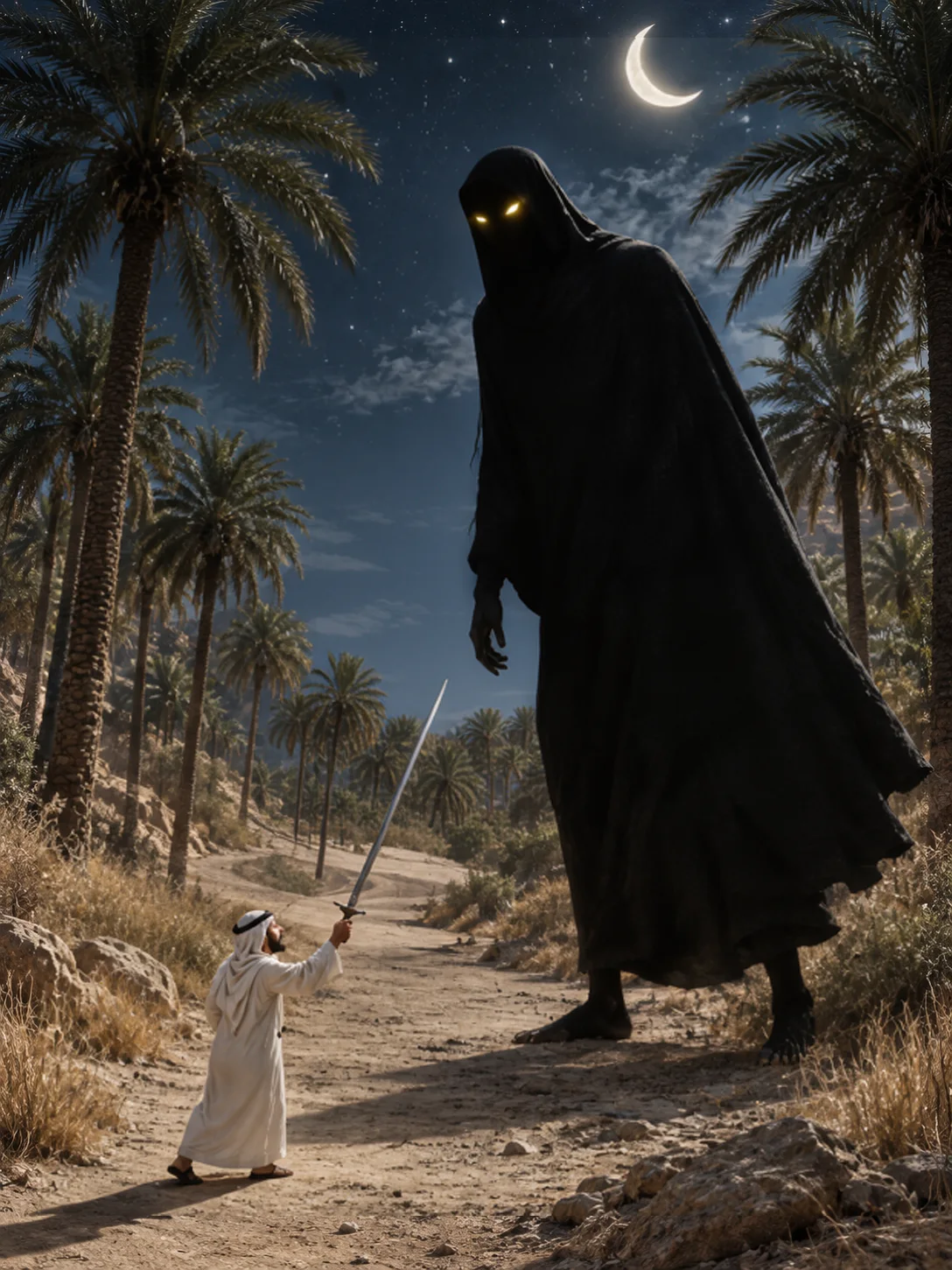
الطنطل: جنّي على صورة رجل طويل جداً، قيل إنه يبلغ طول النخلة العالية، ولهذا يُسمّى كل طويل «طنطلاً». ويتمثّل للسائرين في الليل فيرعبهم، والحيلة في دفعه أن يحمل الساري «مسلّة»، وهي إبرة طويلة ضخمة تُخاط بها أكياس الأرز، فإذا رآه صاح: «هات المسلّة»، فيهرب. ويُعرف الطنطل أيضاً في أهوار جنوب العراق، حيث يُروى أنه يتشكّل في صورة رجل أو امرأة أو طفل أو قطّ أو كلب، وأنه في صورته الحقيقية عملاق له عينا قطّ وأنياب طويلة، يحرس كنوزاً مدفونة لمملكتين قديمتين.
أم سعفة: يزعمون أنها تطير على سعفة نخل بعد منتصف الليل في الصيف، فوق السطوح، وتُسمع خشخشة السعفة.
أم الخضر والليف: هي النخلة نفسها، استعملت الأمهات والجدّات اسمها لإخافة الأطفال حتى يناموا، وإن أوهمنهم أنها جنّية.
كان يُعتقد أن بعض الجن يسكن البيوت مع أهلها. فـالراعية، وتُسمّى أيضاً العمار، امرأة من الجن تظهر لأهل البيت بين حين وآخر، وتصدر أصواتاً أو تتشكّل في صور حيوانات. وكانت الأمهات يسمّين جنّ البيوت الصالحين، فإذا سقط شيء من الطعام أثناء الطبخ نهين الأطفال عن أخذه وقلن: دعوه للصالحين، استرضاءً لهم.
أما الجاثوم، ويُسمّى في بعض المناطق «أبو ركيب» و«العثيون»، فجنّي يُقال إنه يجلس على صدر النائم ويشدّ لسانه حتى يكاد يخنقه. ويقول بعض الرواة إنه جنّي صغير يحب العبث بمنامات الناس ونادراً ما يضرّ، ويرى الباحثون أنه ليس إلا كابوساً سببه الإكثار من الأكل قبل النوم.
ويذكر المسلم أن ساباطاً في قلعة القطيف، في محلّة الزريب، يُعرف بـ«ساباط الظلمى»، كان يُقال إنه مسكن للجن. ومن هذه المعتقدات نشأت عادات منها «العذرة»، وهي أرز مطبوخ بالسكر يُفرَّق في الزوايا ومنعطفات الطرق إرضاءً للجن، إلى جانب الحُجُب والتمائم التي كانت تُعلَّق على الأطفال والنساء والرجال لتقيهم الأمراض.
6حكايات وأمثال
«ركبة بركبة يا ابن عيد، ماكو زعل»: مثل يُضرب حين يكون الجزاء من جنس العمل. وأصله حكاية سمّاك اسمه ابن عيد خرج إلى البحر مبكراً، فوجد حماراً ظنّه لأحد أهل قريته، فركبه إلى البحر وربطه هناك. ثم اصطاد سمكة كبيرة واكتفى بها، فلما عاد لم يجد الحمار، فحمل صيده على كتفه وعاد حزيناً. وحين بلغ الموضع الذي أخذ منه الحمار، انتفضت السمكة وسقطت على الأرض، وصارت رجلاً قال له: حملتك من هنا إلى البحر، وحملتني من البحر إلى هنا، فركبة بركبة، ثم اختفى.
الغزيل: حكاية كانت تُروى للصغار في مجالس المساء، لا للتخويف بل للتسلية. يظهر فيها الغزيل، وهو كائن خيالي، للطفل فجأة، فيخبره أن أباه مات، فيسكت الطفل ثم يبكي. ثم يخبره أن أمه ماتت أيضاً، فيضحك الطفل واثقاً ويقول إنها لا تموت لأنه ما زال يرضع منها. ويرى حسن محمد آل ناصر (2026م)، الذي سمعها في طفولته، أنها كانت تعلّم الصغار مواجهة الفكرة المخيفة بهدوء، فينقلب الخوف إلى ابتسامة.
«خذها يا إبريقوه»: حكاية امرأة كانت تخاف الذهاب إلى الحمّام ليلاً قبل الكهرباء، فطلبت من زوجها أن يرافقها. فلما دخلت أراد أن يمازحها فصاح: «خذها يا إبريقوه»، يقصد إبريق الماء. فلما تأخرت دخل فلم يجدها. وتقول الحكاية إنهم أحضروا رجلاً يسخّر الجن، فقال الجنّي إنه أخذها بأمر زوجها، لأنه ناداه باسمه: إبريقوه.
7نظرة المسلم
رأى المسلم أن العلم يُرجع هذه الحكايات إلى عامل نفسي مصدره الخوف، فالإنسان في المكان الموحش يستولي عليه الرعب، فتتجسّد أمامه الأشباح ويسمع أصواتاً لا وجود لها، مما حُكي له منذ الصغر. ووجد هذا التفسير قريباً مما كتبه المؤرخ المسعودي (ت. 956م) في «مروج الذهب» عن المنفرد في القفار، الذي تداخله الظنون فتُصوَّر له الأصوات والأشخاص.
وذكر أن هذه الأوهام كانت تسيطر على عقول الأجيال السابقة، ثم صارت في عصره، بعد انتشار التعليم، مثاراً للتندّر، وأن كثيراً من الجيل الجديد لم يعد يعرف شيئاً منها.
The Qatif oasis, Safwa included, had folk tales about imaginary creatures living in the springs, the sea, the palm groves and the houses, handed down from one generation to the next. Many were cautionary tales told by mothers and grandmothers to keep children safe: from drowning in the springs, and from going out at night or in the midday heat. The historian Muhammad Saʿid al-Muslim recorded some of them, traced them to the fear people feel in lonely places, and noted that once schooling spread they became something to joke about.
Springs were spread all over the oasis, and children drowning in them was a common accident when they went to swim without adults, not only because they could not swim, but because of the strong rush of water inside a spring. Parents tried to make these tales almost an article of faith for their children, to keep them from harm. In the same way a child was told not to go out at night, or “Umm al-Khudr wal-Lif” would take him.
In a 2013 report by Juhayna News, women from Qatif recalled grandmothers frightening children to sleep with imaginary figures, and an uncle who would put on a cloak, balance something on his head to look tall and switch off the lights, sending the children running to their mothers. Some felt that children today are no longer affected, having grown used to horror films and cartoon monsters.
2Creatures of the springs
ʿAbd al-ʿAin (“servant of the spring”): people held that every spring had a jinn living in its tannur, the place where the water wells up from under the ground, who might drag a swimmer down to his home and drown him; some springs were said to take one person every year. So the people of some places would now and then offer him rice and meat, or rice with sugar and raisins, to leave them in peace.
ʿAbd al-ʿAin in the depths of a spring, with a dish of rice and raisins left on the stepImagined illustration: Safwanipedia, 2026
Duʿaydiʿat al-ʿAin: a creature believed to live in the depths of a spring, pulling people down and smothering them. Swimmers described it differently: a white bird flying under water, a choking rat, or a ghost that seized the drowning by the neck. People also believed there was gold at the bottom of the springs, so boys competed to stay under the longest. On Tarut island a story is still told of a girl who drowned in ʿAin al-ʿAwda while holding her little brother's hand; her brother survived, and her death was put down to the Duʿaydiʿa.
Umm Himar (“the donkey woman”): a woman with a human face and a donkey's legs, said also to appear as a man who led people to a spring at night and drowned them. She was also called Himarat al-Qayla because she came out only at the qayla, the heat of midday, and mothers used her to keep children indoors at that hour.
3Creatures of the sea
Abu Mughawi (“the one who leads astray”): al-Muslim calls him the most curious of all, a sea jinn heard but never seen, who stood in the middle of the Maqtaʿ of Tarut, the sandy track walked at low tide between Qatif and Tarut, and told the traveller to turn right or left; whoever obeyed left the track, sank into the sticky mud and died. He was also said to call to fishermen at night in their friends' voices, promising a rich catch, until he led them into deep water and drowned them, which is how he got his name.
Abu Mughawi luring a traveller off the Maqtaʿ track to TarutImagined illustration: Safwanipedia, 2026
Abu Darbara: al-Muslim records that he appeared to seafarers as a drowning man crying for help; whoever came close to save him was eaten, and if left alone he vanished into the water.
4Creatures of the night and the palm groves
al-Khabbaba: a tall woman wrapped in black from head to foot, who snatched children and lured men and appeared in thick plantations; mothers used her to keep their sons from going out at night.
al-Siʿluwa: a long-haired, slender woman who appeared to men at night and bewitched them until she led them somewhere lonely and killed them; she was also said to be seen from afar like a burning fire. Al-Muslim, calling her al-Siʿlu, describes a black giant with long fangs who carried off small children. Sadiq ʿAli al-Qatari (2025) adds that she imitated the voice of a mother, sister or relative, calling a child by name at the door until he stepped outside, and that she could appear as a beautiful woman before showing her true face, with tangled hair and long fangs. He saw her tale as a kind of night watchman, keeping children away from open wells and the dark paths between villages.
al-Duʿaydiʿ: according to al-Muslim, he appeared to people walking in the dark like a glowing ember lying on the road, and when they came near he moved somewhere else. In other accounts he was a jinn in the shape of a man who haunted graveyards and palm groves and showed himself to farmers at nightfall. An old variety of long, red, slightly bitter date also bore his name.
al-Tantal: a jinn in the form of a very tall man, said to be as tall as the highest palm, which is why any tall person is called a tantal. He loomed up before night travellers to frighten them; the trick was to carry a misalla, the long thick needle used to sew rice sacks, and shout “bring the misalla!”, and he would run away. The Tantal is also known in the marshes of southern Iraq, where he was said to take the shape of a man, woman, child, cat or dog, and in his true form to be a giant with cat-like eyes and long fangs, guarding the buried treasure of two ancient kingdoms.
Umm Saʿfa (“she of the palm frond”): said to fly on a palm frond after midnight in summer, high over the rooftops, with the rustle of the frond heard below.
Umm al-Khudr wal-Lif (“she of the green and the fibre”): simply the palm tree itself, whose name mothers and grandmothers used to scare children into sleep, letting them think it was a jinn.
Al-Tantal, as tall as a palm, and a night traveller raising the misallaImagined illustration: Safwanipedia, 2026
5Spirits of the house
Some jinn were believed to share people's houses. al-Raʿiya, also called al-ʿAmmar, was a jinn woman who showed herself to the household now and then, making noises or taking the shape of animals. Mothers called the house jinn al-Salihin (“the good ones”): if food fell while cooking, they told the children to leave it “for the Salihin”, to keep them content.
al-Jathoum, called in some places Abu Rukayb and al-ʿAthyun, was a jinn said to sit on a sleeper's chest and pull at his tongue until he almost choked. Some storytellers called him a small jinn who liked to play with people's sleep and seldom did real harm; researchers explain him as nothing more than a nightmare brought on by eating too much before bed.
Al-Muslim records that a covered passage in the old Qalʿa of Qatif, in the Zarib quarter, known as Sabat al-Zalma, was said to be a dwelling of the jinn. From such beliefs grew customs such as the ʿadhra, rice cooked with sugar and scattered in corners and at turns of the road to please the jinn, alongside the charms and amulets hung on children, women and men to protect them from illness.
6Tales and sayings
“Knee for knee, Ibn ʿId, no hard feelings”: a proverb used when someone gets what he gave. It comes from the tale of a fisherman, Ibn ʿId, who set out early and found a donkey he took to belong to someone from his village. He rode it to the sea and tied it there, caught one big fish and called it a day, but when he came back the donkey was gone, and he walked home sadly with his catch on his shoulder. At the very spot where he had found the donkey, the fish leapt from his shoulder, fell to the ground and became a man, who told him: I carried you from here to the sea, and you carried me from the sea to here, knee for knee. Then he vanished.
al-Ghazil: a tale told to children at evening gatherings, to amuse rather than frighten them. In it al-Ghazil, an imaginary being, suddenly appears to a child and tells him his father has died; the child falls silent, then weeps. Then he says the mother has died too, and the child laughs with confidence and answers that she cannot die, because he is still nursing from her. Hassan Muhammad Al Nasir (2026), who heard it as a child, saw it as a way of teaching children to meet a frightening idea calmly, turning fear into a smile.
“Take her, Ibriquh”: the tale of a woman, in the days before electricity, who was afraid to go to the washroom at night and asked her husband to come with her. When she went in, he called out as a joke, “Take her, Ibriquh!”, meaning the water jug, the ibriq. She did not come out, and when he went in she was gone. The story goes that a man who could command the jinn was brought, and the jinn said he had only obeyed the husband, who had called him by his name: Ibriquh.
7Al-Muslim’s view
Al-Muslim wrote that science traces these tales to fear: alone in a desolate place, a person is seized by dread, and phantoms take shape before him and he hears voices that are not there, drawn from what he was told as a child. He found this close to what the historian al-Masʿudi (d. 956) wrote in Muruj al-Dhahab about the lone traveller in the wilderness whose fears conjure up voices and figures.
Such beliefs, he wrote, once held sway over earlier generations; by his own day, with schooling widespread, they had become a source of jokes, and many of the young knew nothing of them.

 عين داروشعين صفوى الكبرى، سقت نخيل البلدة آلاف السنين.
 العيون ونظام الريكيف سقت العيون الجارية نخيل الواحة آلاف السنين، وكيف قُسم ماؤها.
 ميناء صفوى وساحلهاالفرضة والجمرك، وحظور الصيد، وغابة القُرم، وطيور الساحل.
 لهجات صفوى وما حولها«يبل» و«يمل»: لهجة صفوى وأخواتها في واحة القطيف، وجذورها في لهجات العرب القديمة.