أسرة عربية من بني عقيل حكمت شرق الجزيرة العربية حتى قدوم البرتغاليين.An Arab dynasty of the Banu ʿUqayl that ruled eastern Arabia until the Portuguese came.
الجبريون، أو بنو جبر، أسرة عربية من بني عقيل حكمت شرق الجزيرة العربية في القرن الخامس عشر ومطلع القرن السادس عشر الميلاديين. وامتد حكمها من الأحساء والقطيف إلى جزر أوال (البحرين اليوم)، وبلغ أحياناً نجداً وأجزاء من عُمان. وكانت صفوى، بوصفها جزءاً من واحة القطيف، داخل بلادهم. وأشهر حكّامهم أجود بن زامل، المتوفى سنة 1496م. وقُتل آخر حكّامهم على الساحل، مقرن بن زامل، سنة 1521م وهو يقاتل البرتغاليين وحلفاءهم من هرمز في أوال، ثم تعاقب على القطيف حكّام كثيرون.
ينتسب الجبريون إلى جدّهم جبر، من قبيلة بني عقيل العربية. وتؤرّخ ويكيبيديا قيام إمارتهم بسنة 1417م ونهايتها بسنة 1524م. وقامت في مطلع القرن الخامس عشر حين أطاحت الأسرة بآخر حكّام الدولة الجروانية في القطيف، وتذكر ويكيبيديا زامل بن حسين بن جبر أولَ حكّامها (1417–1463م).
وبلغت الإمارة أوجها في عهد أجود بن زامل، الذي وصفه أحد علماء عصره بأنه ملك الأحساء والقطيف ومقدّم أهل نجد. وبعد وفاته سنة 1496م قُسّمت بلاده بين أبنائه وأحفاده، وورث مقرن بن زامل الأحساء والقطيف والبحرين.
في أواخر القرن الخامس عشر الميلادي بنت أسرة من الأحساء أكبر دولة عرفها شرق الجزيرة العربية منذ قرون. وهم الجبريون، نسبةً إلى جدّهم جبر، من بني عُقيل.
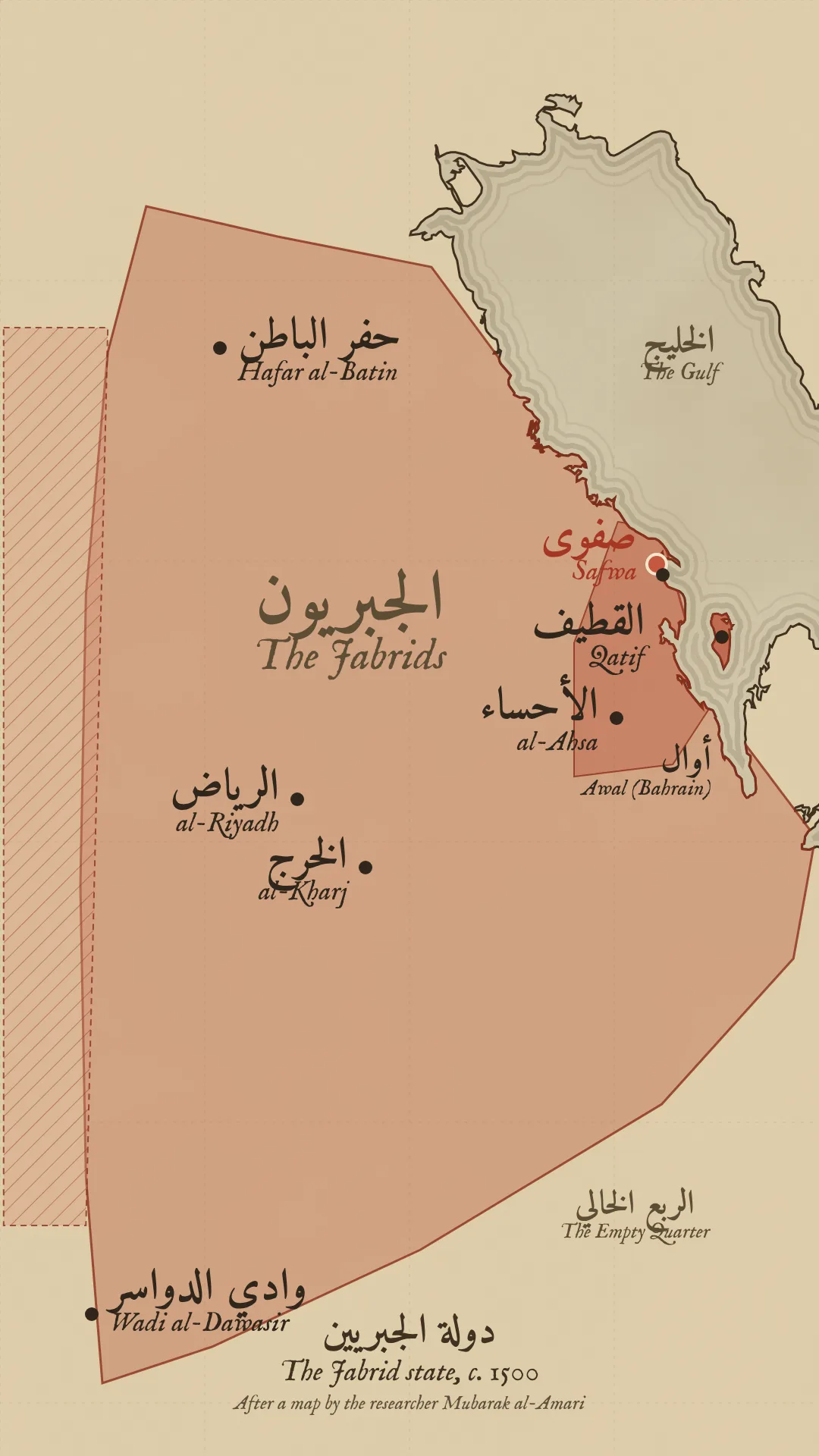
خريطة: بلاد الدولة الجبرية في شرق الجزيرة العربية، عن خريطة للباحث مبارك العماريخريطة رُسمت لصفوانيبيديا عن خريطة للباحث مبارك العماري
حكم أقوى حكّامهم، أجود بن زامل، الأحساء والقطيف وجزر أوال (البحرين اليوم)، وامتدّ نفوذه أحياناً إلى نجد وساحل عُمان. وكانت صفوى، بوصفها جزءاً من واحة القطيف، داخل بلاد الجبريين.
وكتب القائد البرتغالي أفونسو دي البوكيرك، في وصف رحلته على ساحل عُمان سنة 1507م، أن أحد أبناء ابن جابر أخذ جزيرة البحرين من ملك فارس، كما أخذ القطيف أيضاً، وكانت سابقاً خاضعة لملك هرمز.
والخريطة، المرسومة لهذه الصفحة عن خريطة للباحث مبارك العماري، تبيّن رقعة الدولة الجبرية: من حفر الباطن شمالاً إلى وادي الدواسر جنوباً، وفي قلبها الأحساء والقطيف وأوال.
وكان آخر حكّام الجبريين على الساحل مقرن بن زامل. ففي سنة 1521م رفض دفع الإتاوة لهرمز وحلفائها البرتغاليين، فهاجموا أوال، وجُرح مقرن في المعركة وتوفي بعد أيام. وحُمل جثمانه إلى الأحساء فدُفن فيها.
ثم وضع القائد البرتغالي أنطونيو كورّيا رأس مقرن المقطوع على شعار أسرته، ولا يزال جزءاً من شعار كونتات لوزان في البرتغال.
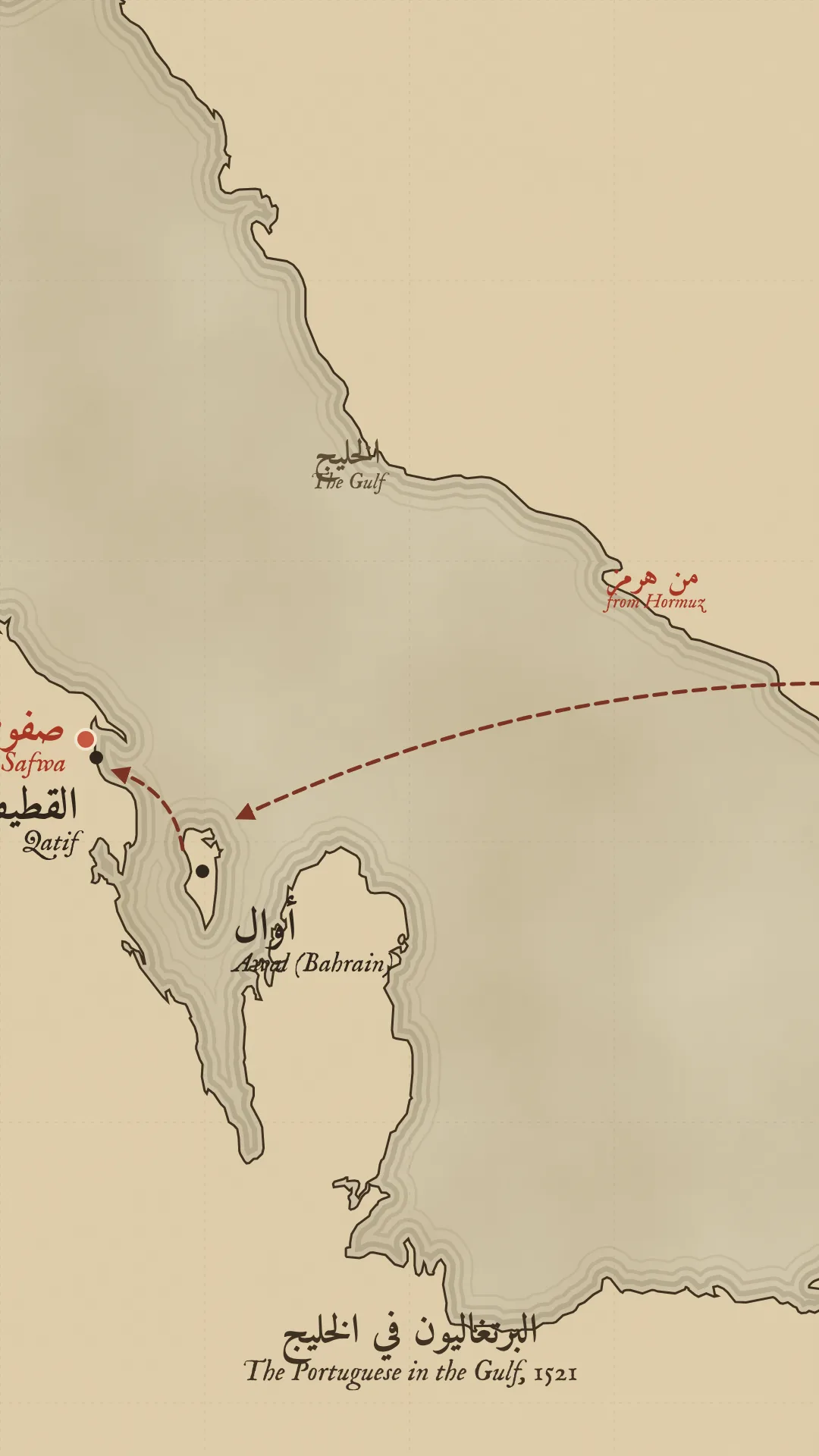
هاجم أسطول برتغالي، متحالف مع مملكة هرمز، حكّام شرق الجزيرة العربية من الجبريين. وقُتل حاكمهم مقرن بن زامل الجبري في القتال، وانتقلت القطيف إلى يد هرمز وحلفائها البرتغاليين.
خريطة: زحف البرتغاليين وهرمز على أوال والقطيفخريطة رُسمت لصفوانيبيديا
كان الجبريون، وهم أسرة من الأحساء، يحكمون المنطقة، ومنها القطيف وصفوى، منذ أواخر القرن الخامس عشر الميلادي.
وكانت هرمز يومئذ تابعة للبرتغاليين الذين أحكموا قبضتهم على تجارة الخليج من قلعتهم في الجزيرة. وظلّ حكّام القطيف يُرسَلون من هرمز طوال العقود التالية.
وتختلف الروايات في نهاية السلطة البرتغالية على القطيف. فقد ثارت القطيف بعون العثمانيين سنة 1550م. ويؤرّخ مقال «تاريخ القطيف» في ويكيبيديا العربية انتصار أهالي القطيف النهائي على البرتغاليين وإخراجهم بسنة 1572م.
وقد خلّف البرتغاليون شيئاً من لغتهم في اللهجة المحلية، بل تربط إحدى الروايات اسم عين داروش بكلمة برتغالية.
بعد مقتل مقرن بن زامل سنة 1521م تداولت حكمَ القطيف أيدٍ كثيرة. ويعدّد المؤرخ علي الدرورة حكامها في تلك الفترة، وقد كانوا محليين أو معيّنين من قبل الأتراك أو حكاماً بالتناوب:
حكم علي بن أجود، أخو مقرن، شهراً واحداً. ثم ابن أخيه ناصر بن محمد بن أجود ثلاث سنوات (1521–1525م)، ثم تنازل عن الحكم لقطن بن علي بن هلال بن زامل لقاء مبلغ من المال، فمات بعد سنة من الحكم. ثم حكم ابنه بضعة أشهر وتنازل لغصيب بن زامل بن هلال، الذي حكم مستعيناً بالسلطان راشد حتى سنة 1526م.
ثم حكم السلطان راشد بن مغامس، الملقّب بسلطان الشرق، القطيف والأحساء والبصرة التي انتزعها من الفرس. وبعد أن احتل البحرين عيّن أخاه محمداً والياً على البصرة، وحكم ابنه من بعده.
وفي سنة 1539م استولى السلطان مانع، ملك الأحساء، على القطيف وضمّها إلى سلطانه. وفي سنة 1558م هرب مقرن بن غصيب إلى العراق.
وفي تلك الحقبة أجرى السلطان علي بك، قائد سنجق القطيف العثماني، مفاوضات مع البرتغاليين، وأعاد أسراهم مع غنائم الحرب، وكانوا أكثر من سبعين مقاتلاً.
5العلم والفقه والشعر
عُرفت الدولة الجبرية عند المؤرخين بدعمها القوي للمذهب المالكي وللعلوم الإسلامية التقليدية، وأسّس أجود بن زامل مدارس كثيرة في شرق الجزيرة العربية وعُمان. وكان الجبريون أول من عُرف برعاية الشعر النبطي المنظوم بلهجة نجد.
وفي عُمان ساعدوا على إحياء الإمامة الإباضية في مواجهة النباهنة، فنصّبوا عمر بن الخطاب الخروصي إماماً سنة 1487م مقابل خراج سنوي يُدفع إلى خزينتهم، ثم نصّبوا محمد بن إسماعيل سنة 1500م.
6بنو عقيل حول القطيف
كان بنو عقيل، قبيلة الجبريين، حاضرين حول القطيف قبل قيام دولتهم. فقد كتب النسّابة ابن عنبة (ت. 1425م)، في أوائل القرن الخامس عشر الميلادي، أن نسل ربيعة بن عقيل، من عامر بن ربيعة، «في أرض البصرة والقطيف»، وأن بني عُبادة بن عقيل قبيلة عظيمة في أطراف واسط بين واسط والبصرة، ومنهم آل المسيّب أمراء عبادة.
The Jabrids, or Banu Jabr, were an Arab dynasty of the Banu ʿUqayl that ruled eastern Arabia in the 15th and early 16th centuries. From al-Ahsa and Qatif their rule reached the islands of Awal (today's Bahrain), and at times Najd and parts of Oman. Safwa, as part of the Qatif oasis, lay inside their lands. Their best-known ruler was Ajwad ibn Zamil, who died in 1496. Their last ruler on the coast, Muqrin ibn Zamil, was killed in 1521 fighting the Portuguese and their Hormuz allies on Awal, and Qatif then passed through many hands.
The Jabrids take their name from their forefather Jabr, of the Arab tribe of Banu ʿUqayl. Wikipedia dates their emirate from 1417 to 1524. It was founded in the early 15th century, when the family overthrew the last ruler of the Jarwanid dynasty in Qatif; Wikipedia lists Zamil ibn Husayn ibn Jabr as its first ruler, from 1417 to 1463.
The emirate reached its height under Ajwad ibn Zamil, whom a scholar of his time called the king of al-Ahsa and Qatif and the leader of the people of Najd. After his death in 1496 his lands were divided among his descendants, and Muqrin ibn Zamil inherited al-Ahsa, Qatif and Bahrain.
In the late 15th century, a family from al-Ahsa built the largest state eastern Arabia had known in centuries. They were the Jabrids, named after their forefather Jabr, of the Arab tribe of Banu ʿUqayl.
Map: the lands of the Jabrid state in eastern Arabia, after a map by Mubarak al-Amarimap drawn for Safwanipedia after a map by the researcher Mubarak al-Amari
Their most powerful ruler, Ajwad ibn Zamil, governed al-Ahsa, Qatif and the islands of Awal (today's Bahrain), and at times reached into Najd and along the coast of Oman. Safwa, as part of the Qatif oasis, lay inside the Jabrid lands.
The Portuguese commander Afonso de Albuquerque, describing his voyage along the coast of Oman in 1507, wrote that one of the sons of Ibn Jabr had taken the island of Bahrain from Persia, and Qatif too, which had once been subject to the king of Hormuz.
The map, drawn for this page after a map by the researcher Mubarak al-Amari, shows the Jabrid domain: from Hafar al-Batin in the north to Wadi al-Dawasir in the south, with al-Ahsa, Qatif and Awal at its heart.
The last Jabrid ruler of the coast was Muqrin ibn Zamil. In 1521 he refused to pay tribute to Hormuz and its Portuguese allies. They attacked Awal, and Muqrin was wounded in the battle and died some days later. His body was carried to al-Ahsa for burial.
The Portuguese commander António Correia then placed Muqrin's severed head on his family's coat of arms. It is still part of the arms of the Counts of Lousã in Portugal.
A Portuguese fleet, allied with the kingdom of Hormuz, attacked the Jabrid rulers of eastern Arabia. Their ruler, Muqrin ibn Zamil al-Jabri, was killed in the fighting, and Qatif passed into the hands of Hormuz and its Portuguese allies.
Map: the Portuguese and Hormuz advance on Awal and Qatifmap drawn for Safwanipedia
The Jabrids, a dynasty from al-Ahsa, had ruled the region, Qatif and Safwa among it, since the late 15th century.
Hormuz was by then a vassal of the Portuguese, who controlled the Gulf's trade from their fortress on the island. For the next decades Qatif's governors were sent from Hormuz.
Accounts differ on when Portuguese power over Qatif ended. Qatif rose with Ottoman help in 1550. The Arabic Wikipedia article on Qatif's history dates a final victory of the people of Qatif over the Portuguese to 1572.
The Portuguese left a few words behind in the local dialect, and one story even links the name of ʿAin Daroush to a Portuguese word.
After Muqrin ibn Zamil was killed in 1521, Qatif passed through many hands. The historian ʿAli al-Darura lists the rulers, some local, some appointed by the Ottomans, some ruling in turn:
ʿAli ibn Ajwad, Muqrin's brother, ruled for a month. His nephew Nasir ibn Muhammad ibn Ajwad then ruled for three years (1521–1525). Nasir gave up the rule to Qatan ibn ʿAli ibn Hilal ibn Zamil in return for a sum of money, but Qatan died a year later. His son ruled for a few months, and handed power to Ghusayb ibn Zamil ibn Hilal, who held it until 1526 with the help of Sultan Rashid.
Sultan Rashid ibn Mughamis, called the Sultan of the East, then ruled Qatif, al-Ahsa and Basra, which he had taken from the Persians. After taking Bahrain he made his brother Muhammad governor of Basra, and his son ruled after him.
In 1539 Sultan Maniʿ, king of al-Ahsa, took Qatif and added it to his realm. In 1558 Muqrin ibn Ghusayb fled to Iraq.
In the same years Sultan ʿAli Bey, commander of the Ottoman Sanjak of Qatif, negotiated with the Portuguese and returned more than seventy of their men taken prisoner, with the spoils of war.
5Learning, law and poetry
Historians know the Jabrid state for its strong support of the Maliki school of law and of the traditional Islamic sciences, and Ajwad ibn Zamil founded many schools across eastern Arabia and Oman. The Jabrids were also the first known patrons of Nabati poetry composed in the Arabic of Najd.
In Oman they helped revive the Ibadi imamate against the Nabhanid rulers. They appointed Omar ibn al-Khattab al-Kharusi as imam in 1487, in return for a yearly tribute to their treasury, and Muhammad ibn Ismaʿil in 1500.
6The Banu ʿUqayl around Qatif
The Banu ʿUqayl, the tribe of the Jabrids, were already present around Qatif before their state arose. Writing in the early 15th century, the genealogist Ibn ʿInaba (d. 1425) records that the descendants of Rabiʿa ibn ʿUqayl, through ʿAmir ibn Rabiʿa, lived “in the land of Basra and Qatif”, and that the Banu ʿUbada ibn ʿUqayl were a great tribe on the edges of Wasit, between Wasit and Basra, among them Al al-Musayyab, the emirs of ʿUbada.
ʿAli ibn Ibrahim al-Darura – Tarikh al-Ihtilal al-Burtughali lil-Qatif (History of the Portuguese Occupation of Qatif), Cultural Foundation, Abu Dhabi, 2001

 الجروانيونأسرة عربية حكمت شرق الجزيرة العربية من القطيف في القرن الرابع عشر الميلادي.
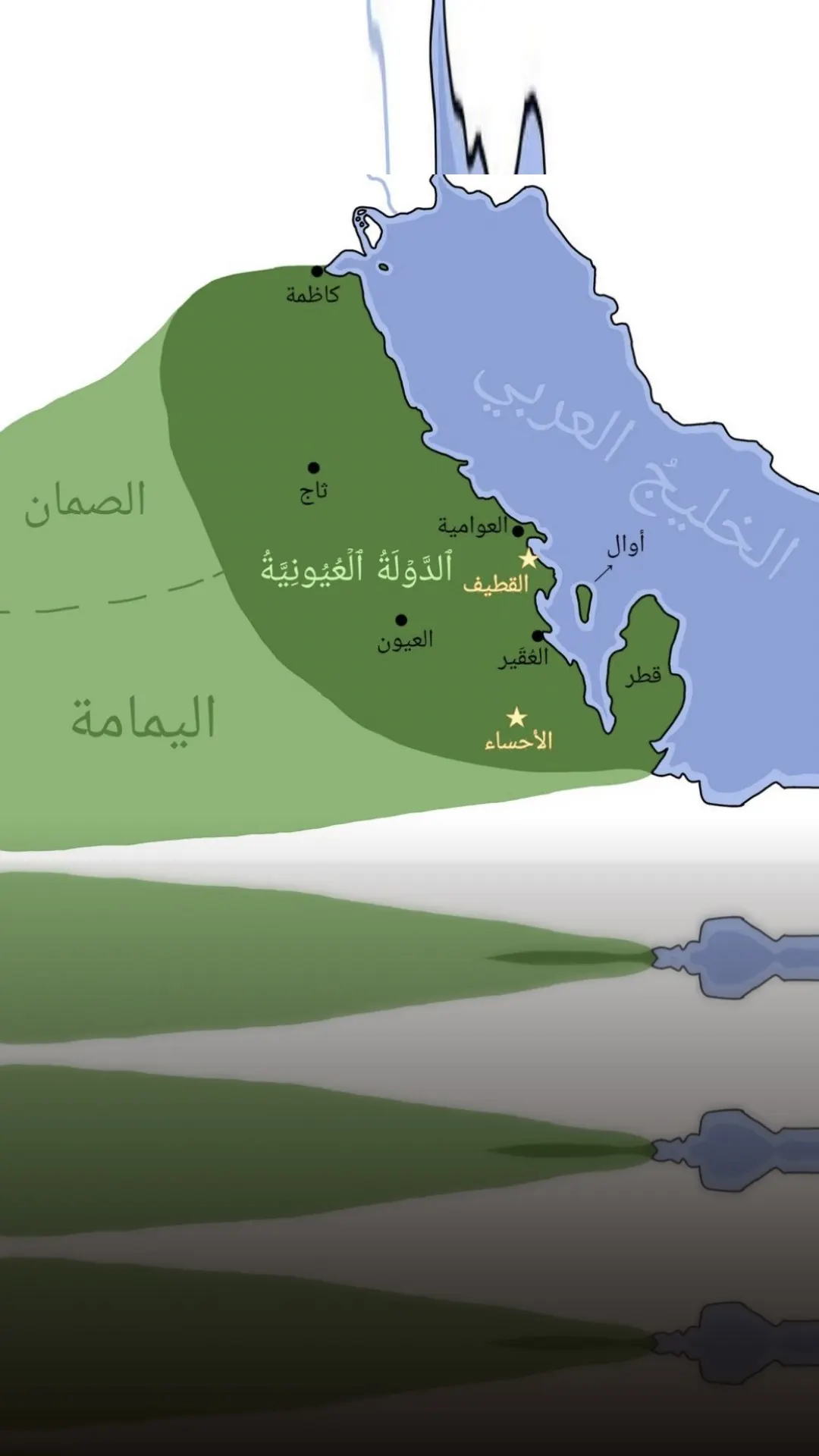 العيونيون والعصفوريوندولتان عربيتان حكمتا شرق الجزيرة العربية، وشهدت صفوى معاركهما.
 بنو خالدحلف قبلي حكم شرق الجزيرة العربية من الأحساء قرابة قرن ونصف.