البرتغاليون والعثمانيونThe Portuguese and the Ottomans
The Portuguese and the Ottomansالبرتغاليون والعثمانيون
قرن من التنافس على القطيف وسواحلها، ترك في صفوى الكوت وسورها.A century of rivalry over Qatif and its coast, which left Safwa its Koot and its wall.
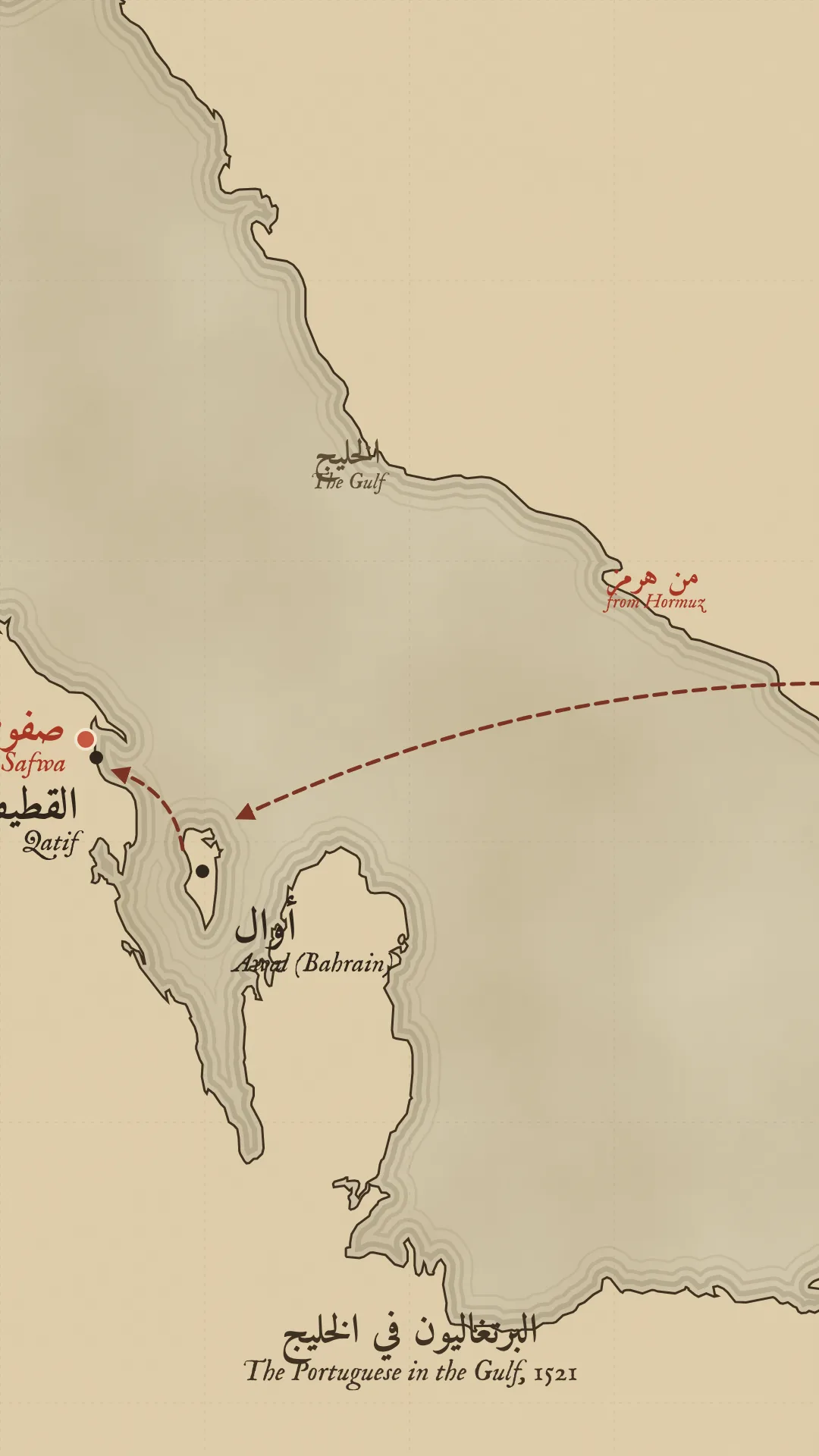
في سنة 1521م هاجم أسطول برتغالي متحالف مع مملكة هرمز حكّام شرق الجزيرة العربية الجبريين، فقُتل أميرهم مقرن بن زامل، وانتقلت القطيف إلى هرمز وحلفائها البرتغاليين. وفي تلك السنوات بُني كوت صفوى وسورها. ثم ثار أهل القطيف سنة 1550م وسلّموها إلى العثمانيين، فصارت قاعدة لهم في حربهم البحرية مع البرتغاليين. وعاد العثمانيون إلى المنطقة سنة 1871م في حملة مدحت باشا، ومرّت قواتهم بآبار صفوى.
هاجم أسطول برتغالي، متحالف مع مملكة هرمز، حكّام شرق الجزيرة العربية من الجبريين. وقُتل حاكمهم مقرن بن زامل الجبري في القتال، وانتقلت القطيف إلى يد هرمز وحلفائها البرتغاليين.
خريطة: زحف البرتغاليين وهرمز على أوال والقطيفخريطة رُسمت لصفوانيبيديا
كان الجبريون، وهم أسرة من الأحساء، يحكمون المنطقة، ومنها القطيف وصفوى، منذ أواخر القرن الخامس عشر الميلادي.
وكانت هرمز يومئذ تابعة للبرتغاليين الذين أحكموا قبضتهم على تجارة الخليج من قلعتهم في الجزيرة. وظلّ حكّام القطيف يُرسَلون من هرمز طوال العقود التالية.
وتختلف الروايات في نهاية السلطة البرتغالية على القطيف. فقد ثارت القطيف بعون العثمانيين سنة 1550م. ويؤرّخ مقال «تاريخ القطيف» في ويكيبيديا العربية انتصار أهالي القطيف النهائي على البرتغاليين وإخراجهم بسنة 1572م.
وقد خلّف البرتغاليون شيئاً من لغتهم في اللهجة المحلية، بل تربط إحدى الروايات اسم عين داروش بكلمة برتغالية.
بعد مقتل مقرن بن زامل سنة 1521م تداولت حكمَ القطيف أيدٍ كثيرة. ويعدّد المؤرخ علي الدرورة حكامها في تلك الفترة، وقد كانوا محليين أو معيّنين من قبل الأتراك أو حكاماً بالتناوب:
حكم علي بن أجود، أخو مقرن، شهراً واحداً. ثم ابن أخيه ناصر بن محمد بن أجود ثلاث سنوات (1521–1525م)، ثم تنازل عن الحكم لقطن بن علي بن هلال بن زامل لقاء مبلغ من المال، فمات بعد سنة من الحكم. ثم حكم ابنه بضعة أشهر وتنازل لغصيب بن زامل بن هلال، الذي حكم مستعيناً بالسلطان راشد حتى سنة 1526م.
ثم حكم السلطان راشد بن مغامس، الملقّب بسلطان الشرق، القطيف والأحساء والبصرة التي انتزعها من الفرس. وبعد أن احتل البحرين عيّن أخاه محمداً والياً على البصرة، وحكم ابنه من بعده.
وفي سنة 1539م استولى السلطان مانع، ملك الأحساء، على القطيف وضمّها إلى سلطانه. وفي سنة 1558م هرب مقرن بن غصيب إلى العراق.
وفي تلك الحقبة أجرى السلطان علي بك، قائد سنجق القطيف العثماني، مفاوضات مع البرتغاليين، وأعاد أسراهم مع غنائم الحرب، وكانوا أكثر من سبعين مقاتلاً.
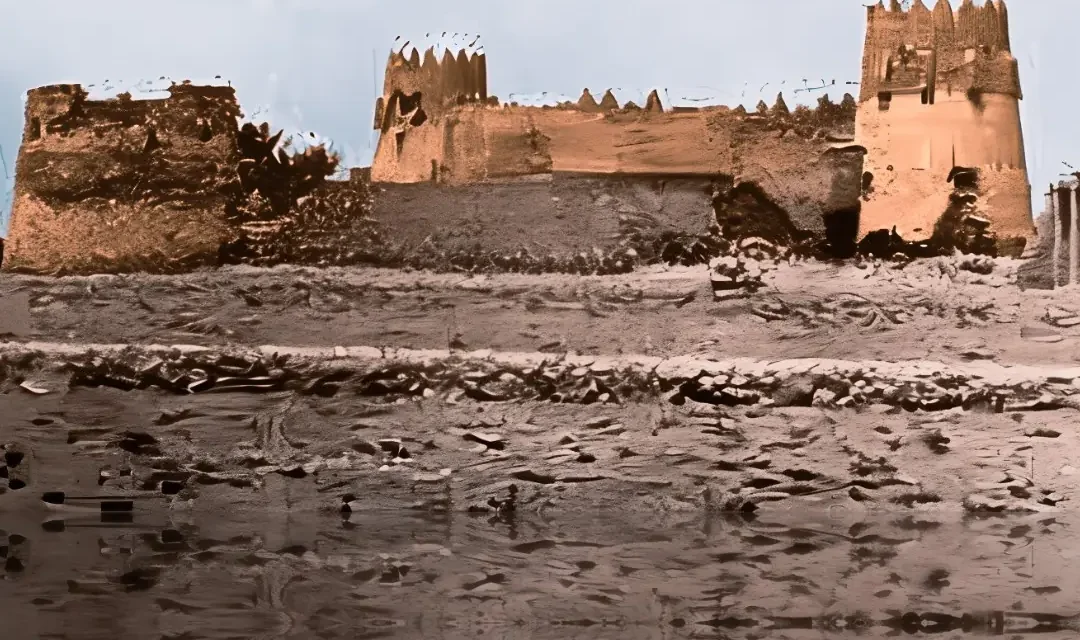
خلال وجودهم على ساحل الخليج، بنى البرتغاليون في صفوى حصناً هو «الكوت»، ومعه سور دفاعي يحيط بالبلدة.
بناء كوت صفوىأرامكو – كوت صفوى، الأربعينيات
«الكوت» لفظ شائع في الخليج يُطلق على القلعة المحصّنة بالأسوار والأبراج. ولقربه من الساحل صار الكوت معلماً يهتدي به البحّارة والغوّاصون في السير على امتداد الشاطئ وتحديد المرافئ والممرّات القريبة.
وقد أصابه دمار كبير في القتال بين البرتغاليين والعثمانيين، فأعاد العثمانيون بناءه بمساعدة أهالي صفوى سنة 1551م. وكان آخر ترميم له سنة 1906م لحماية البلدة من غارات القبائل.
ومع التوسع العمراني في منتصف القرن العشرين تآكل الحصن الطيني وانهار، ولم يبقَ منه اليوم شيء.
التُقطت الصورة هنا بعدسة أحد موظفي أرامكو في الأربعينيات الميلادية، قُبيل اختفاء الحصن، وهي من الصور القليلة الباقية للكوت.
ولا يتفق الجميع على أن البرتغاليين بنوا قلاع القطيف. فالمؤرخ علي الدرورة يرى أن مدن الواحة كانت محصّنة قبلهم بزمن طويل، بسواعد أهلها، وأن البرتغاليين ربما رمّموها لا أكثر. وفي قائمته لقلاع المنطقة يذكر صفوى مدينةً محصّنة لها برجان: برج العين وبرج البحر.
ثار أهالي القطيف ضد الاحتلال البرتغالي بمساعدة الأسطول العثماني، وتمكّنوا من دحر البرتغاليين وتسليم إدارة المدينة والقلاع للدولة العثمانية.
وتختلف الروايات في كيفية انتقال القطيف. فرواية أخرى تذكر أن والي البصرة العثماني استمال بعض حامية القلعة، فاستسلمت القلعة حين وصل أسطوله، وانسحب حاكم القطيف، المعيَّن من مملكة هرمز حليفة البرتغاليين، إلى هرمز.
وردّاً على ذلك أرسل الحاكم البرتغالي في الهند أسطولاً من غوا وصل إلى القطيف في العام التالي.
بعد هزيمة البرتغاليين أمام العثمانيين، أعاد العثمانيون بناء سور صفوى الذي تضرّر في القتال، بمساعدة الأهالي.
عاد البرتغاليون عام 1551م بقوة عسكرية ضخمة وبدعم من حلفائهم في مملكة هرمز، وفرضوا حصاراً عنيفاً على قلعة القطيف التي كانت تتحصّن بها حامية عثمانية. وانتهت المواجهة بسقوط القلعة وتدمير أجزاء منها، قبل أن يستعيدها العثمانيون لاحقاً بالتحالف مع القوى المحلية.
ويرى الكاتب المحلي أحمد مكي الغانم أن السور قديم قِدم البلدة نفسها، وكان قائماً قبل وصول البرتغاليين. وفي رأيه أن البرتغاليين ربما جدّدوا بناءه، كما فعل العثمانيون في أواخر عهدهم، لكن لم يكن لأيٍّ منهما دور في إنشائه.
بعد أن صارت القطيف في يد العثمانيين أصبحت إحدى قواعدهم في حربهم البحرية الطويلة مع البرتغاليين. وتكشف وثائق عثمانية نشرها المؤرخ محمد محمود خليل كيف كانت إسطنبول تديرها من بعيد.
فقد أسس قبودان السويس، قائد الأساطيل العثمانية في البحر الأحمر والمحيط الهندي، وحدات بحرية في البصرة وفي القطيف.
وفي أواخر سنة 1552م فتح القائد البحري بيري رئيس مسقط وحاصر هرمز. فأمر السلطان سليمان والي البصرة بأنه إذا فُتحت هرمز فليُعيَّن ضابط اسمه علي، قدم مع الأسطول من مصر، أميراً على سنجق القطيف.
وفي سنة 1554م أبحر القائد البحري سيدي علي رئيس من البصرة بخمس عشرة سفينة، مارّاً ببوشهر ثم القطيف ثم البحرين، وواجه أسطولاً برتغالياً قرب هرمز.
وفي سنة 1573م تسجّل قائمة عثمانية بالتعيينات في ولاية البصرة زيادة قدرها 20 ألف أقجة لعلي بك، بك القطيف. وفي السنوات نفسها حثّ ولاة الأحساء إسطنبول على فتح البحرين، فسأل السلطان عن عدد السفن والجنود اللازمة لذلك.
وفي سنة 1579م أخبر مراد باشا، والي الأحساء، بأن سفناً برتغالية تجوب قرب ميناء الأحساء وتُنقص عوائد جماركه، فأمر السلطان والي البصرة بإرسال سفن لحراسة سواحل الأحساء والقطيف.
في الأول من أكتوبر 1636م ختم حاكم القطيف، ابن علي باشا، في القطيف قائمة بمطالبه من البرتغاليين، وحملها مبعوثان هما ماميد آغا وفالنتيم دا كوستا إلى السلطات البرتغالية. وهي محفوظة بوصفها الوثيقة رقم 53 في سجلات مجلس الدولة البرتغالي.
وجاء هذا الحلف تجديداً لاتفاق سابق بين أبيه علي باشا والقائد البرتغالي روي فريري دي أندرادي، وقاعدته: أصدقاء الأصدقاء وأعداء الأعداء. وكانت البحرين يومئذ في يد الصفويين من فارس، خصوم الطرفين.
وطلب الحاكم مدفعين من مخزون البرتغاليين في مسقط، وعشرين ألف قصبة خيزران لصنع الرماح للدفاع عن أراضيه في الداخل، وأن تهبّ السفن البرتغالية في مضيق هرمز لنجدة القطيف عند الحاجة، على نفقته.
وطلب أن ترسو السفن المتجهة إلى القطيف عند جزيرة تاروت، وألا تتعرض السفن الراسية في رأس تنورة لهجوم البرتغاليين أو تفتيشهم. كما طلب إغلاق ميناء البحرين أمام الملاحة، وتعيين فالنتيم دا كوستا، العارف بالعربية وبأهل البلاد، وكيلاً للبرتغاليين في ميناء القطيف.
ووافق مجلس الدولة على المدفعين والقصب وإغلاق ميناء البحرين. وكانت القطيف حينئذ من البلاد التي تُحكم باسم العثمانيين، فكان الحلف حلف حكامها لا حلف أهل الواحة.
قاد والي بغداد مدحت باشا حملة عسكرية كبرى على شرق الجزيرة العربية، مستغلاً الصراع الداخلي بين ابنَي الإمام فيصل بن تركي، عبدالله وسعود.
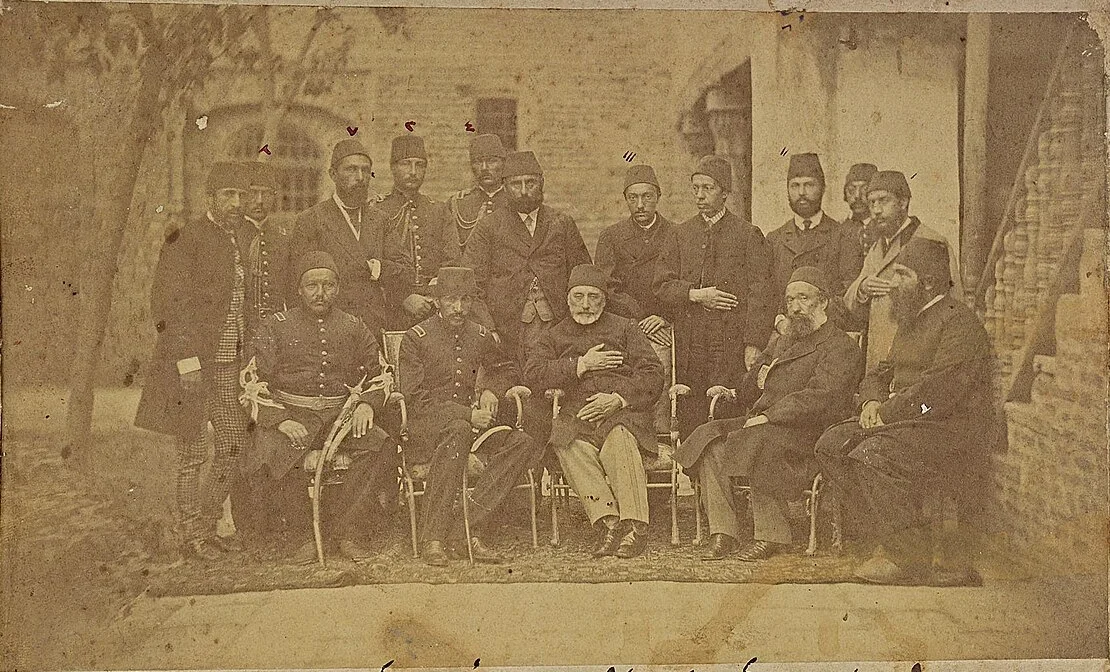
مدحت باشا ورجال ولايته، بغداد، 1870مويكيبيديا – مدحت باشا ورجال ولايته، بغداد، 1870م
تحرّكت القوات العثمانية مدعومةً بقطع بحرية وسرايا من قبائل المنتفق والكويت، ونجحت بعد مواجهات متفرقة في السيطرة على الدمام والأحساء والقطيف، وتأسّس على إثرها «لواء نجد» التابع لولاية بغداد العثمانية.
وتُظهر الصورة هنا مدحت باشا مع رجال حكومة ولايته في بغداد عام 1870م، قبل الحملة بعام.
ولكسب أهل الأحساء لجأ العثمانيون إلى بني خالد. ففي سنة 1874م عقد والي البصرة ناصر باشا مؤتمراً في الهفوف أعلن فيه تنصيب بركة بن عريعر، وهو من زعماء بني خالد، والياً على الأحساء. وكان أول عربي يتولى الأحساء في العهد العثماني، وخفّف من الثورات على العثمانيين، لكن حكمه انتهى سنة 1875م، وكان ذلك آخر حكم لبني خالد في المنطقة.
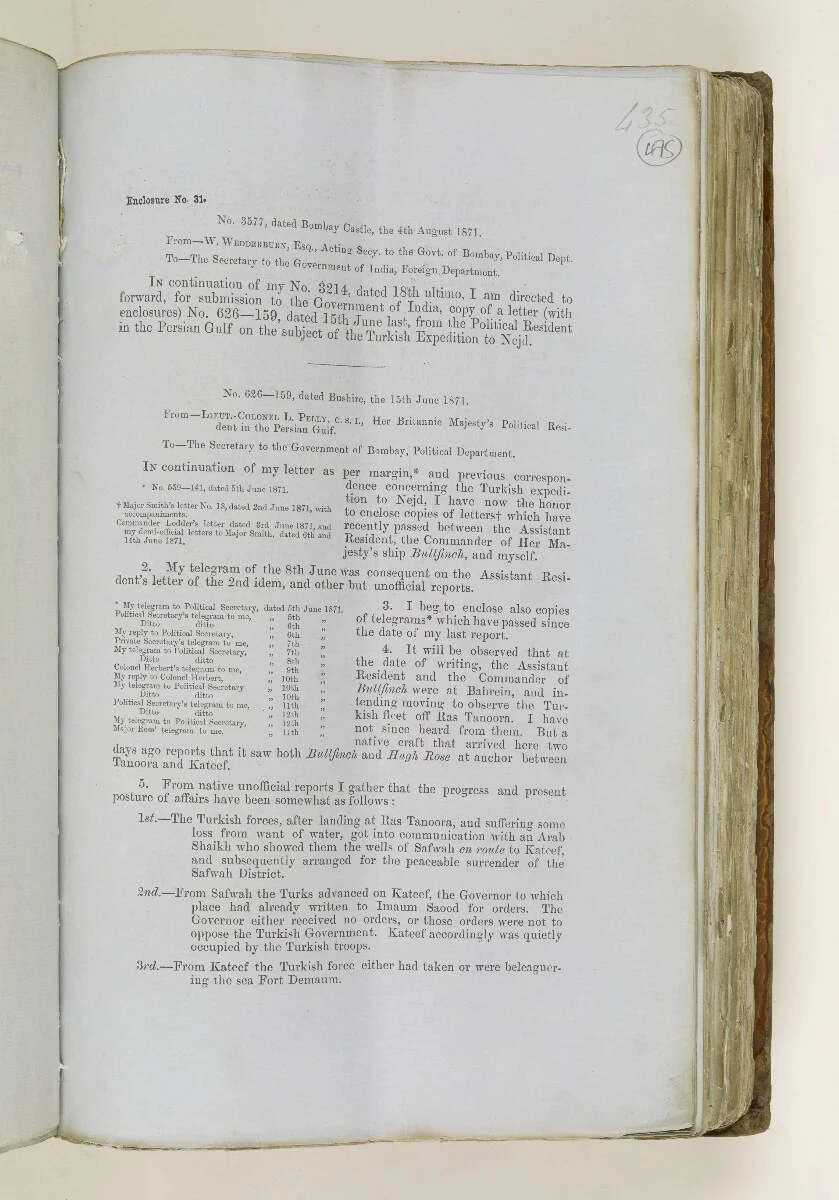
في عام 1871م نزلت القوات العثمانية في رأس تنورة. ويصف تقرير بريطاني كتبه في بوشهر في 15 يونيو 1871م المقدّم لويس بيلي، المقيم السياسي البريطاني في الخليج، ما جرى بعد ذلك نقلاً عن روايات محلية.
تقرير بريطاني عن الحملة التركية، 15 يونيو 1871مالحملة التركية على نجد، IOR/L/PS/5/268، ورقة 475و
فقد عانت القوات من شحّ الماء بعد نزولها، ثم دلّها شيخ عربي على «آبار صفوى» في طريقها إلى القطيف، ورتّب «الاستسلام السلمي لمقاطعة صفوى».
ومن صفوى تقدّم العثمانيون نحو القطيف، فلم يقاوم حاكمها، ودخلتها القوات بهدوء.
والصفحة المعروضة هنا من ذلك التقرير، المحفوظ ضمن سجلات مكتب الهند في المكتبة البريطانية.
In 1521 a Portuguese fleet allied with the kingdom of Hormuz attacked the Jabrid rulers of eastern Arabia. Their ruler, Muqrin ibn Zamil, was killed, and Qatif passed to Hormuz and its Portuguese allies. Safwa's Koot fortress and town wall date from these years. In 1550 the people of Qatif rose and handed the town to the Ottomans, who made it a base in their naval war with the Portuguese. The Ottomans returned in 1871 with Midhat Pasha's campaign, and their troops passed by the wells of Safwa.
A Portuguese fleet, allied with the kingdom of Hormuz, attacked the Jabrid rulers of eastern Arabia. Their ruler, Muqrin ibn Zamil al-Jabri, was killed in the fighting, and Qatif passed into the hands of Hormuz and its Portuguese allies.
Map: the Portuguese and Hormuz advance on Awal and Qatifmap drawn for Safwanipedia
The Jabrids, a dynasty from al-Ahsa, had ruled the region, Qatif and Safwa among it, since the late 15th century.
Hormuz was by then a vassal of the Portuguese, who controlled the Gulf's trade from their fortress on the island. For the next decades Qatif's governors were sent from Hormuz.
Accounts differ on when Portuguese power over Qatif ended. Qatif rose with Ottoman help in 1550. The Arabic Wikipedia article on Qatif's history dates a final victory of the people of Qatif over the Portuguese to 1572.
The Portuguese left a few words behind in the local dialect, and one story even links the name of ʿAin Daroush to a Portuguese word.
After Muqrin ibn Zamil was killed in 1521, Qatif passed through many hands. The historian ʿAli al-Darura lists the rulers, some local, some appointed by the Ottomans, some ruling in turn:
ʿAli ibn Ajwad, Muqrin's brother, ruled for a month. His nephew Nasir ibn Muhammad ibn Ajwad then ruled for three years (1521–1525). Nasir gave up the rule to Qatan ibn ʿAli ibn Hilal ibn Zamil in return for a sum of money, but Qatan died a year later. His son ruled for a few months, and handed power to Ghusayb ibn Zamil ibn Hilal, who held it until 1526 with the help of Sultan Rashid.
Sultan Rashid ibn Mughamis, called the Sultan of the East, then ruled Qatif, al-Ahsa and Basra, which he had taken from the Persians. After taking Bahrain he made his brother Muhammad governor of Basra, and his son ruled after him.
In 1539 Sultan Maniʿ, king of al-Ahsa, took Qatif and added it to his realm. In 1558 Muqrin ibn Ghusayb fled to Iraq.
In the same years Sultan ʿAli Bey, commander of the Ottoman Sanjak of Qatif, negotiated with the Portuguese and returned more than seventy of their men taken prisoner, with the spoils of war.
During their presence on the Gulf coast, the Portuguese built a fortress at Safwa, the Koot, together with a defensive wall around the town.
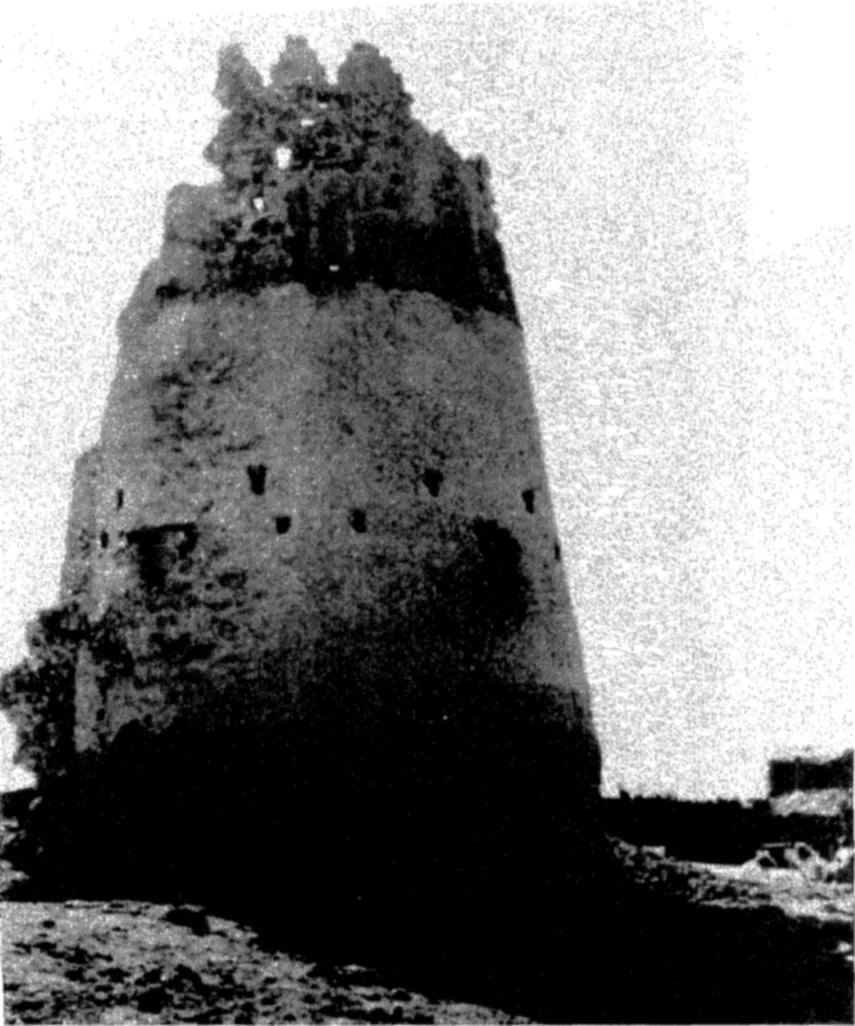
The building of the KootAramco – The Koot of Safwa, 1940s
Koot is a word used across the Gulf for a fortified citadel protected by walls and towers. Standing near the coast, the Koot became a landmark for sailors and pearl divers, who used it to find their way along the shore and locate nearby harbours and channels.
Fighting between the Portuguese and the Ottomans left it heavily damaged, and the Ottomans rebuilt it with Safwa's residents in 1551. Its last renovation came in 1906, to protect the town from tribal raids.
As Safwa expanded in the mid-20th century, the mud-brick fortress eroded and collapsed. Nothing of it stands today.
The photograph here was taken by an Aramco employee in the 1940s, shortly before the fort disappeared. It is one of the only images of the Koot that survive.
Not everyone agrees that the Portuguese built Qatif's forts. The historian ʿAli al-Darura argues that the towns of the oasis were fortified long before them, by their own people, and that the Portuguese at most repaired them. In his list of the area's forts, Safwa is a fortified town with two towers: Burj al-ʿAyn, the Spring Tower, and Burj al-Bahr, the Sea Tower.
The people of Qatif rose against the Portuguese occupation. With help from the Ottoman fleet they drove the Portuguese out and handed the town and its forts to the Ottoman state.
Accounts of the takeover differ. Another account says the Ottoman governor of Basra won over part of the fort’s garrison, and the fort surrendered when his fleet arrived. Qatif’s governor, appointed by the kingdom of Hormuz, an ally of the Portuguese, withdrew to Hormuz.
In response, the Portuguese governor of India sent a fleet from Goa, which reached Qatif the following year.
After the Portuguese were defeated by the Ottomans, Safwa's town wall, damaged in the fighting, was rebuilt by the Ottomans with help from residents.
The Portuguese returned in force in 1551, backed by their allies in the Kingdom of Hormuz. They laid a fierce siege to the castle of Qatif, where an Ottoman garrison held out. The siege ended with the castle's fall and parts of it destroyed, before the Ottomans retook it with the help of local forces.
The local writer Ahmad Makki al-Ghanim argues that the wall is as old as the town itself and was standing before the Portuguese arrived. In his view the Portuguese may have renewed it, as the Ottomans did again late in their rule, but neither of them built it.
Once Qatif was in Ottoman hands, it became one of their bases in the long naval war with the Portuguese. Ottoman documents published by the historian Muhammad Mahmud Khalil show how Istanbul ran it from afar.
The Kapudan of Suez, who commanded the Ottoman fleets in the Red Sea and the Indian Ocean, set up naval units at Basra and at Qatif.
In late 1552 the admiral Piri Reis took Muscat and laid siege to Hormuz. Sultan Suleiman ordered the governor of Basra that, if Hormuz fell, an officer named ʿAli, who had come with the fleet from Egypt, should be made bey of the Sanjak of Qatif.
In 1554 the admiral Seydi Ali Reis sailed from Basra with fifteen ships, by way of Bushehr, Qatif and Bahrain, and fought a Portuguese fleet near Hormuz.
In 1573 an Ottoman list of appointments in the province of Basra records a rise of 20,000 akçe for ʿAli Bey, bey of Qatif. In the same years the governors of al-Ahsa urged Istanbul to conquer Bahrain, and the sultan asked how many ships and men it would take.
In 1579 Murad Pasha, governor of al-Ahsa, reported Portuguese ships cruising off the port of al-Ahsa and cutting its customs revenue. The sultan told the governor of Basra to send ships to patrol the coasts of al-Ahsa and Qatif.
On 1 October 1636 the ruler of Qatif, son of ʿAli Pasha, sealed a list of requests to the Portuguese in Qatif. Two envoys, Mamid Agha and Valentim da Costa, carried it to the Portuguese authorities. It survives as document no. 53 in the records of the Portuguese Council of State.
The pact renewed an earlier agreement between his father, ʿAli Pasha, and the Portuguese captain Ruy Freire de Andrade. Its rule was simple: the friends of one were the friends of the other, and their enemies the same. At the time Bahrain was held by the Safavids of Persia, the rivals of both.
The ruler asked for two cannons from the Portuguese stock at Muscat, and 20,000 bamboo canes for making spears to defend his lands inland. Portuguese ships in the Strait of Hormuz were to come to Qatif's aid when needed, at his expense.
Ships bound for Qatif were to anchor at Tarut island, and ships at Ras Tanura were to be spared Portuguese attack or inspection. He also asked that Bahrain's port be closed to shipping, and that Valentim da Costa, who spoke Arabic and knew the people, be made the Portuguese agent at the port of Qatif.
The Council of State agreed to the cannons, the canes and the closing of Bahrain's port. Qatif was then part of the lands ruled in the Ottoman name, so the pact was made by its rulers rather than by the people of the oasis.
Midhat Pasha, the Ottoman governor of Baghdad, led a major campaign into eastern Arabia, taking advantage of the feud between Abdullah and Saud, the sons of Imam Faisal ibn Turki.
Midhat Pasha and his officials, Baghdad, 1870Wikipedia – Midhat Pasha and his officials, Baghdad, 1870
Ottoman troops moved with naval support and units from the Muntafiq tribes and Kuwait. After scattered fighting they took Dammam, al-Ahsa and Qatif, and the region was organised as the Sanjak of Najd, part of the Ottoman province of Baghdad.
The photograph here shows Midhat Pasha with the officials of his provincial government in Baghdad in 1870, the year before the campaign.
To win over the people of al-Ahsa, the Ottomans turned to the Bani Khalid. In 1874 Nasir Pasha, governor of Basra, held a gathering in al-Hofuf and named Baraka ibn ʿUrayʿir, a Bani Khalid leader, governor of al-Ahsa. He was the first Arab to govern al-Ahsa under the Ottomans, and eased the revolts against them, but his rule ended in 1875. It was the last time the Bani Khalid ruled the region.
In 1871 Ottoman troops landed at Ras Tanura. A British report written at Bushire on 15 June 1871 by Lieutenant-Colonel Lewis Pelly, the British Political Resident in the Gulf, describes what happened next, based on local accounts.
British report on the Turkish expedition, 15 June 1871Turkish Expedition to Nejd, IOR/L/PS/5/268, f. 475r
The troops suffered from lack of water after landing. An Arab shaikh then showed them “the wells of Safwah” on the way to Qatif, and arranged “the peaceable surrender of the Safwah District.”
From Safwa the Ottomans advanced on Qatif. Its governor did not resist, and the town was occupied quietly.
The page shown here is from that report, kept in the India Office Records at the British Library.
ʿAli ibn Ibrahim al-Darura – Tarikh al-Ihtilal al-Burtughali lil-Qatif (History of the Portuguese Occupation of Qatif), Cultural Foundation, Abu Dhabi, 2001

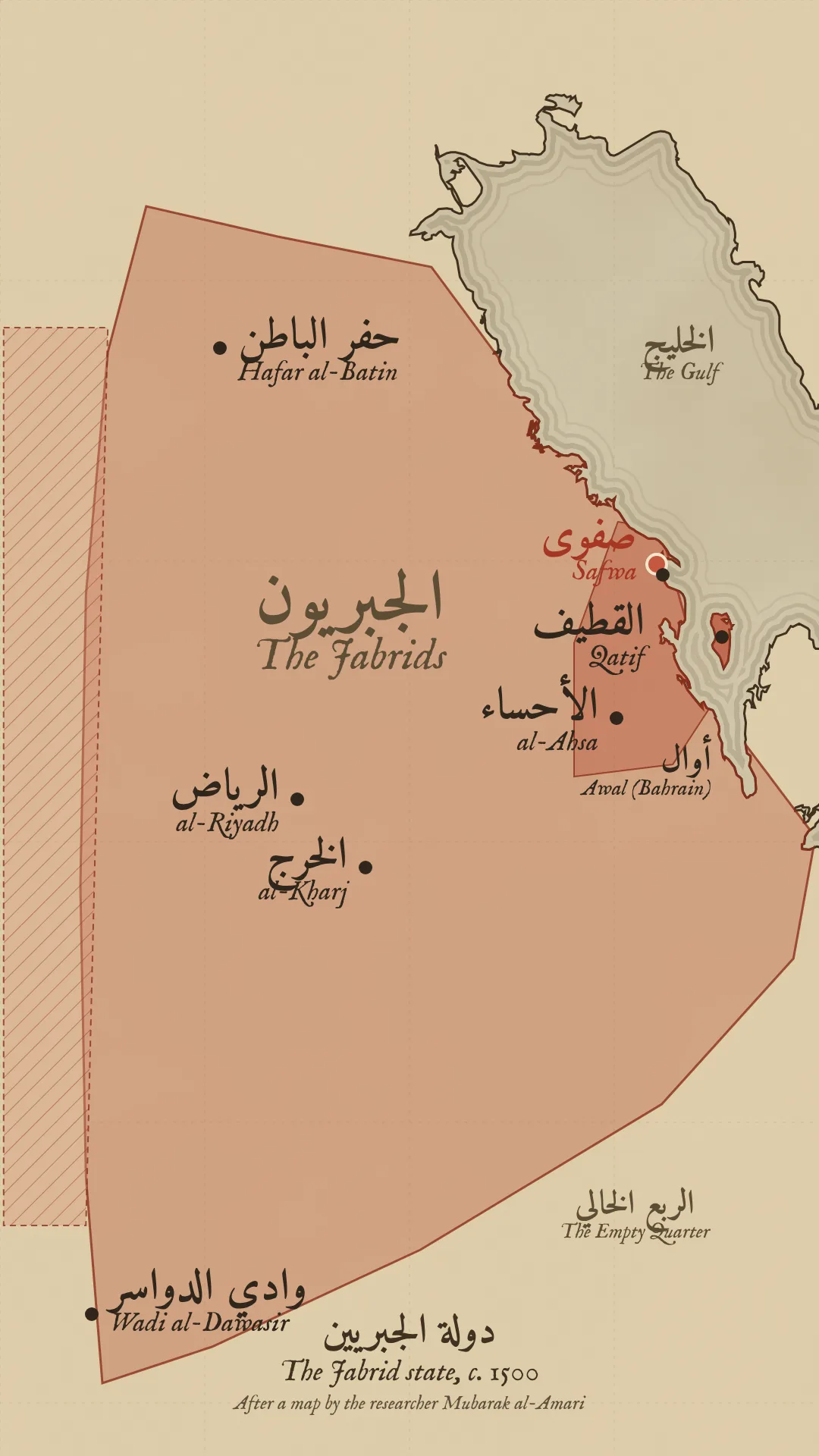 الجبريونأسرة عربية من بني عقيل حكمت شرق الجزيرة العربية حتى قدوم البرتغاليين.
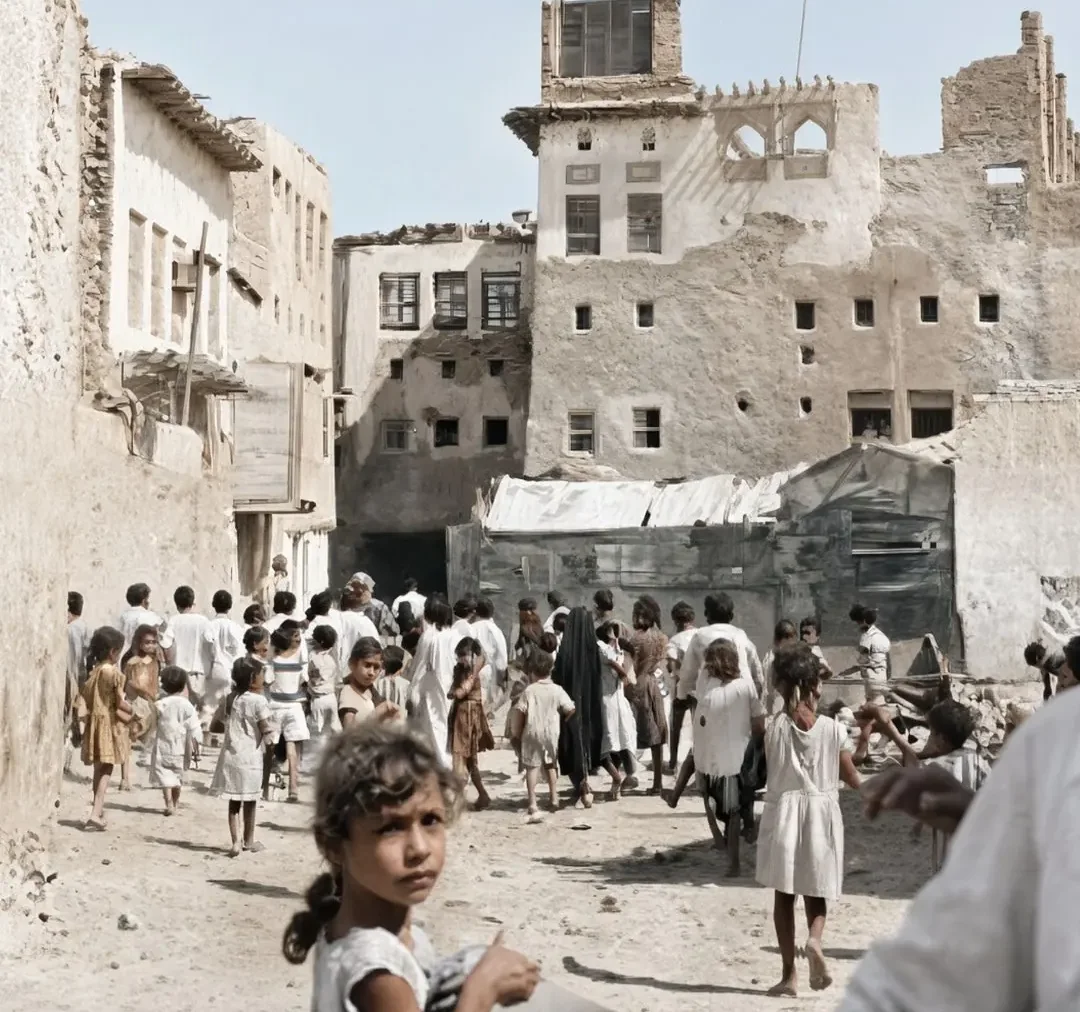 الديرة، البلدة المسوّرةقلب صفوى القديم: سورها وأبوابها وكوتها ومسجدها الجامع، حتى أُزيلت سنة 1989م.
 ميناء صفوى وساحلهاالفرضة والجمرك، وحظور الصيد، وغابة القُرم، وطيور الساحل.
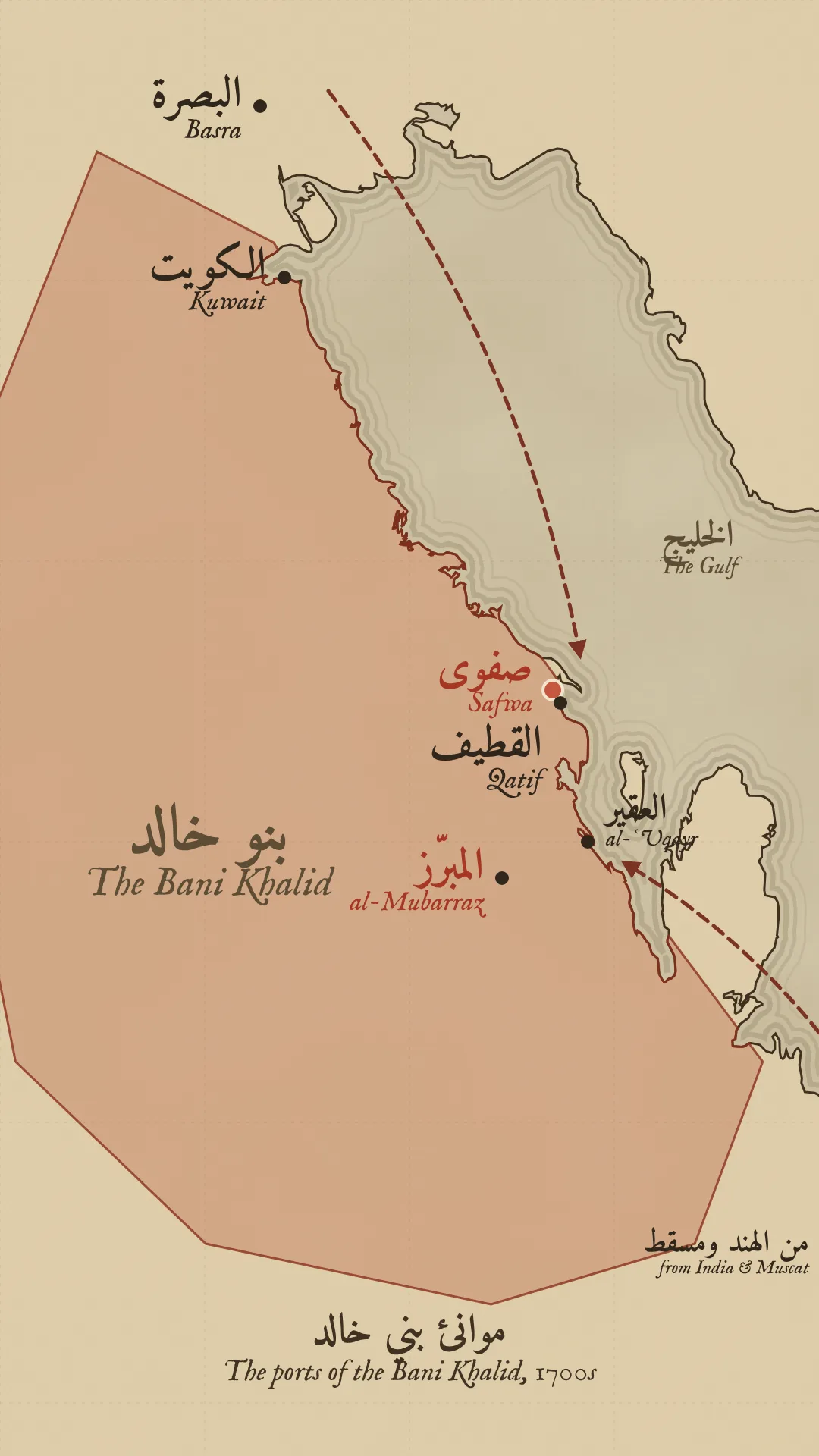 بنو خالدحلف قبلي حكم شرق الجزيرة العربية من الأحساء قرابة قرن ونصف.
 قلاع الواحة وأبراجهاأسوار القطيف وصفوى وتاروت وسيهات وأبراجها، ومن بناها.