الأوبئة والغارات والحرائق والكوارث التي سمّى بها أهل صفوى سنواتهم.The epidemics, raids, fires and disasters by which Safwa named its years.
كان أهل صفوى، كغيرهم من أهل الخليج، يؤرّخون بالأحداث الكبرى، فيسمّون السنة بما وقع فيها: سنة الغارة، وسنة الطاعون، وسنة الطبعة، وسنة البَرَد. وتجمع هذه الصفحة السنوات التي بقيت في ذاكرة البلدة، من الأوبئة والغارات والمعارك إلى الحرائق والجراد والبَرَد، مرتّبة زمنياً.
انتشرت الكوليرا القادمة من الهند في الخليج، فوصلت إلى البحرين والقطيف وصفوى. وكانت أولى أوبئة الكوليرا الكبرى في القرن التاسع عشر.
ظهر الوباء في البنغال عام 1817م، وحملته السفن الشراعية على طرق التجارة. وفي عام 1821م بلغ عُمان، فقتل فيها نحو 10 آلاف شخص في قيظ الصيف. ومنها نقلته السفن العُمانية إلى الموانئ التي كانت تتاجر معها: البحرين، والساحل الفارسي، والعراق.
وكان الموت به سريعاً، إذ تروي الأخبار أن بعض المصابين في مسقط ماتوا بعد عشر دقائق فقط من ظهور الأعراض.
وصل الطاعون قادماً من الهند إلى جزيرة البحرين والقطيف وسواحل الخليج الأخرى، فحصد المئات من الناس، ومنهم العشرات من أهالي صفوى.
وتُعرف السنة محلياً بسنة الطاعون.
وتعطي السجلات البريطانية صورة عن الوباء؛ إذ يذكر دليل لوريمر وباءً خفيفاً من الطاعون في أبريل 1903م في سنجق الأحساء العثماني، الذي كانت القطيف تابعة له آنذاك. وفي العام نفسه تفشّى وباء أشدّ في البحرين، فقتل نحو 300 من نحو 600 أصيبوا به.
وتسمّيها موسوعة المعرفة «وقعة صفوى»، وقد دارت بين أهالي صفوى وسكان البادية، في سنوات كثرت فيها غارات البدو على قرى واحة القطيف، في العقد الأخير من الحكم العثماني.
وتذكر روايات محلية من السنوات نفسها غارات في أنحاء الواحة. فنحو عام 1905م حاول بدوٌ الاستيلاء على ماشية في البحاري فردّهم رجال من العوامية، ولما هاجم البدو القديح هبّ أهالي القطيف لنصرة أهلها، وقاتلوا معهم في طفّ المنديل، وهو بستان نخيل غرب البلدة.
ودفعت هذه الغارات أهالي صفوى إلى إعادة بناء سور بلدتهم بعد نحو عامين.
في 18 يونيو 1908م، تطوّر خلاف على «شربة»، أي كأس ماء للشرب، إلى صراع مسلّح بين أهالي واحة القطيف وبعض القبائل البدوية. وتُعرف تلك السنة محلياً بعام الحصارة.
رفض أحد البدو أن يدفع لبائع ماء في الدبابية ثمن شربته، فنشب عراك قُتل فيه أحد البدو برصاصة. فثارت لمقتله عشائر عدة، منها الصبيح ومطير والعجمان والعوازم والمهاشير، ثم نزلت غرب القطيف قرب الدبابية وهاجمتها.
ولجأت النساء والأطفال والشيوخ والمرضى إلى القلعة، حيّ القطيف المسوّر، بينما استمر القتال خارج الأسوار وأُحرقت بساتين النخيل. وقُتل من المدافعين جعفر بن حسن علي الخنيزي ودُفن في القلعة. ويُنسب إلى الشيخ محمد بن نمر، وكان كفيفاً، تدبير المدافعين: أن يمسكوا عن الرمي حتى يقترب المهاجمون، ويذروا التراب والرماد من الأسوار ليخفوا مواقعهم، ثم يطلقوا النار معاً.
حوصرت بلدات القطيف قرابة 70 يوماً ونُهبت قرى عديدة. ونظراً لعجز الحامية العثمانية المحلية عن ضبط الأمن، أرسل الباب العالي تعزيزات بلغت 320 جندياً عثمانياً، نجحت في فكّ الحصار وإبرام اتفاق صلح. وكان البريطانيون أيضاً يريدون الصلح، خشية أن تمتد الاضطرابات إلى البحرين.
في يونيو 1911م قُتل ثلاثون رجلاً وجُرح تسعة من أهالي العوامية وصفوى والآجام، في وقعة جبل القوم.
وتُعرف محلياً بمذبحة دمنة عمار.
وتروي إحدى الروايات المحلية كيف انقلبت المعركة: طارد مقاتلون من العوامية بدواً بدا أنهم يفرّون، فلما ظهرت غبرة من جهة صفوى ظنّوها فرسان صفوى قادمين لنصرتهم، فتقدّموا إلى أرض مكشوفة تُعرف بدمنة عمار. وكان القادمون بدواً آخرين، فوقع المقاتلون بين نيران من أمامهم ومن خلفهم.
وتؤرّخ الرواية نفسها المعركة بمايو 1911م، وتجعل خسائر العوامية أكبر، بنحو 40 قتيلاً و30 جريحاً.
وتُذكر السنوات نفسها، بين نحو 1911 و1914م، بتفشّي الكوليرا على نطاق واسع في القطيف وقراها.
في سبتمبر 1912م، ساند أهالي صفوى أهالي سيهات في قتال ضد بدو العمائر.
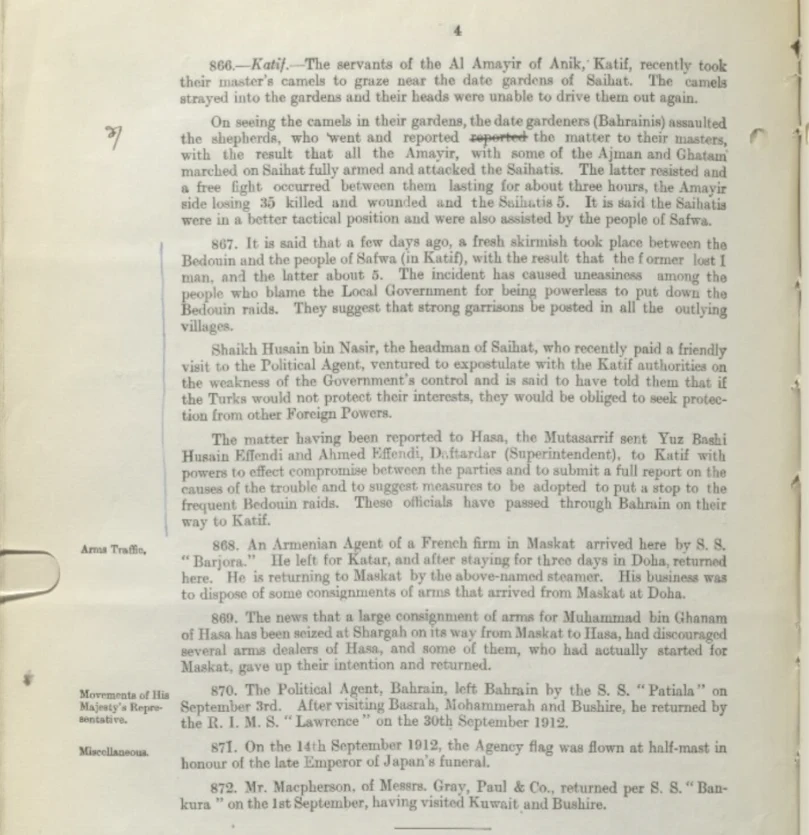
جلال الهارون، سبتمبر 1912م، ص 4جلال الهارون، سبتمبر 1912م، ص 4
بحسب التقارير، دخلت إبلٌ للعمائر بساتين النخيل في سيهات، فاعتدى المزارعون على الرعاة، فزحف العمائر ومعهم رجال من العجمان وغطمان على سيهات. دام القتال نحو ثلاث ساعات، وكان أهالي سيهات في موقع أقوى، وساندهم أهالي صفوى.
وبعد أيام وقعت مناوشة أخرى بين البدو وأهالي صفوى، خسر فيها البدو رجلاً واحداً، وخسرت صفوى نحو خمسة.
ولم تكن هذه أول غارة للعمائر على الواحة؛ إذ تذكر روايات محلية هجومهم على تاروت نحو عام 1833م انطلاقاً من جزيرة جنة والمسلمية، حين أرسلت العوامية وسيهات رجالاً للدفاع عن الجزيرة. وتُعرف بوقعة الرياحين.
حمّل الأهالي الحكومة العثمانية مسؤولية العجز عن وقف الغارات، وطالبوا بحاميات في جميع القرى الطرفية. فأرسل المتصرف العثماني في الأحساء موظفَين إلى القطيف لحل النزاع ورفع تقرير عن أسباب الغارات.
في ليلة 1 أكتوبر 1925م، ضربت عاصفة بحرية شديدة سفن الغوص على اللؤلؤ في مغاصات الخليج، فعُرفت في ذاكرة الخليج بسنة الطبعة.
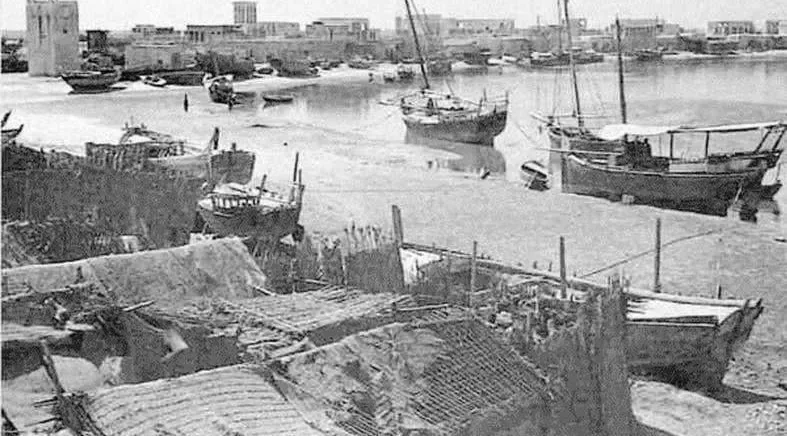
سفن شراعية عند الجزر على ساحل خليجيصحيفة الوطن (البحرين)، جعفر الديري، 21 فبراير 2014م
ضربت العاصفة نحو منتصف الليل، والسفن راسية في المغاصات تنتظر الفجر للغوص، ودامت بحسب إحدى الروايات نحو نصف ساعة فقط. وتجعل بعض الروايات تاريخها 28 سبتمبر.
وتذكر المصادر أن نحو 80٪ من السفن التي كانت في عرض البحر غرقت، ومنها سفن من الكويت والبحرين وساحل شرق الجزيرة العربية وعُمان. وتختلف تقديرات عدد الضحايا اختلافاً كبيراً لغياب الإحصاءات الرسمية، وتتراوح بين نحو 5 آلاف و20 ألفاً، ويعود الرقم الأعلى إلى تقرير لحكومة البحرين.
وفي اليوم التالي خرجت سفن الإنقاذ من البحرين. ونجا أحد البحارة متشبثاً بلوح خشبي حتى انتُشل عند رأس تنورة، على مقربة من صفوى.
وعلى اليابسة أسقطت العاصفة النخيل وألحقت الضرر بالبيوت في واحة القطيف. وينقل الشيخ فرج العمران في كتابه «الأزهار الأرجية» وصفاً لشدة الحداد الذي عمّ القطيف بعدها.
وفي جزيرة تاروت المجاورة، تضم وثيقة بخط الشيخ عبدالله المعتوق التاروتي أسماء أكثر من عشرين بحاراً لفظهم البحر على شواطئها، وظلت الجثث تصل إلى الشاطئ نحو خمسة أيام.
ومن بحارة القطيف، يُذكر الشاعر أحمد الكوفي ناجياً وحيداً، إذ تروي الأخبار أنه سبح يوماً وليلة حتى بلغ القطيف.
وكان غواصو صفوى يرتادون المغاصات القريبة في مياه خليج تاروت شرق البلدة وشمالها، ومنها مغاص أم ارحيم وهير البطين بين رأس تنورة ورحيمة. ويذكر الكاتب المحلي عبد الرسول الغريافي أن جثامين كثير من الغرقى من مناطق الخليج المختلفة وُجدت في مغاصات القطيف والبحرين، وأن غواصي المنطقة لم يتجاوزوا هذه المياه القريبة.
وتسجّل قائمة محلية بالسنوات التي حفظتها ذاكرة المنطقة أن العاصفة خلّفت دماراً شاملاً في الأملاك والبساتين والسفن، وتسمّي السنة التالية، نحو 1926–1927م، «سنة الطفرة»، إذ خرج أهالي صفوى منها لضيق العيش.
وكانت صفوى، بوصفها جزءاً من واحة القطيف، تعيش على البحر والغوص، ولا بد أن أهلها كانوا ممن أصابتهم الكارثة. لكن لم يُعثر حتى الآن على سجل يحدد خسائر صفوى نفسها: عدد من فقدتهم، وأسماءهم، وسفنهم.
وتُظهر الصورة هنا سفناً شراعية عند الجزر على أحد سواحل الخليج، ولا يُعرف مكانها وتاريخها على وجه التحديد.
اجتاح الجراد صفوى والقرى المحيطة بها من جديد، وكان الدمار هذه المرة أشدّ، فتراجع الإنتاج الزراعي.
وكان ذلك جزءاً من موجة أوسع؛ إذ رُصدت أسراب الجراد في أنحاء الجزيرة العربية منذ عام 1941م، في بداية نحو سبع سنوات من آفات الجراد. وفي عام 1943م أنشأت بريطانيا «وحدة مكافحة الجراد في الشرق الأوسط» لمواجهتها، بطُعوم مسمومة توضع في طريق صغار الجراد.
وكانت تلك السنوات قاسية من وجوه أخرى؛ إذ تذكر الذاكرة المحلية القحط والمجاعة نحو عام 1943م، وتسمّيها «سنة المحل». وفي أثناء الحرب العالمية الثانية توقّفت الواردات، فوُزّعت المواد الغذائية على كل أسرة ببطاقات خاصة، فعُرفت بـ«سنة البطاقة».
Like others across the Gulf, the people of Safwa dated events by the great happenings of a year, and named the year after them: the Year of the Raid, the Year of the Plague, the Year of the Sinking, the Year of the Hail. This page gathers the years the town remembers, from epidemics, raids and battles to fires, locusts and hail, in order of time.
Cholera, arriving from India, spread through the Gulf and reached Bahrain, Qatif and Safwa. It was the first of the great cholera epidemics of the 19th century.
The disease broke out in Bengal in 1817 and was carried along the trade routes by sailing ships. In 1821 it reached Oman, where it killed about 10,000 people in the heat of summer. From there Omani ships carried it to the ports they traded with: Bahrain, the Persian coast and Iraq.
It killed quickly. In Muscat there were accounts of people dying within ten minutes of the first symptoms.
On the day of Eid, raiders from the desert killed twelve people of Safwa near the town’s cemetery. The day is remembered locally as Waqʿat al-Madhabih, the Battle of the Slaughters.
It falls within the years of raids on Qatif from the al-Biyad desert, which local memory dates from about 1824 to 1872.
A clan conflict broke out inside Safwa, and several of the town’s notables were killed. The year is remembered locally as Sanat al-Dhabha, the Year of the Slaughter.
Plague, arriving from India, spread to Bahrain, Qatif and other coasts of the Gulf. It killed hundreds of people, among them dozens of Safwa’s people.
The year is remembered locally as Sanat al-Taʿun, the Year of the Plague.
British records give a sense of the outbreak. Lorimer’s Gazetteer notes a mild epidemic of plague in April 1903 in the Ottoman province of al-Hasa, which then included Qatif. The same year a sharper outbreak in Bahrain killed some 300 of about 600 people who fell ill.
Marefa calls it Waqʿat Safwa, the Battle of Safwa, fought between the people of Safwa and the people of the desert. It came during years of Bedouin raids on the villages of the Qatif oasis, in the last decade of Ottoman rule.
Local accounts from the same years record raids across the oasis. Around 1905, Bedouin tried to drive off livestock at al-Bahari and were turned back by men of al-Awamiya, and when Bedouin attacked al-Qadih, people from across Qatif came to fight beside them at Tuf al-Mandeel, a palm grove west of the town.
Such raids led the people of Safwa to rebuild their town wall about two years later.
Bedouin raids struck Safwa after the outbreak of the battle of al-Sharba in Qatif. The year is remembered locally as Sanat al-Fazʿa, the Year of the Call to Arms.
Local memory dates the battle of al-Sharba itself to about 1908, so one of the two dates may be off.
On 18 June 1908, a quarrel over a sharba, a cup of drinking water, grew into armed conflict between the people of the Qatif oasis and Bedouin tribes. The year is remembered locally as ʿAm al-Hasara, the Year of the Siege.
A Bedouin refused to pay a water seller in al-Dababiya for his cup. A fight broke out, and a Bedouin was shot dead. His killing drew in several tribes, among them the al-Subaih, Mutair, Ajman, Awazim and Mahashir. They then camped west of Qatif, near al-Dababiya, and attacked.
Women, children, the old and the sick took refuge in al-Qalʿa, Qatif's walled quarter, while fighting went on outside the walls and palm groves were burned. One defender, Jaʿfar ibn Hasan ʿAli al-Khunaizi, was killed and buried in al-Qalʿa. A blind cleric, Sheikh Muhammad ibn Nimr, is credited with the defenders' tactic: hold fire until the attackers came close, throw dust and ash from the walls to hide their positions, then fire together.
The towns of Qatif were besieged for about 70 days, and many villages were looted. The local Ottoman garrison could not restore order, so the Sublime Porte sent 320 soldiers as reinforcements. They broke the siege and brokered a peace agreement. The British also wanted peace, fearing the unrest would spread to Bahrain.
In June 1911, thirty men were killed and nine wounded from al-Awamiya, Safwa and al-Ajam, in a battle at Jabal al-Qawm.
It is remembered locally as the massacre of Dimnat ʿAmmar.
A local account tells how the battle turned. Fighters from al-Awamiya chased Bedouin who seemed to be fleeing. When a cloud of dust rose from the direction of Safwa, they took it for Safwa’s horsemen coming to help and pressed on into open ground called Dimnat ʿAmmar. The riders were in fact more Bedouin, and the fighters were caught between fire from the front and behind.
The same account dates the battle to May 1911 and puts al-Awamiya’s losses higher, at about 40 killed and 30 wounded.
The same years, about 1911 to 1914, are also remembered for cholera, which spread widely in Qatif and its villages.
In September 1912, the people of Safwa joined Saihat in a fight against Bedouin of the Al Amayir.
Jalal Alharoon, September 1912, p. 4Jalal Alharoon, September 1912, p. 4
According to reports, camels belonging to the Al Amayir strayed into Saihat’s date gardens. The gardeners attacked the shepherds, and the Al Amayir, with men of the Ajman and Ghatam, marched on Saihat. The fight lasted about three hours. Saihat held the stronger position and was helped by the people of Safwa.
A few days later, a further skirmish broke out between the Bedouin and the people of Safwa. The Bedouin lost one man and Safwa about five.
The Al Amayir had raided the oasis before. Local accounts recall their attack on Tarout around 1833, launched from Jinna Island and al-Musallamiya, when al-Awamiya and Saihat sent men to defend the island. It is remembered as the battle of al-Riyahin.
Residents blamed the Ottoman government for failing to stop the raids and called for garrisons in every outlying village. The Ottoman governor of al-Ahsa sent two officials to Qatif to settle the dispute and report on the causes of the raids.
The Spanish flu spread among the people of Qatif and its villages and killed hundreds. In Safwa it killed dozens.
Local accounts also call the epidemic ṭāʿūn, plague. Among those who died was Hasan ʿAli al-Khunaizi, who caught the illness on a visit to Safwa.
The pandemic killed tens of millions of people worldwide. Across the Gulf the year is remembered as Sanat al-Rahma, the Year of Mercy, a name that prays for mercy on the dead.
In neighbouring Bahrain the epidemic lasted from November 1918 to January 1920 and killed about 1,500 people, most of them in Manama, Muharraq and al-Hidd.
On the night of 1 October 1925, a violent storm struck the pearl-diving fleets out on the Gulf's pearl banks. It is remembered across the Gulf as Sanat al-Tabʿa, the Year of the Sinking.
Dhows at low tide on a Gulf shoreAl-Watan (Bahrain), Jaafar al-Dairi, 21 February 2014
The storm struck around midnight, while the boats lay at anchor on the pearl banks, waiting to dive at dawn. By one account it lasted only about half an hour. Some accounts give the date as 28 September.
Sources say around 80% of the boats at sea went down, among them boats from Kuwait, Bahrain, the eastern Arabian coast and Oman. Estimates of the dead vary widely, from about 5,000 to 20,000, because no official count was kept. The higher figure comes from a Bahraini government report.
Rescue boats set out from Bahrain the next day. One survivor clung to a plank until he was picked up at Ras Tanura, close to Safwa.
On land, the storm brought down palm trees and damaged houses across the Qatif oasis. Sheikh Faraj al-ʿUmran, in his book al-Azhar al-Arajiyya, describes the mourning that followed in Qatif.
On nearby Tarut island, a document in the hand of Sheikh ʿAbdullah al-Maʿtuq al-Tarouti lists more than twenty sailors whose bodies washed ashore. They kept washing ashore for about five days.
Of Qatif's own sailors, the poet Ahmad al-Kufi is remembered as the only survivor. He is said to have swum for a day and a night to reach Qatif.
Safwa's divers worked the banks close to home, in the waters of Tarut Bay east and north of the town. Among them were Umm Rahim and Hir al-Butain, between Ras Tanura and Rahima. The local writer ʿAbd al-Rasul al-Ghuraifi records that the bodies of drowned men from across the Gulf were found on the banks off Qatif and Bahrain, and that the area's own divers worked only these nearby waters.
A local list of the region's remembered years records that the storm left widespread damage to property, gardens and boats. It names the following year, about 1926–27, Sanat al-Tafra, when people of Safwa left the town because living had become so hard.
Safwa, part of the Qatif oasis, lived from the sea and pearl diving, and its people were surely among those affected. But no record yet found gives Safwa's own losses: how many men it lost, their names, or their boats.
The photograph here shows dhows at low tide on a Gulf shore. Its exact place and date are not known.
Fire destroyed a third of the rural homes in the east and south of Safwa. The year is remembered locally as Sanat Hariq al-Sharba, the Year of the al-Sharba Fire.
The same year, locusts swept through the farms of the area.
Locusts swept through Safwa and the villages around it. The damage was worse than in earlier swarms, and farm output fell.
It was part of a wider plague. Swarms were reported across the Arabian Peninsula from 1941, the start of about seven years of locust plagues. In 1943 Britain set up the Middle East Anti-Locust Unit to fight them, with poisoned bait laid in the path of young locusts.
The same years were hard in other ways. Local memory records drought and hunger in about 1943, remembered as Sanat al-Mahl. During the Second World War, imports stopped and food was handed out to each family by ration card, remembered as Sanat al-Bitaqa, the Year of the Card.
Large hailstones fell in great numbers and covered the ground in Safwa and Qatif. The year is remembered locally as Sanat al-Bardi, the Year of the Hail.
The same year brought fourteen days of continuous rain. The floods that followed damaged homes and farms across the area.

 الديرة، البلدة المسوّرةقلب صفوى القديم: سورها وأبوابها وكوتها ومسجدها الجامع، حتى أُزيلت سنة 1989م.
 صفوى في القرن العشرينمن امتياز النفط إلى المدارس والطرق، وكيف تحوّلت البلدة المسوّرة إلى مدينة مفتوحة.
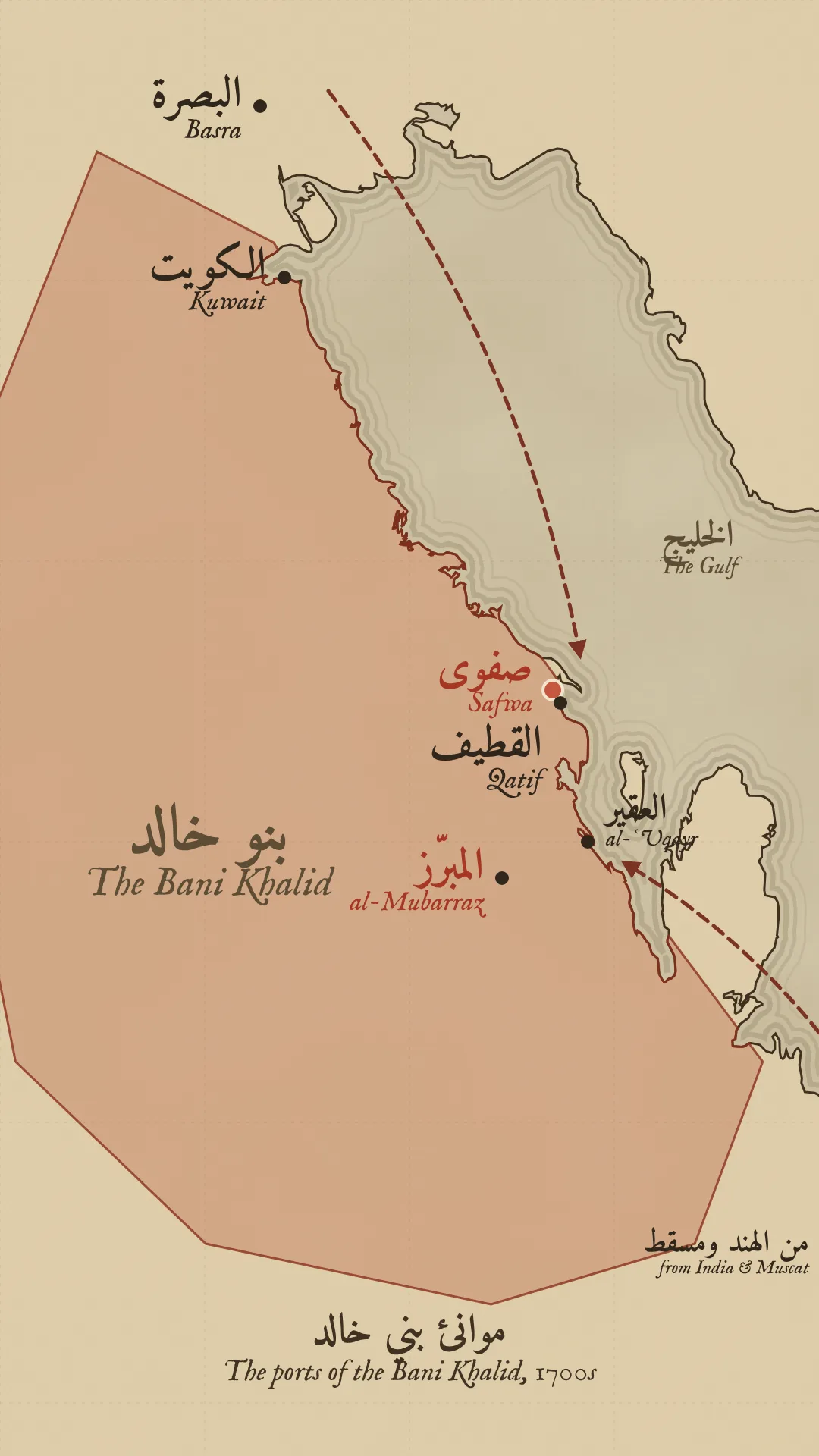 بنو خالدحلف قبلي حكم شرق الجزيرة العربية من الأحساء قرابة قرن ونصف.