ما كتبه الرحّالة والأدلة البريطانية عن صفوى والقطيف.What travellers and British gazetteers wrote about Safwa and Qatif.
وصف عدد من الرحّالة والأدلة واحة القطيف وصفوى. فمرّ ابن بطوطة بالقطيف نحو سنة 1331م، وعبر الضابط البريطاني جورج سادلير الجزيرة العربية من القطيف سنة 1819م، ووصل الرحّالة الإنجليزي بالغريف إلى القطيف سنة 1863م. ثم وصف دليل الخليج البريطاني صفوى سنة 1904م بأنها قرية مسوّرة وأقصى قرى القطيف شمالاً، وزاد دليل لوريمر سنة 1908م أنها قرية كبيرة مسوّرة فيها 350 بيتاً.
عبر الضابط البريطاني جورج سادلير الجزيرة العربية. ويذكر مرجع بريطاني لاحق أن صفوى كانت في زمنه بلدة مسوّرة يسكنها نحو 2400 نسمة.
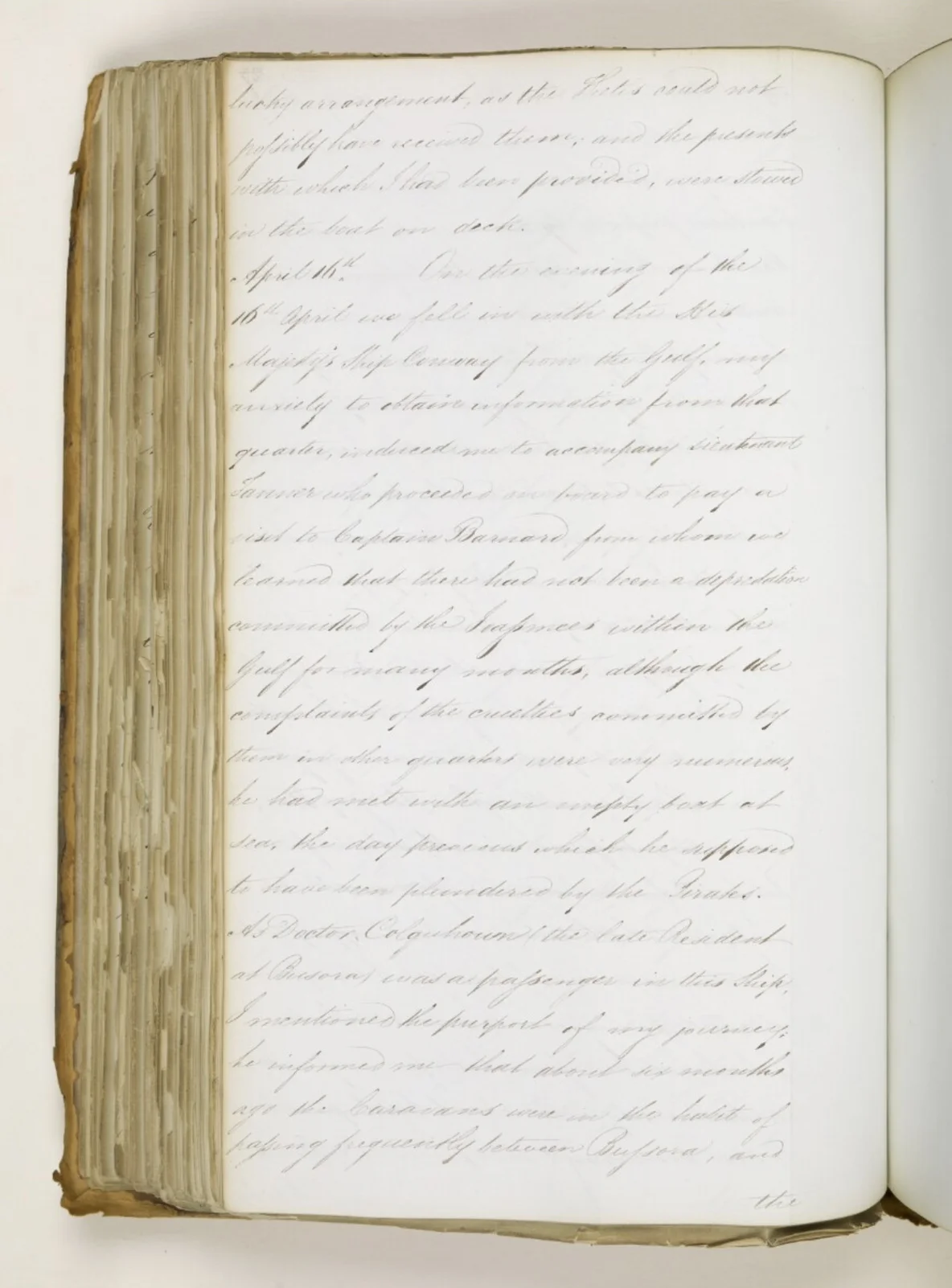
صفحة من يوميات سادلير، أبريل 1819ميوميات الكابتن سادلير عن مهمته إلى الجزيرة العربية، 1819–1820م، ورقة 179ظ
نزل جورج فورستر سادلير القطيف عام 1819م، ثم عبر شبه الجزيرة العربية كلها حتى البحر الأحمر، فكان من أوائل الأوروبيين المعروفين الذين فعلوا ذلك.
وكان الحاكم البريطاني العام في الهند، اللورد هاستنجز، قد أوفده لتهنئة إبراهيم باشا، قائد جيش محمد علي باشا المصري، بالاستيلاء على الدرعية، وليعرض عليه العمل المشترك ضد القواسم في أسفل الخليج. لكن سادلير ما كاد يصل إلى الأحساء حتى تبيّن له أن إبراهيم باشا قد انسحب منها، فتبعه عبر شبه الجزيرة. ولما التقى به أخيراً رفض إبراهيم باشا الاقتراح، فعاد سادلير إلى الهند عن طريق جدة.
وفي السنة نفسها عدّ تقرير استخباري بريطاني وضعه الكابتن روبرت تايلور القطيفَ والعقيرَ ضمن الموانئ العربية التي تنطلق منها سفن تهاجم السفن البريطانية.
ولا تزال يومياته محفوظة في المكتبة البريطانية، ويمكن قراءتها عبر مكتبة قطر الرقمية.
والصفحة المعروضة هنا من يومياته، كتبها في 16 أبريل 1819م وهو يبحر في الخليج في طريقه إلى القطيف.
وصل الرحالة الإنجليزي وليم جيفورد بالجريف إلى القطيف قادماً من الهفوف، في أواخر رحلته عبر وسط الجزيرة العربية وشرقها، وانتظر فيها مركباً يحمله إلى البحرين.
ويصف الطريق إليها بين بساتين النخيل والعيون والمجاري المائية، ومنها مجرى قديم يرى أن القرامطة أنشأوه لإيصال الماء إلى المدينة. أما المدينة نفسها فكانت ذات أسوار وأبراج، مزدحمة بالسكان، شديدة الرطوبة.
وعلى الشاطئ عند طرف الخليج قامت قلعة القرموط، تتجه مدافعها نحو البحر، وفي داخلها قصر الحاكم. وكان الأهالي ينسبون بناءها إلى زعيم القرامطة أبي سعيد الجنابي، أما بالجريف فرآها أحدث من ذلك. وكان حاكم القطيف يومئذ فرحات، وهو عبد أفريقي معتَق للإمام فيصل بن تركي، ومعه حامية من نحو 250 رجلاً من نجد.
ووجد بالجريف تمر القطيف أقل جودة من تمر الأحساء لكنه أكثر كمية، ورأى فيها الليمون والحمضيات والخضروات وشيئاً من القمح. وكان السمك والأرز غذاء الناس الرئيسي، ويأتي الأرز من الهند عن طريق البحرين. وكان الميناء ضحلاً تحميه جزيرة تاروت، لا تقترب منه إلا المراكب الصغيرة، وكان مبنى الجمرك على الشاطئ مصنوعاً من جذوع النخيل وسعفه.
ذكر الدليل صفوى قريةً مسوّرة، وأقصى قرى القطيف شمالاً.
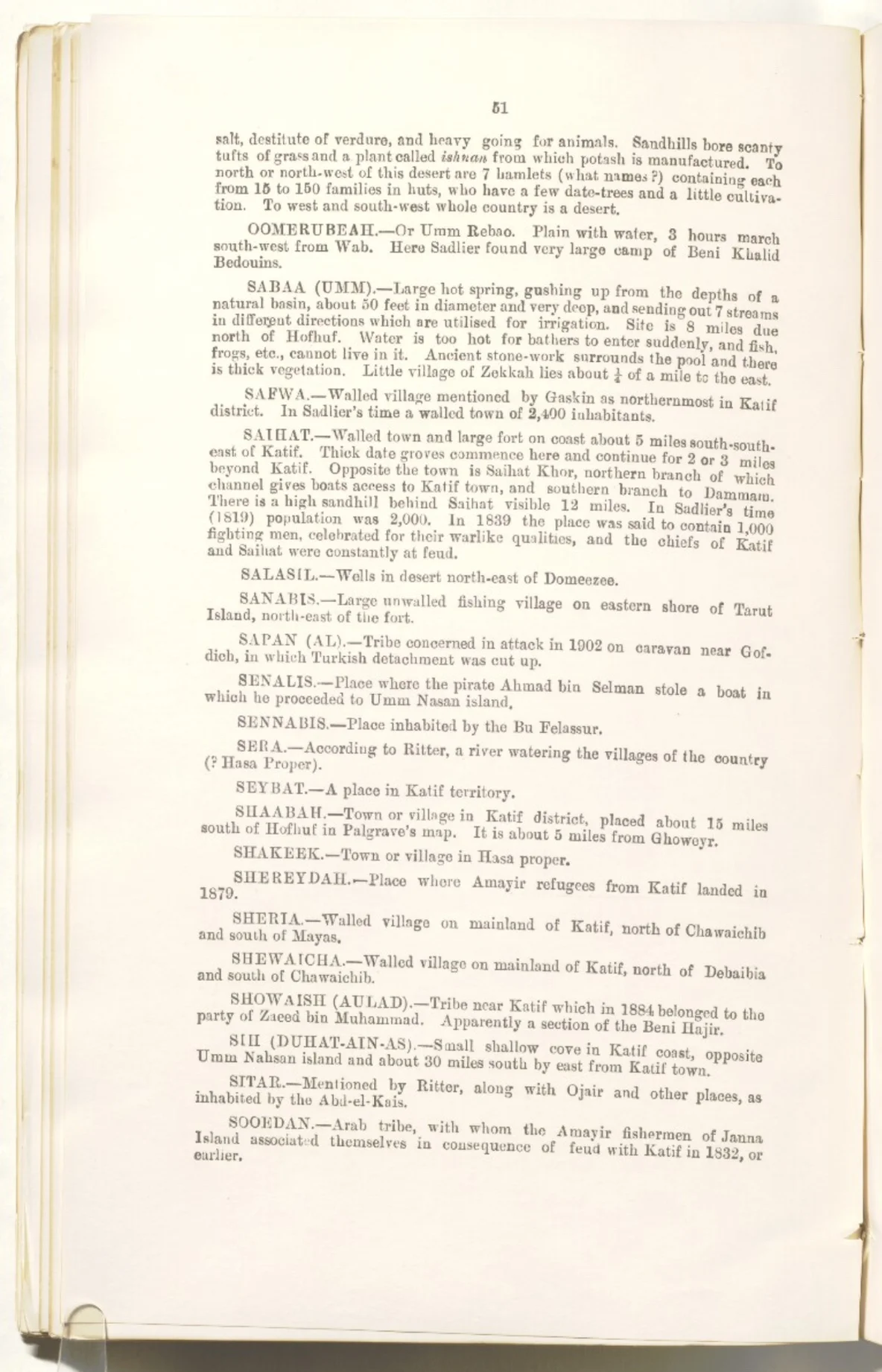
دليل الخليج، 1904م، ورقة 109ظدليل الخليج الفارسي، الجزء الثاني، 1904م، ورقة 109ظ
جُمع هذا الدليل لحكومة الهند البريطانية، وطُبع في شيملا عام 1904م. ومادته عن صفوى قصيرة، تستند إلى تقرير لغاسكن، أحد المسؤولين البريطانيين في البحرين، وتكرّر رقم سادلير عام 1819م: بلدة مسوّرة يسكنها نحو 2400 نسمة.
والصفحة المعروضة هنا هي التي تضم مادة صفوى، تحت اسم SAFWA.
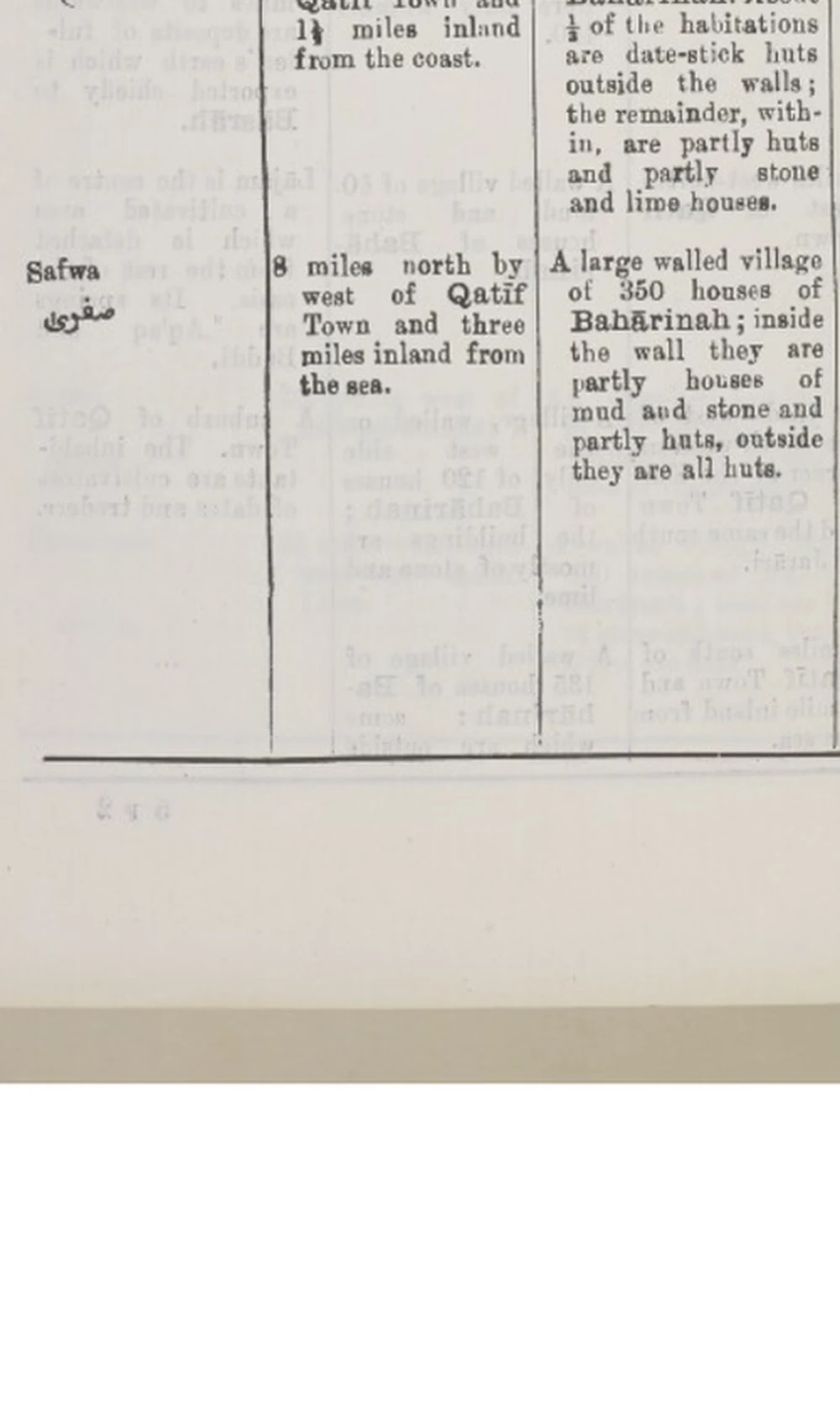
وصف مسح ج. ج. لوريمر صفوى بأنها قرية كبيرة مسوّرة من 350 بيتاً، على بُعد 8 أميال شمال القطيف مائلاً إلى الغرب، وثلاثة أميال داخل البر من البحر، وذكر أن أهلها من البحارنة. وكانت البيوت داخل السور بعضها من الطين والحجر وبعضها أكواخ، أما خارج السور فكلها أكواخ.
دليل لوريمر، 1908م، ص 1540ج. ج. لوريمر – دليل الخليج، المجلد الثاني، 1908م، ص 1540
ويصفها بأنها أقصى قرى الواحة شمالاً، تقع عند الطرف الغربي لرقعة زراعية مستقلة، يفصلها عن زراعة العوامية جنوباً ميلان أو ثلاثة. ومن عيونها داروش، «أجود عيون الواحة»، وعين يكتب اسمها «عفيقة». وكان بعض أهلها يعملون في الغوص على اللؤلؤ.
جُمع «دليل الخليج وعُمان ووسط الجزيرة العربية» لجون غوردون لوريمر لصالح الحكومة البريطانية في الهند، وظلّ سرّياً عقوداً. وقد سجّل المدن والقرى والسكان والتجارة والقبائل في أنحاء المنطقة.
A number of travellers and gazetteers described the Qatif oasis and Safwa. Ibn Battuta passed through Qatif around 1331; the British officer George Sadlier crossed Arabia from Qatif in 1819; and the English traveller William Gifford Palgrave reached Qatif in 1863. The British Persian Gulf Gazetteer of 1904 listed Safwa as a walled village and the northernmost of Qatif, and Lorimer's Gazetteer of 1908 described it as a large walled village of 350 houses.
British officer George Sadlier crossed Arabia. A later British reference book records that in his time Safwa was a walled town of about 2,400 people.
A page of Sadlier's diary, April 1819Captain Sadlier's Diary of his Mission to Arabia, 1819–20, f. 179v
George Forster Sadlier landed at Qatif in 1819 and went on to cross the whole Arabian Peninsula to the Red Sea, one of the first Europeans known to do so.
He had been sent by the British Governor-General of India, Lord Hastings, to congratulate Ibrahim Pasha, commander of Muhammad Ali's Egyptian army, on taking Diriyah, and to propose joint action against the Qawasim of the lower Gulf. By the time Sadlier reached al-Ahsa, Ibrahim Pasha had already withdrawn, so Sadlier followed him across the peninsula. When they finally met, Ibrahim Pasha turned the proposal down, and Sadlier sailed back to India from Jeddah.
In the same year a British intelligence report by Captain Robert Taylor listed Qatif and al-ʿUqayr among the Arabian ports from which vessels set out against British shipping.
His diary survives in the British Library and can be read online through the Qatar Digital Library.
The page shown here is from his diary, written on 16 April 1819 as he sailed up the Gulf on his way to Qatif.
The English traveller William Gifford Palgrave reached Qatif from al-Hofuf, near the end of his journey across central and eastern Arabia, and waited there for a boat to Bahrain.
He describes the approach through palm groves, springs and water channels, among them an old channel that he believed the Qarmatians had built to bring water to the town. The town itself had walls and towers, and was crowded and damp.
On the shore at the far end of the bay stood the Qarmut castle, with cannon facing the sea and the governor's palace inside. Local people said it was built by the Qarmatian leader Abu Saʿid al-Jannabi; Palgrave thought it later. The governor was Farhat, a freed African slave of the Saudi ruler Imam Faisal ibn Turki, with a garrison of about 250 men from Najd.
Palgrave found Qatif's dates lower in quality than al-Ahsa's but greater in quantity, and saw citrus, vegetables and some wheat. Fish and rice were the main food, the rice coming from India by way of Bahrain. The harbour was shallow, sheltered by Tarut island, and only small boats could come close. The customs house on the shore was built of palm trunks and fronds.
The gazetteer listed Safwa as a walled village and the northernmost village of Qatif.
The Persian Gulf Gazetteer, 1904, f. 109vPersian Gulf Gazetteer, Part II, 1904, f. 109v
The Persian Gulf Gazetteer was compiled for the British government in India and printed in Simla in 1904. Its entry on Safwa is brief. It rests on a report by Gaskin, a British official in Bahrain, and repeats Sadlier’s figure from 1819: a walled town of about 2,400 people.
The page shown here is the one that holds Safwa’s entry, listed under SAFWA.
J. G. Lorimer's survey described Safwa as a large walled village of 350 houses, 8 miles north by west of Qatif Town and three miles inland from the sea. Its people, he records, were Baharna. Inside the wall the houses were partly of mud and stone and partly huts; outside the wall they were all huts.
Lorimer's Gazetteer, 1908, p. 1540J. G. Lorimer – Gazetteer of the Persian Gulf, Vol. II, 1908, p. 1540
He calls it the northernmost village of the oasis, standing at the west end of its own block of farmland, two or three miles from that of al-Awamiya to the south. Its springs were Daroush, “the finest in the oasis”, and one he spells ʿAfiqah. Some of its people were pearl divers.
John Gordon Lorimer's Gazetteer of the Persian Gulf, Oman and Central Arabia was compiled for the British government in India and was kept confidential for decades. It recorded towns, villages, populations, trade and tribes across the region.

 اسم صفوىالصفا، وصفوان، وصفواء: كيف ورد اسم البلدة في الشعر والمعاجم.
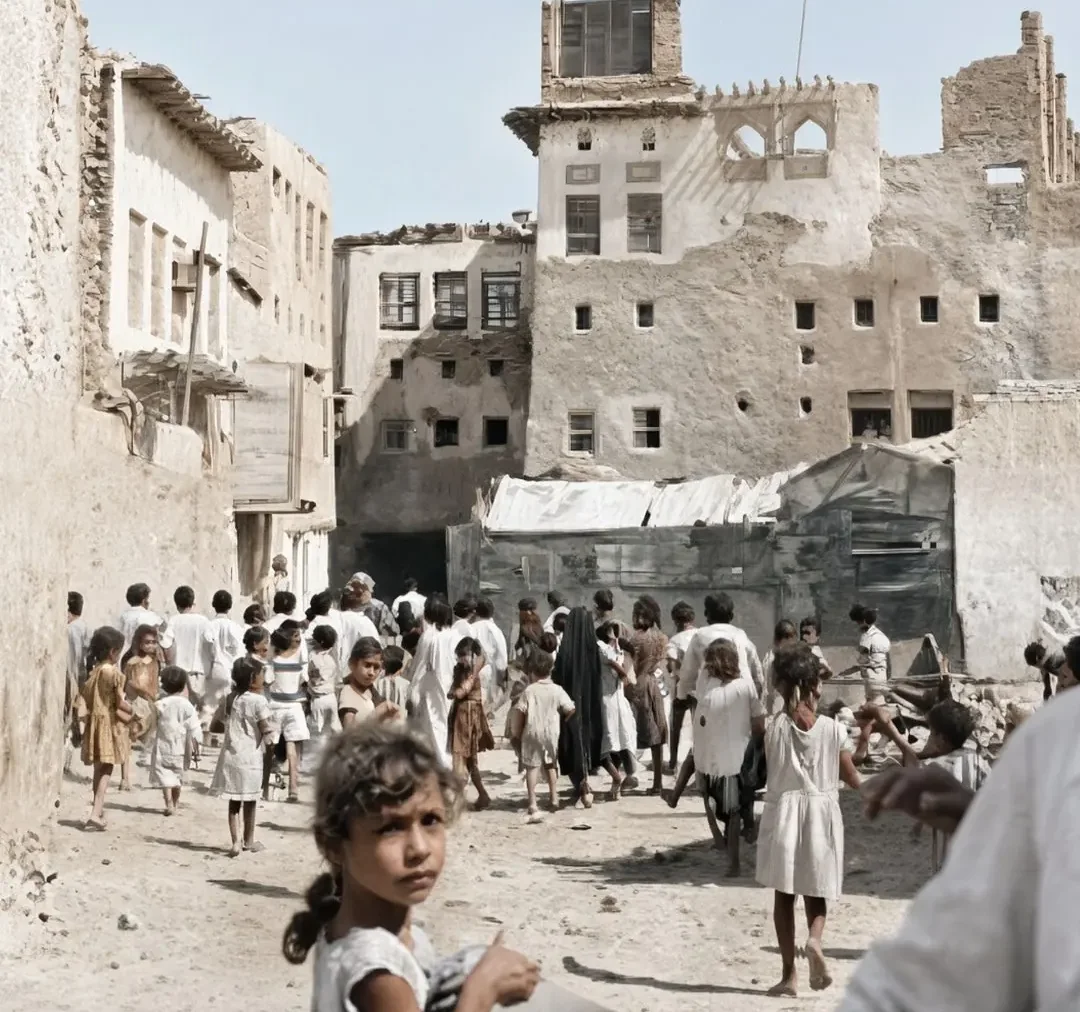 الديرة، البلدة المسوّرةقلب صفوى القديم: سورها وأبوابها وكوتها ومسجدها الجامع، حتى أُزيلت سنة 1989م.
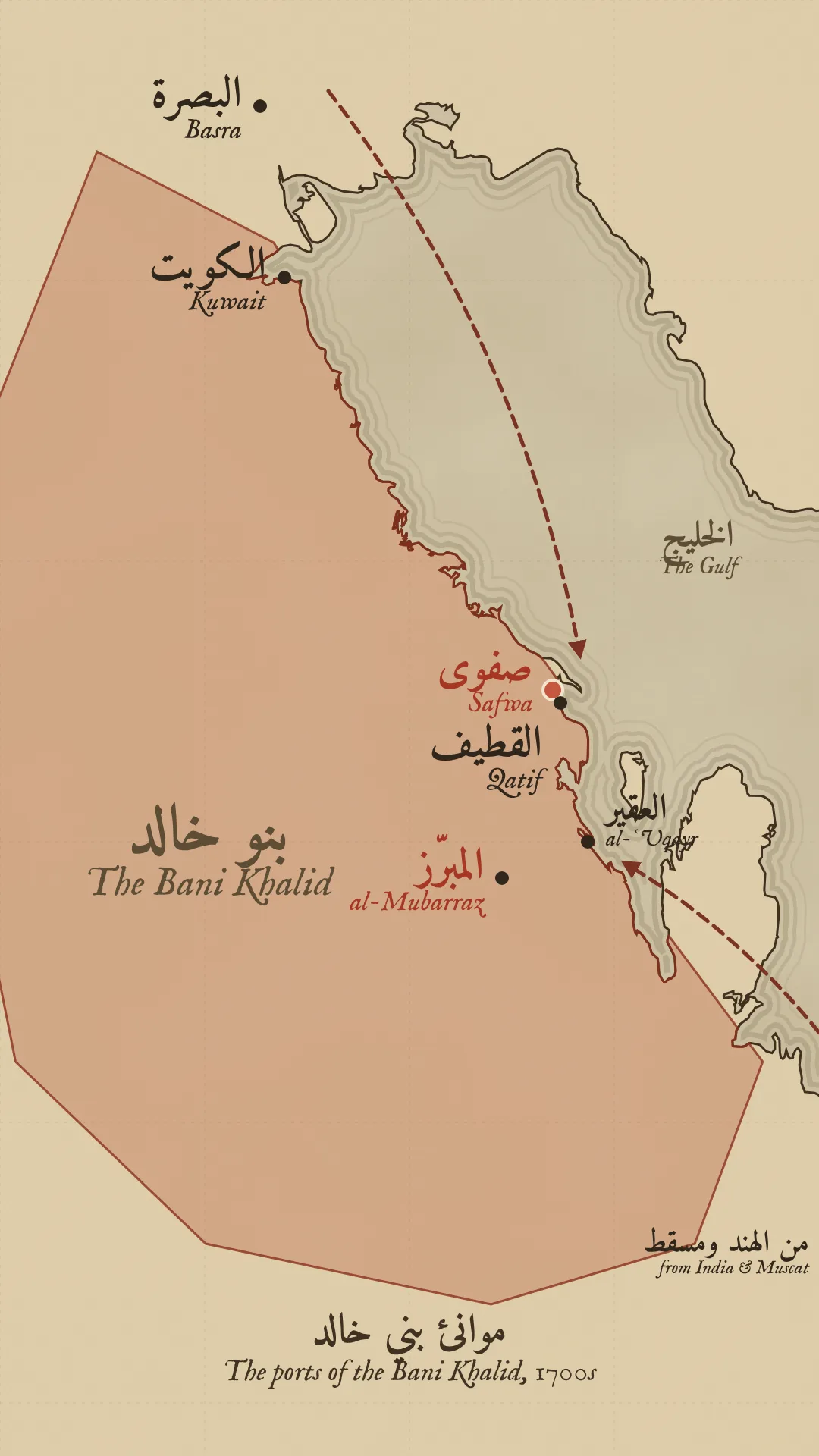 بنو خالدحلف قبلي حكم شرق الجزيرة العربية من الأحساء قرابة قرن ونصف.
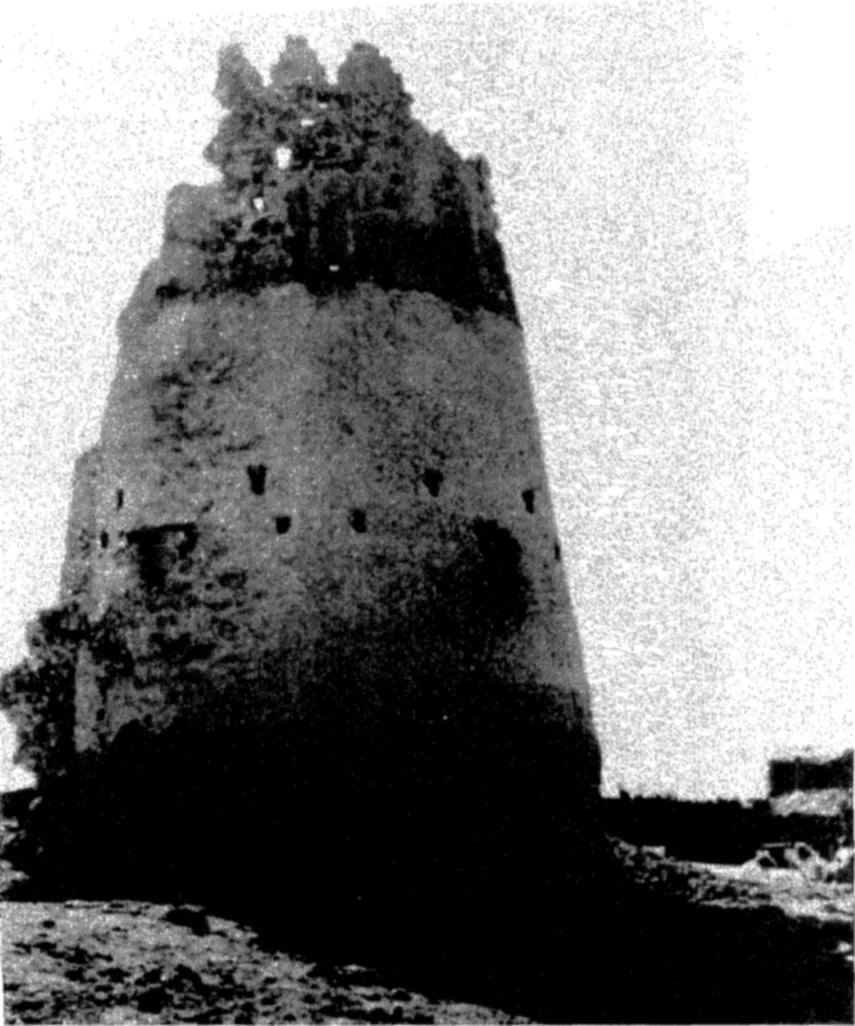 قلاع الواحة وأبراجهاأسوار القطيف وصفوى وتاروت وسيهات وأبراجها، ومن بناها.